

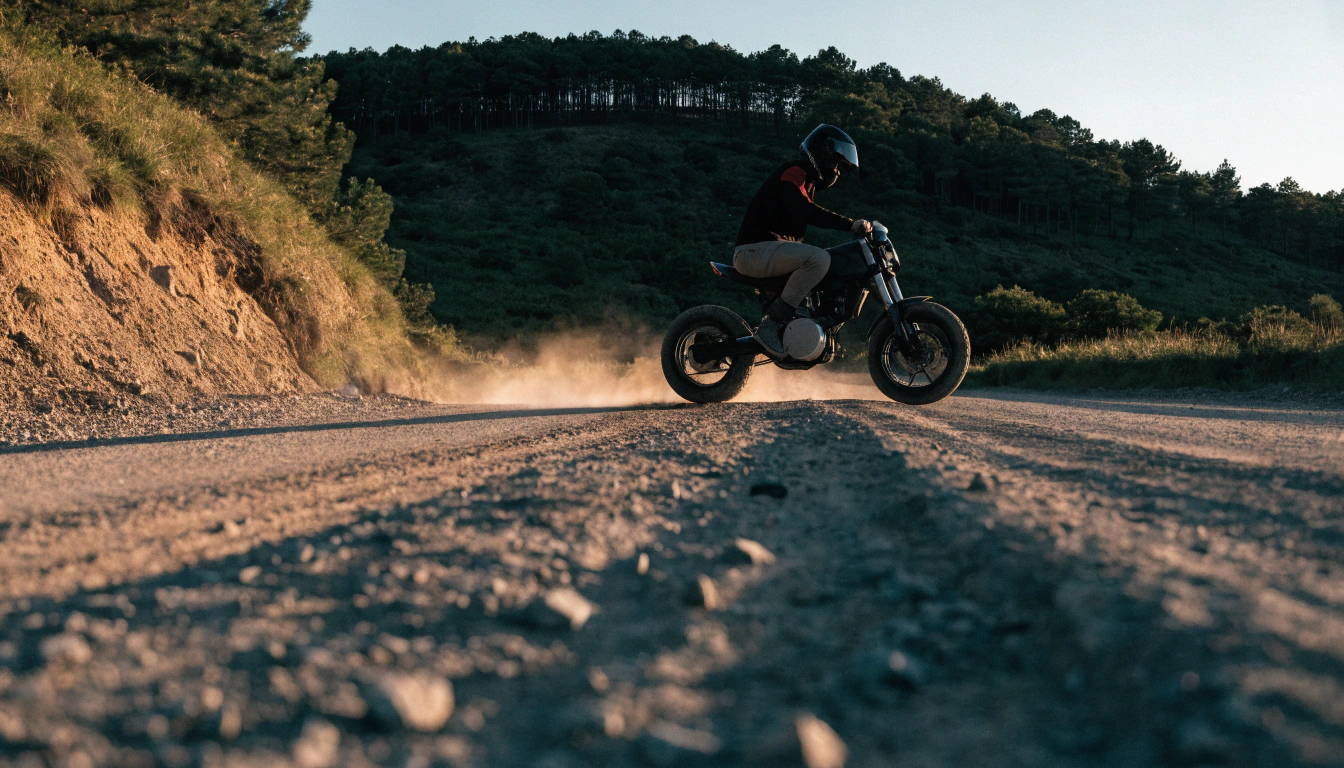
Best Electric Dirt Bike With Pedals: Pedal-Assist Models Compared
Pedals on an electric dirt bike tell you almost nothing on their own.
Some bikes use them. They read your effort through a sensor and feed power in as you push. Other bikes wear pedals like a costume — there for the photo, useless once the trail tilts uphill. Same word, two completely different machines.
So the best electric dirt bike with pedals isn't the one with the loudest spec sheet. It's the one where the pedals actually pull their weight: usable gearing, real clearance over rocks, and an assist system that doesn't fight you. Worth saying once, plainly — a high-watt Adult Electric Off-Road Motorcycle with cranks bolted on is still an off-road machine, not a street-legal bicycle. No amount of pedaling changes that.
Below, I'll sort the three types you'll run into — real pedal-assist, pedal-backup, and throttle-only — and help you figure out which one matches the way you ride.
What Is an Electric Dirt Bike With Pedals?
Strip away the marketing and it's simple: a dirt-style electric bike with crank arms and pedals attached. It might run pedal assist, a throttle, or both.
The only question that matters is whether those pedals do anything. On a well-built bike, they're part of how you ride. On a cheap one, they're dead weight you'll curse the first time you try to pedal home.

Electric Dirt Bike vs E-Bike vs E-Moto
Three categories get jammed together online. Pulling them apart saves you a bad purchase.
|
Type
|
Built for
|
Pedals?
|
Typical rules
|
|
Standard e-bike
|
Roads, bike lanes, paths, light gravel
|
Yes, fully working
|
Class 1–3, under 750W, usually street-legal
|
|
Electric dirt bike
|
Rough ground, trails, jumps
|
Sometimes — varies by model
|
Often off-road only; depends on power/speed
|
|
E-moto
|
High-power off-road performance
|
Often none
|
Off-road; may need registration as a motorcycle
|
Here's the trap. A bike can wear pedals and still ride like an e-moto — heavy, fast, throttle-first. The pedals don't drag it back into e-bike territory. They just sit there.
Pedal-Assist vs Pedal Backup
This is the line most buyers miss, so slow down here.
Pedal assist means the motor responds to your legs. A sensor catches your movement or pressure, then layers power on top based on the mode you've chosen. Pedal and the bike helps; coast and it eases off. It feels like cycling with a tailwind that never quits.
Pedal backup is a different deal entirely. The throttle runs the show. The pedals only matter at crawl speed, in a dead-battery emergency, or rolling across a flat lot. Useful in a pinch — not a system you'd plan a ride around.
|
Pedal home on a dead 130-pound bike with dirt gearing and your calves will file a complaint by the second hill.
|
Why Pedals Matter for Range, Control, and Access
Three real benefits, when the pedals are done right.
-
Range. Share the work and the battery lasts longer than it would on full throttle the whole way.
-
Control. Pedaling feeds in smoother power on loose dirt and gravel — the kind a hard throttle stab would just spin away.
-
Access. Some trails and local rules treat pedal-assist bikes more kindly than throttle-only ones. But pedals alone don't make a high-watt bike legal everywhere — more on that later.
|
Valtinsu EM-5 — Adult Electric Off-Road Motorcycle
48V geared motor | 3,840W peak | 190 N·m torque | 37 mph | IPX6 | Three ride modes | Age 13+
Built for first trips on dirt — private land, OHV parks, designated off-road areas. Throttle-driven by design, not a pedal-assist commuter.
From $1,259 USD | Free U.S. shipping | 3–7 day delivery
|
Quick Comparison: Best Pedal-Assist Electric Dirt Bike Models
No single bike wins for everyone. A teen learning on gravel, an adult bombing fire roads, a commuter splitting time on pavement — they want different machines. Find your row first, then go deep.

|
Rider Need
|
Best Model Type
|
What to Check First
|
|
Trail control
|
True pedal-assist dirt-style e-bike
|
Torque sensor, low-speed balance, brakes
|
|
Hill climbing
|
High-torque pedal-equipped model
|
Motor torque, battery voltage, cooling
|
|
Mixed riding
|
Fat-tire pedal-assist bike
|
Range, comfort, lights, legal class
|
|
Teen or beginner
|
Lower-speed adjustable model
|
Speed modes, size, brake feel
|
|
Budget riding
|
Mid-power pedal-equipped option
|
Battery quality, frame, service support
|
If raw off-road power matters more to you than pedaling, stack pedal-equipped options against electric dirt bikes for adults and teens and see how the non-pedal off-road models handle speed, torque, and suspension. Sometimes the honest answer is you never needed pedals at all.
Best Overall Pedal-Assist Electric Dirt Bike
The all-rounder balances three things: power, range, control. Enough motor to clear a hill, calm enough to trust at slow trail speed.
Non-negotiables: hydraulic disc brakes, full suspension, real off-road tread. Watch the pedal clearance — a tall frame with low cranks catches every rock and root.
And the fastest bike rarely wins this slot. Smooth, predictable power beats a big peak number for most people, most of the time.
Best for Hill Climbing and High Torque
Hills don't care about top speed. They care about torque — the grunt that drags you up loose dirt without a flat-out run at every climb.
Mid-drive or a well-tuned high-torque hub will both do it. The controller matters just as much, though. Sloppy throttle tuning turns strong power into a jerky, wheel-spinning mess.
Pedaling the climbs? Check the gear ratio before you buy. Bad gearing on a heavy bike means your legs add almost nothing once it gets steep.
Best for Long Range and Mixed Riding
Battery size is one number on a page. Your real range gets chewed up by weight, tire pressure, hills, speed, headwind, and how hard you twist the throttle.
The right mixed-use bike lets you ride low assist on the flats and bank the strong power for climbs. That hands the battery math to you instead of the motor.
String together fire roads, a campsite, some private land, a short paved stretch, and comfort starts to matter too. A brutal seat ends the day before the battery does.
Best for Beginners or Teen Riders
Control comes before speed. Always. A good starter has gentle ride modes, smooth brakes, and a frame the rider can plant both feet on.
For teens, top speed is the wrong headline. Fit, supervision, gear, and local rules outrank it every time.
Skip the “they'll grow into it” logic. Too much torque under a new rider ends in a panic grab of the brake and a slide-out on loose ground. Ask me how I know.
Best Budget-Friendly Pedal-Equipped Option
Budget can work — if the basics are right. Safe brakes, a solid frame, a battery from a name you can look up.
Cheap bikes save money in the worst places: suspension, tires, brake hardware, after-sale support. Those are exactly the parts keeping you upright.
A smart budget pick feels boring and predictable at 15–25 mph. If it can't stop clean, the extra speed isn't a feature — it's a liability.
What to Look for Before Buying One

Start with one question: what are the pedals actually for? Real assist? Range help? Legal comfort? A dead-battery hail-mary? Your answer changes which bike you should even be looking at.
Then judge the whole machine. Motor, battery, brakes, suspension, frame, tires, fit — they work as a system or they don't work at all.
Peak Power and Motor Torque
Peak power is the biggest short burst the motor can throw. Great for launches, steep pitches, quick punches of speed.
Nominal power is closer to what it holds for the long haul. That's the number that counts on a long climb or a hot day.
Torque is the pull from a standstill. Hills, mud, sand, loose gravel — if that's your terrain, torque sits near the top of the list.
Top Speeds and Ride Modes
A 40-mph headline looks great and tells you little. That same bike can feel gutless halfway up a real hill.
Ride modes are the number you'll actually use. Low, medium, high — dial it for learning, trail picking, or open ground.
Share the bike with anyone? Adjustable modes turn into a safety feature. Nobody learns in the strongest setting and walks away clean.
Battery Size and Real-World Range
Volts and amp-hours give you the on-paper range. A bigger pack stretches it — and adds weight you'll feel lifting it into a truck.
Real range lands under the brochure number, basically every time. Fast riding, a heavier rider, hills, cold mornings, soft dirt — all of it drains faster than the lab test.
Pedal assist buys you a little more. Just don't plan a whole trail day around the best-case figure unless you know the terrain cold.
Brake Quality and Suspension Setup
Brakes might be the single most important part on a fast dirt bike. Hydraulic discs beat basic mechanical ones for control, and the gap widens the faster you go.
Match suspension to terrain. Mellow trails want less travel than rocks, roots, ruts, and jumps.
Don't judge a fork by how beefy it looks. The bike should stay settled under braking, soak bumps, and hold its line instead of bucking you off it.
Pedal Position and Ground Clearance
On pavement, low pedals are a non-issue. On dirt, they're a problem waiting to happen — rocks, roots, curbs, ruts, all of it reaching up for the crank when you lean.
Good clearance protects the crank and keeps your feet off the dirt. It also makes tight turns feel a lot less sketchy.
Pull up the side photos before you commit. If the crank hangs low under the frame, the pedals are a weak spot, not a perk.
Are Pedals Actually Useful on an Electric Dirt Bike?
Sometimes. Honestly, sometimes not. It comes down to whether the bike was designed around the pedals or just shipped with them.
|
Pedals lie. A heavy e-moto with tiny cranks barely feels like a bicycle the second the motor cuts out.
|
When Pedals Help on Trails
Rolling trails, mild climbs, slow technical bits — that's where pedals earn it. You add steady input without stabbing the throttle and breaking traction.
On loose dirt, that smoothness keeps the rear tire planted instead of spinning. Matters more than you'd think when the ground keeps shifting.
They also help when you're tiptoeing past hikers, a gate, a horse, a tight trailhead. Throttle-only control feels twitchy in those moments. Legs are gentler.
When Pedals Help With Low Battery
They help when the battery dips — to a point. A heavy bike on wide tires with dirt gearing is nothing like spinning a road bike home.
Use them early. Drop a mode before you're desperate and let your legs cover the flat sections while there's still charge to share.
Battery flat dead? The pedals might limp you back to the truck. Treat them as a last resort, not a plan, on long off-road routes.
When Pedals Don't Add Much Value
Very heavy, poorly geared, throttle-first by design — that's when pedaling turns into slow, sweaty, pointless effort.
A crank that sits too low for rough trails hurts too. Pedal strikes rattle your confidence and chew up parts.
If you only want throttle power on private land, a non-pedal bike usually makes more sense. The EM-5 Pro high-power off-road bike leans the other way on purpose — 4,800W peak and 240 N·m from a geared motor that hits low in the rev range, rated 18+ for adults. No pedals pretending to be a feature.
How to Tell If a Bike Is Truly Pedal-Ready
A real pedal-ready bike has three things: a usable gear ratio, enough clearance, and an assist system that responds clean. The pedals feel built-in, not stapled on.
Find out whether it uses a cadence sensor or a torque sensor. Torque sensors feel natural — they react to how hard you push, not just that you're turning the cranks at all.
Then read the reviews for the ugly words: pedal strikes, chain drops, weak cranks, junk gearing. Those small details decide whether the pedals do real work out there.
Are Electric Dirt Bikes With Pedals Legal?

Short version: it depends, and pedals don't settle it.
Legality rides on where you go, how fast the bike runs, motor power, throttle or not, and how your local rules define the vehicle. Most high-power dirt bikes are sold for off-road use — private property, OHV parks, designated areas. Push past e-bike power or speed limits and the law may call it a moped, a motorcycle, or an off-road vehicle instead.
Why Pedals Don't Always Make a Bike Street Legal
The myth that won't die: “it has pedals, so it's a legal e-bike.” Not how it works.
Federally, the Consumer Product Safety Act draws a low-speed electric bicycle as having fully operable pedals, a motor under 750W, and a motor-only top speed under 20 mph (CPSC). A bike with pedals but big wattage or big speed doesn't fit that box no matter what the listing says.
Street use can also demand lights, mirrors, a horn, turn signals, reflectors, a VIN, registration, insurance, a plate. Most dirt-focused bikes ship with none of that road gear.
Class 1, Class 2, and Class 3 E-Bike Limits
|
Class
|
Power delivery
|
Motor cap
|
Common notes
|
|
Class 1
|
Pedal assist only
|
20 mph
|
Widest trail and path access
|
|
Class 2
|
Throttle allowed
|
20 mph
|
Throttle, but still capped at 20
|
|
Class 3
|
Pedal assist only
|
28 mph
|
Often helmet + age rules; limited path access
|
Those classes come from the PeopleForBikes three-class system, now adopted by most states. High-power dirt bikes blow straight past every row. Running 2000W, 4000W, or more peak? Treat it as a higher-risk vehicle until your state DMV says otherwise.
When High-Power Models May Count as E-Motos
A high-watt pedal-equipped dirt bike can land in e-moto territory the moment it clears normal e-bike limits — pedals attached or not.
Same goes for high top speeds, strong throttle power, or a motorcycle-style frame. An officer looks at how the thing is built and ridden, not the label some marketer slapped on the product page.
Want a pure off-road machine? Great, that's allowed. Want bike paths and public roads? Read the rules before you spend a dollar.
What to Check Before Riding on Roads, Bike Lanes, or Trails
Four checks before the first ride: state law, city rules, trail rules, and the bike's real specs. Not the ad. Not the YouTube clip.
-
Roads and bike lanes: confirm motor limits, speed limits, throttle rules, helmet rules, age rules.
-
Trails: confirm motorized vehicles are allowed at all before you unload.
Sold for off-road use? Treat it that way first. Valtinsu states its dirt bikes are built for off-road riding, so a model like the EM23 adult electric dirt bike should be checked against local off-road rules before any public-road use.
Pedal-Assist Models vs Throttle-Only Electric Dirt Bikes
Both have a place. Which one's right hangs on how much control, speed, range, and legal wiggle room you want. One feels like cycling. The other feels like a small motorcycle. Here's the side-by-side before the detail.
|
Factor
|
Pedal-Assist
|
Throttle-Only
|
|
Range
|
Better — legs share the load
|
Drains faster, easy to overuse
|
|
Hill feel
|
Smooth, traction-friendly
|
Strong but can spin or wheelie
|
|
Rider effort
|
Higher — more active ride
|
Low — just twist and go
|
|
Weight handling
|
Usually lighter, easier to push
|
Heavier; harder to move when dead
|
|
Maintenance
|
More drivetrain parts
|
Fewer pedal parts, still needs care
|
Range and Battery Backup
Pedal assist stretches range because your legs chip in. Low assist sips power; full throttle gulps it.
Throttle-only drinks faster, especially on hills or at speed. Easy to ride, easy to burn through more than you planned.
Pedal backup covers a low-battery moment. It's not a substitute for showing up with a full charge.
Hill Climbing and Torque Control
Climbing on assist feels smoother — power arrives as you pedal, which is a gift when traction's loose.
Throttle-only climbs hard if the torque's there. The risk is a sudden hit spinning the rear or lifting the front.
Newer rider? Smooth control beats raw power. A bike that climbs predictably wins over one that just looks mean on paper.
Trail Handling and Rider Effort
Pedal-assist asks for your legs. That's a plus if you want exercise, longer days, and a more connected feel.
Throttle-only cuts the effort — a real help on steep climbs, deep dirt, or long sessions.
The cost is weight and control. A heavy throttle bike fights you when you have to push, load, or pick it up off the trail.
Maintenance and Long-Term Cost
Pedal-assist carries more bicycle parts — chain, crank, pedals, cassette, sensors. None of it hard, all of it needs eyes on it.
Throttle-only skips some drivetrain bits but still wants brake, tire, chain, suspension, and battery checks.
Cost over time tracks how hard you ride. Mud, jumps, steep hills, and high speed eat parts faster than mellow paths ever will.
Best Use Cases for Electric Dirt Bikes With Pedals
These bikes reward riders who want options. They're not the sharpest pure off-road tool, and they're not automatically legal road bikes. The sweet spot is dirt-style fun with a little pedal support and more ways to manage speed and range.
Adults Who Want Off-Road Power With Flexibility
One bike, several jobs — light trails, private land, camp roads, a little mixed riding. That's the adult ask.
It needs to feel solid under adult weight. Check max load, frame size, seat height, brake quality before you buy.
If motor power and trail strength are the real goal, line pedal-assist models up next to a dedicated off-road option like the EM-5 off-road electric dirt bike. That comparison tells you fast whether pedals are a true need or just a nice-to-have.
Riders Who Need Hill Torque and Full Suspension
Hill riders should obsess over torque, cooling, voltage, and suspension. A weak bike with pedals still dies on steep dirt.
Full suspension keeps rubber on the ground — more grip, cleaner braking, more control on rough climbs.
Pedals support a climb. They can't fix bad motor tuning or weak brakes. Whole bike, one system. Keep saying it.
Buyers Who Want Backup Pedaling for Longer Rides
Long routes love a backup plan. Pedals give you another lever when the ride runs farther than the map promised.
Best habit: pedal early, not at the bitter end. Wait until the battery's gasping and the ride home turns into a grind.
If long rides are the point, buy comfortable geometry. A cramped frame or bad seat ends a day quicker than a low battery.
Beginners Who Need Adjustable Power Modes
Beginners need room to grow. Adjustable modes let a rider start gentle and step up when the skills catch up.
A good beginner bike feels calm down low. It shouldn't lunge at a tiny throttle twist or half a pedal stroke.
New riders and parents — test the brakes first. A bike that stops smooth and predictable makes the whole learning curve safer.
Who Should Avoid This Type of Bike?
Not everyone should buy one. Some folks need a real e-bike; others need a true off-road motorcycle. The wrong call buys you poor control, legal headaches, or a garage regret.
Riders Expecting Full Motorcycle Performance
Chasing full motorcycle performance? The pedals barely register. Go for a dedicated off-road electric motorcycle or dirt bike.
Pedal-equipped models can be quick, but the frames, brakes, suspension, and tires swing wildly. Some sit closer to fat-tire e-bikes than dirt bikes.
Be honest about how hard you ride. Jumps, deep ruts, and high-speed trails demand stronger parts than a casual dirt road ever will.
Young Riders Without Proper Supervision
Kids and teens have no business on high-power bikes without close adult eyes, full gear, and a safe private area. Speed, torque, and weight overwhelm them fast.
Even a sharp teen may not be ready for 40 mph. Braking distance, body position, trail awareness — that's earned, not bought.
Pick by skill, size, and maturity, not the number on a birthday card. Gear on, every single time.
Buyers Who Need a Fully Street-Legal Vehicle
Need something fully street-legal? Don't assume a pedal-equipped dirt bike clears the bar. Plenty don't.
You might be looking at a licensed moped, a motorcycle, or a proper Class 1/2/3 e-bike instead. Your state and city decide.
Get written specs and read the local rules before you pay. Buying right up front beats untangling a legal mismatch later.
Riders Who Only Need a Simple City E-Bike
If your world is smooth streets, bike lanes, and paved paths, a dirt bike feels heavy and aggressive for no payoff. A city e-bike is comfier.
Dirt tires drag on pavement. Long suspension and a heavy frame make daily storage a chore.
City riders should hunt for comfort, lights, fenders, rack mounts, and the right legal class. Off-road muscle does nothing in traffic.
How Fast Can an Electric Dirt Bike With Pedals Go?

It depends — and that's not a dodge. Speed rides on motor power, voltage, controller tuning, rider weight, tire size, terrain, and local limits. Two bikes with the same wattage can feel like different species.
Some pedal-assist e-bikes cap at 20 or 28 mph. High-power dirt bikes blow past that, legal-on-public-roads or not.
Is 20 MPH Fast on an E-Bike?
Yes. Especially on a narrow path, loose dirt, or near other people. It's well past what most casual cyclists hold for any length of time.
At 20, braking distance grows and mistakes arrive quicker. A small rock, a rut, a wet patch — they all matter more than they would at 10.
For a new rider, 20 is plenty to learn on. Start slower, build control, then chase bigger numbers.
How Fast Will a 2000W Electric Bike Go?
Roughly 30–40 mph in some setups. No single answer, because gearing, voltage, controller limits, rider weight, and terrain all move it.
On flat pavement, 2000W feels fast. On soft dirt or a steep grade, much of that power just goes to holding speed.
Heads up — 2000W usually sits above common low-speed e-bike limits in the U.S. Check local rules before you take one on public roads or paths.
Can a Pedal-Assist Dirt Bike Reach 40 MPH?
Some do. But hitting 40 often shoves the bike outside normal e-bike class limits, and now it's getting treated like an e-moto or off-road vehicle.
The real issue is control. A 40-mph bike needs strong brakes, stable tires, a stiff frame, and suspension that can take the hits.
Don't chase 40 without the gear and the skill. A bike that's a blast at 25 can feel downright nervous at 40 on dirt.
Why Faster Is Not Always Better Off-Road
Off-road pays out in control, not top speed. Dirt, rocks, roots, sand, mud, ruts — every one of them steals grip.
A slower bike with smooth torque is often easier to ride well than a fast bike with a sharp, snappy power curve. That's the whole case for ride modes.
Good riders spend speed only when the trail hands it to them. On tight stuff, the best bike turns, brakes, and climbs with confidence — it doesn't just go fast in a straight line.
Safety Checklist Before You Ride

High-power dirt bikes earn a real pre-ride routine. Two minutes of checks heads off most of the bad days.
Electric doesn't mean harmless. Speed, weight, and terrain still bite.
Helmet and Protective Gear
Helmet, every ride, no exceptions. For dirt, a DOT-rated full-face beats a basic bicycle lid by a mile.
Add gloves, knee guards, elbow guards, long sleeves, and real boots or sturdy shoes. Dirt riding means falling — even at low speed.
Don't forget your eyes. Dust, bugs, branches, flung gravel — all of it reaches your face before you can blink.
Brake Checks and Tire Grip
Squeeze both brakes before you roll. Firm levers, clean stop, no grinding, dragging, or pulling to one side.
Eyeball the tires. Low pressure, worn tread, or a cut in the sidewall wrecks handling.
Wet, sandy, or rocky out there? Take it slow at first. Grip can change inside a few feet.
Battery Safety and Charging Habits
Use the charger the bike came with. The wrong one can cook the pack or start a fire.
Keep charging away from anything flammable. Let a hot battery cool after a hard ride before you plug in.
Store it cool and dry. Swelling, a burning smell, heat, damage, or weird charging behavior — stop using it and call the seller.
Trail Rules, Road Rules, and Private Property Use
Know where you're allowed. Some trails take bicycles but ban motorized vehicles; others allow e-bikes only in certain classes.
Private property still needs a yes from the owner. Empty land isn't the same as legal land.
Respect speed, noise, hikers, animals, other riders. A quiet motor sneaks up on people — ride like they can't hear you, because they can't.
Final Buying Advice: Which Pedal-Assist Model Fits You?
It all comes back to terrain, skill, speed needs, legal comfort, and how much you actually care about pedaling. Whatever you do, don't start with the biggest motor and work backward.
Start with how you ride. Match the bike to that. Everything else is noise.
Choose More Power for Hills and Trails
Steep hills, loose dirt, rough trails — more power, more torque, less bogging down.
Power needs control riding shotgun. Strong motor, good brakes, stable suspension, safe modes. The four travel together.
Too sharp and you won't enjoy the extra grunt anyway. Smooth response is what makes power usable.
Choose Better Suspension for Rough Terrain
Roots, rocks, ruts, jumps — buy the better suspension. It's what keeps your tires touching the ground.
Weak suspension bounces, bottoms out, feels unstable. Even moderate speed turns risky.
Don't pay only for motor numbers. Suspension quality decides how safe and how fun the bike actually is.
Choose Pedal Assist for Range and Flexibility
Want a more active ride, better range control, smoother low-speed handling? Pedal assist. Solid for mixed trails and longer routes.
It also keeps the ride close to cycling. Motor help on tap, legs still in the game.
Just confirm the pedals are real before you buy. Good clearance, real gearing, a sensor that responds clean.
Choose Lower Speed Modes for Newer Riders
Beginners, teens, anyone stepping up from a regular bike — lower speed modes. A gentle first mode builds confidence instead of fear.
Speed comes later. Habits come first.
For off-road-first riding, compare pedal-equipped bikes with purpose-built Valtinsu models. Want private-land trail power? A non-pedal bike fits better. Want range support and mixed-use flexibility? A true pedal-assist model earns its keep.
Conclusion
Forget the biggest peak-power number. The best electric dirt bike with pedals is the one whose pedals do something on your terrain. Real assist with a torque sensor, decent crank clearance, smart gearing — now the pedals are a tool for range and control. Cranks stuck on a heavy throttle bike are there for the brochure and not much else.
Match the machine to your riding. Want an active, cycling-style ride with range backup? Go pedal-assist. Want raw throttle power for private-land trails and steep climbs? A purpose-built off-road model like the EM-5 or EM-5 Pro serves you better — age ratings kept honest, EM-5 at 13+, EM-5 Pro at 18+ adults only.
And the legal question outlives the purchase by years. So before you load up, answer this one: do you want pedals that work — or pedals that just unlock a few more places you're allowed to ride?
Which Valtinsu Fits Your Riding?
|
EM-5 — Ages 13+ | Trail Starter
48V | 3,840W peak | 190 N·m | 37 mph | IPX6. Three modes (25/40/60 km/h). The only Valtinsu model rated under 18.
|
|
EM-5 Pro — Adults 18+ only | Performance Trail
60V | 4,800W peak | 240 N·m | 43 mph | IPX6. Black or Volt Green. Geared motor for fire roads and 30°+ grades.
|
|
Age rule — no exceptions: EM-5 = 13+ | EM23 = 16+ | EM-5 Pro = 18+ adults only. Parents shopping for a rider under 18 should choose the EM-5.
|
FAQs
What are the best electric dirt bikes with pedals?
The ones where the pedals actually do work — not the ones where they're just visible. Look for real pedal assist, usable gearing, high crank clearance, strong hydraulic brakes, and suspension that can take a beating. Adults usually do best on a high-torque pedal-assist trail bike or a pedal-equipped fat-tire model; teens and beginners want a lower-speed model with adjustable modes. Don't shop by peak power alone. 4000W with weak brakes is a bad bike with a big number.
Can you ride an electric dirt bike with pedals?
Yes — if the pedals fully work and the bike is built for pedaling. A true pedal-assist bike feeds in power as you push, which feels smooth and natural. A throttle-first bike with pedals is a slog to pedal without motor help, because the frame, tires, and battery pile on weight. Test it in low assist mode before any long ride so you know whether the pedals genuinely help once the battery starts dropping.
Can a 12 year old ride a Surron?
Not without strict adult supervision, full protective gear, and a safe private area — and plenty of people would say not at all. Surron-style bikes are faster and heavier than normal youth e-bikes. The problem isn't only age; it's size, strength, skill, and judgment. A kid can twist a throttle without being able to handle sudden torque or a real braking distance. Start a young rider on a lower-speed youth model and keep them off public roads.
Can a Surron go 70 mph?
A stock one usually doesn't. Getting to 70 takes serious upgrades — battery, controller, motor, gearing — plus stronger brakes, tires, and suspension to survive it. Those changes also shrink range, add heat, and stack up legal problems. On public roads, a bike moving that fast gets treated as a motorcycle, not an e-bike. If speed's the goal, upgrade the safety parts first and check local law before you touch the power settings.
How fast can a 14 year old go on an e-bike?
Depends on local law, the rider's skill, the bike's class, and where they ride. In a lot of places 20 mph is already fast for a young rider, especially on dirt or a shared path. The legal limit isn't the whole story either — a 14-year-old needs solid braking, balance, and trail awareness. Set the bike to its lowest mode first, and only bump the speed once the rider shows real control and steady, safe stopping.
How fast is 250cc in mph?
A 250cc gas dirt bike usually runs about 55–85 mph, depending on the model, gearing, rider weight, and terrain. People ask this to size up electric bikes against gas. A high-power electric dirt bike feels quicker off the line thanks to instant torque, while a 250cc gas bike often carries a higher top speed and longer fuel range. Compare the use case, not just the mph — torque, control, range, and maintenance matter way more off-road.
Is 20 mph fast on an e-bike?
For most riders, yes. It doesn't sound extreme, but it feels different on a bike path, a gravel road, or a tight trail. At 20 you're covering ground fast with less time to react, and braking distance stretches out. It's also a common motor-assist cap for Class 1 and Class 2 e-bikes under U.S. rules. New riders should practice emergency braking at lower speeds before riding anywhere near people, traffic, or loose dirt.
How fast will a 2000 watt electric bike go?
Somewhere around 30–40 mph in some setups, but the exact figure rides on voltage, controller limits, rider weight, gearing, tires, and terrain. Some 2000W bikes are tuned for torque over top speed, so a well-tuned one can out-climb a sloppy higher-power bike. In a lot of areas 2000W sits above the common low-speed e-bike range, which means the bike may be regulated differently. Check both the legal limits and the brake quality before you buy.
Sources
-
PeopleForBikes, “Electric Bicycle Policies and Laws.”
-
PeopleForBikes, “Federal E-Bike Rulemaking — Three-Class System.”
-
U.S. Consumer Product Safety Commission (CPSC), “The Consumer Product Safety Act.”
-
NHTSA, “Motorcycle Safety.”
-
Reddit r/ebikes, “Best e-moto-style bike with pedals.”
-
Valtinsu, “EM-5 Pro Electric Dirt Bike.”
-
Valtinsu, “EM23 Adult Electric Dirt Bike.”


Looking for something else?
Electric Dirt Bike Setup for Hardpack Trails
LEARN MORE
Electric Dirt Bike Mud Riding: Setup, Technique and Cleanup
LEARN MORE
Can You Ride an Electric Dirt Bike on Forest Service Roads?
LEARN MORE
Electric Dirt Bikes at OHV Parks: Rules and Checklist
LEARN MORELooking for something else?
Hot-Weather Electric Dirt Bike Guide: Battery, Rider and Range
LEARN MORE
How to Ride an Electric Dirt Bike Over Wet Roots
LEARN MORE
Electric Dirt Bike Ruts and Washouts: Line Choice and Recovery
LEARN MOREYou may also like
VALTINSU EM-5 Off-Road Electric Dirt Bike
$969.00
$1,559.00
VALTINSU EM-5 Pro Off-Road Black Electric Dirt Bike
$1,699.00
$1,899.00
VALTINSU EM-5 Pro Green Electric Dirt Bike
$1,699.00
$1,899.00
VALTINSU EM-5 Ultra Electric Dirt Bike
$2,199.00
$2,499.00
VALTINSU EM-5 & EM-5 Pro Combo
$2,658.00
$3,458.00
Further reading
Electric Dirt Bike Tire Pressure by Terrain: PSI Starting Points
Electric dirt bike tire pressure should start with the exact tire and motorcycle limits, then change with terrain, rider load, tire construction and impact risk. Softer ground usually favors a lowe...
Electric Dirt Bike Suspension Sag Setup: A Rider-Weight Method
Electric dirt bike suspension sag setup starts by measuring the rear suspension fully extended, then measuring it again with the bike alone and with you in full riding gear. Use those readings to e...

Your First 100 Miles on an Electric Dirt Bike: Break-In and Service Checklist
The first 100 miles on an electric dirt bike are an inspection period rather than a gas-engine-style mechanical break-in. Check the motorcycle at 0, 25, 50 and 100 miles for hardware settling, chai...
Electric Dirt Bike Ground Clearance vs Suspension Travel: What Each Number Means
Electric dirt bike ground clearance is the vertical space between the ground and the motorcycle’s lowest relevant chassis point, while suspension travel is how far the wheel and suspension can move...