Do You Need a License for an Electric Dirt Bike? Street Legal Rules Explained
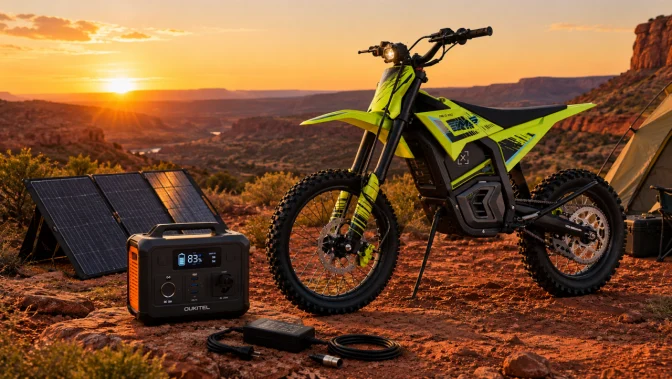
Marcus bought his EM-5 Pro in March. He'd ridden it maybe 200 miles by summer. Bootleg Canyon, a fire road past Sedona, a private track near Scottsdale. And his neighbor kept watching him load it into the truck every weekend until one day he just asked: why don't you ride it over? It's right there.
Marcus had to explain. He hates explaining it, because the answer disappoints people, and it disappointed his neighbor too.
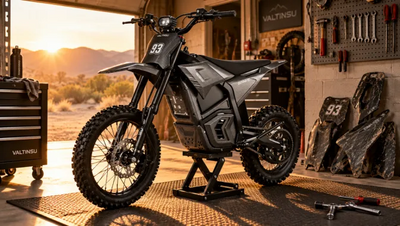
Here's the thing they don't mention when you check out. If you keep the bike on private land or a closed track or somewhere actually marked for off-road use, you basically never need a license. None. But the second the tires hit a public road, you're in a completely different situation. Valtinsu electric dirt bikes are off-highway machines. That's what they were made to be. So the license question isn't really about the bike at all. It's about where you point it.
|
Short answer: If you are asking, “do you need a license for an electric dirt bike,” the answer depends on where you ride it. On off-road land, you usually do not need a license. On public roads, many high-power electric dirt bikes require motorcycle registration, DOT-approved equipment, insurance, and a Class M license. Most Valtinsu bikes are OHVs and are not street legal by default. A quiet electric motor does not change that classification. |
How the Law Classifies Your Electric Dirt Bike
Once a vehicle has road equipment on it and can go faster than 20 mph, the NHTSA calls it a motor vehicle. That puts federal safety standards in play. The narrower classification — what your specific bike counts as — gets sorted out at the state level. And states look at how the bike was built, not what you added to it. People miss this part constantly and it costs them.
|
Classification |
License for Public Roads? |
Where It Applies |
|
Off-Highway Vehicle (OHV) |
No license on off-road land |
Most electric dirt bikes, including Valtinsu EM-5 and EM-5 Pro |
|
Street-Legal Motorcycle |
Yes — Class M license + registration |
Converted bikes with DOT equipment, road VIN, insurance |
|
Moped / Low-Speed Cycle |
Sometimes — varies by state |
Rare; lower-power models only. Does not apply to EM-5 or EM-5 Pro |
A 3000W electric dirt bike usually falls under motorcycle-style rules, not standard e-bike classifications.The EM-5 Pro does 4,800W peak and 43 mph and has no pedals at all. If you ride it on a public street like it's a bicycle, you're operating an unregistered motorcycle, whether you meant to or not. The law can tell them apart even when a person at a glance can't.
Do You Need a License? It Depends on Where You Ride

Two people can own the same bike and live under totally different rules. The bike isn't the variable. The ground is.
Off-road land — usually no license
Private property where the owner said it's fine, OHV parks, closed motocross tracks. These places rarely ask for a driver's license because they treat the bike as off-road, and the regular road-traffic rules don't really apply out there. You might need an OHV sticker or a trail permit depending on where you are. Gear rules still apply too. A Class M license, though, usually isn't something anyone brings up.
Public roads — yes, a license
Now put it on a public road. A city street, a county road, the road in front of your house. The bike can get reclassified as a motor vehicle, and then you need registration, insurance, DOT equipment, and a motorcycle license. The neighborhood thing fools almost everybody. Those streets feel private. They're not. Most of them are public roads, and the law starts counting the moment you leave the driveway.
Do kids need a license?
For off-road riding, generally no, though a lot of parks set a minimum age and want an adult around for the younger ones. The EM-5 is rated 13+, with under-16 riders supervised. The EM-5 Pro is 18+ only. One thing to be straight about: that age rating is about off-road use. It doesn't make the bike street legal, and a 13-year-old still can't take it onto a public road just because he's old enough to ride it on a trail.
Common Street-Legal Requirements by State

Every state writes its own list and they don't all line up. But strip them down and most DMVs are looking for the same basic stuff before they'll plate a converted off-road bike. Here's what shows up on most lists:
- DOT-compliant lighting — headlight with high/low beams, taillight, brake lights, and front and rear turn signals. Basic off-road lights don't qualify.
- Rearview mirrors — one minimum, two in many states.
- Audible horn — heard from 200 feet; usually absent on off-road models.
- DOT-approved street tires — knobby off-road tires won't pass inspection, so a full swap is the norm.
- Speedometer showing MPH, plus a license-plate mount and plate light.
- Road-recognized VIN — if the VIN reads “off-road use only,” the DMV may refuse registration no matter what you've installed.
- Registration, title, liability insurance, and a Class M motorcycle license or endorsement.
Before you buy parts or ride on public roads, check with your local DMV and local laws for the exact inspection and equipment rules in your area.
|
The VIN problem: Hardware is the easy part — roughly $300 to $700 for a full conversion kit. Paperwork is the wall. If the manufacturer's title or manual says “off-road use only,” several DMVs will refuse road registration outright. Call your state DMV with the exact VIN before buying a single part. |
Parts, inspection, registration, the first year of insurance. Add it up and a realistic conversion lands somewhere between $800 and $2,000. If you pay a shop to do the install instead of doing it yourself, it goes higher. A lot of riders run the numbers and end up deciding it makes more sense to just buy a motorcycle that was built for the road to begin with. Hard to argue with that math.
Can Valtinsu Dirt Bikes Be Converted?
Maybe. That's the real answer, and I know it's not satisfying.
Valtinsu doesn't make a street-legal conversion kit and doesn't support one. The bikes are off-road tools. Whether yours can get road-registered comes down to two things at once: your state's rules, and what the VIN paperwork says. The California DMV is clear on it. To register for on-highway use, the vehicle had to be manufactured for both on- and off-highway use from the start. That's set at the factory. You can't add it later by bolting on parts, no matter how complete the kit is.
Riders in Texas and Colorado and a few other states have actually pulled off legal conversions, so it does happen. It takes a VIN the DMV will accept, a full inspection, title work, insurance. Do one thing before anything else: call the DMV. Not the parts store. That call tells you whether it's even possible, and it can save you a thousand dollars you'd otherwise spend on a bike you still can't legally ride down the block.

|
VALTINSU EM-5 — Adult Electric Off-Road Motorcycle 48V geared motor | 3,840W peak | 190 N·m torque | 37 mph | IPX6 | Three ride modes | Age 13+ Built for trail riding on private land, OHV parks, and designated off-road areas — not public roads. From $1,259 USD | Free U.S. shipping | 3–7 day delivery View the EM-5 — adult off-road electric motorcycle built for trail riding → |
State-Specific Legal Differences
California, Texas, and Florida make up about 30% of Valtinsu sales between them. None of the three is easy on conversions.
California is the toughest. The CA DMV wants a bike manufactured for both on- and off-highway use before it'll register one for the road. If it was sold off-road only, you're done. The upside is that OHV access through SVRA parks and Forest Service land is great in California. That's a separate thing from the public street though, and the two don't connect.
Texas is friendlier. There's still inspection and VIN verification, and you'll need the right turn signals and certain headlight beam standards, but Texas does allow off-road-to-road conversions when the paperwork checks out. The part that usually stops people is VIN recognition. Plenty of off-road bikes just don't have a VIN the road system will take.
Florida is the harshest in the country and it isn't a close call. Under Florida Statute 320.02, running an unregistered motor vehicle on public roads is a criminal offense. A second-degree misdemeanor, not a ticket. People have actually been charged over short rides around their own block.
New York barely ever approves these. NY DMV rules for limited-use and electric motorcycles are some of the strictest anywhere, and off-road bikes fail to qualify over and over no matter what gets bolted on.
|
State |
VIN Check |
Insurance |
Conversion Likelihood |
|
California |
Yes |
Yes |
Very difficult |
|
Texas |
Varies |
Yes |
Sometimes possible |
|
Florida |
Yes |
Yes |
Possible — criminal risk if unregistered |
|
New York |
Yes |
Yes |
Rarely approved |
|
Arizona |
Varies |
Varies |
Sometimes; strong OHV access |
|
Colorado |
Yes |
Yes |
Possible; separate OHV roads exist |
|
Pennsylvania |
Yes |
Yes |
Sometimes, with inspection |
|
Illinois |
Yes |
Yes |
Full compliance required |
Public roads & neighborhood streets | Not legal by default | Full motorcycle registration, DOT equipment, insurance, Class M license, or a factory street-legal electric dirt bike approved for public-road use
Where You Can Legally Ride — Location by Location
Work out what kind of location it is before you load up. The rules don't shift by a degree from one spot to the next. They flip.
|
Location |
Status |
What You Need |
|
Public roads & neighborhood streets |
Not legal by default |
Full motorcycle registration, DOT equipment, insurance, Class M license |
|
Bike lanes & sidewalks |
No |
Dirt bikes aren't e-bikes under any state's law |
|
Designated OHV parks |
Yes |
OHV sticker or trail permit; varies by state and land manager |
|
Federal OHV trails (U.S. Forest Service) |
Yes — with registration |
USFS requires OHV registration on designated trails |
|
Private land |
Yes |
Owner's permission; safety gear still applies |
|
Crossing a road to reach a trail |
State-dependent |
Some states allow a perpendicular crossing only — no riding along the road |
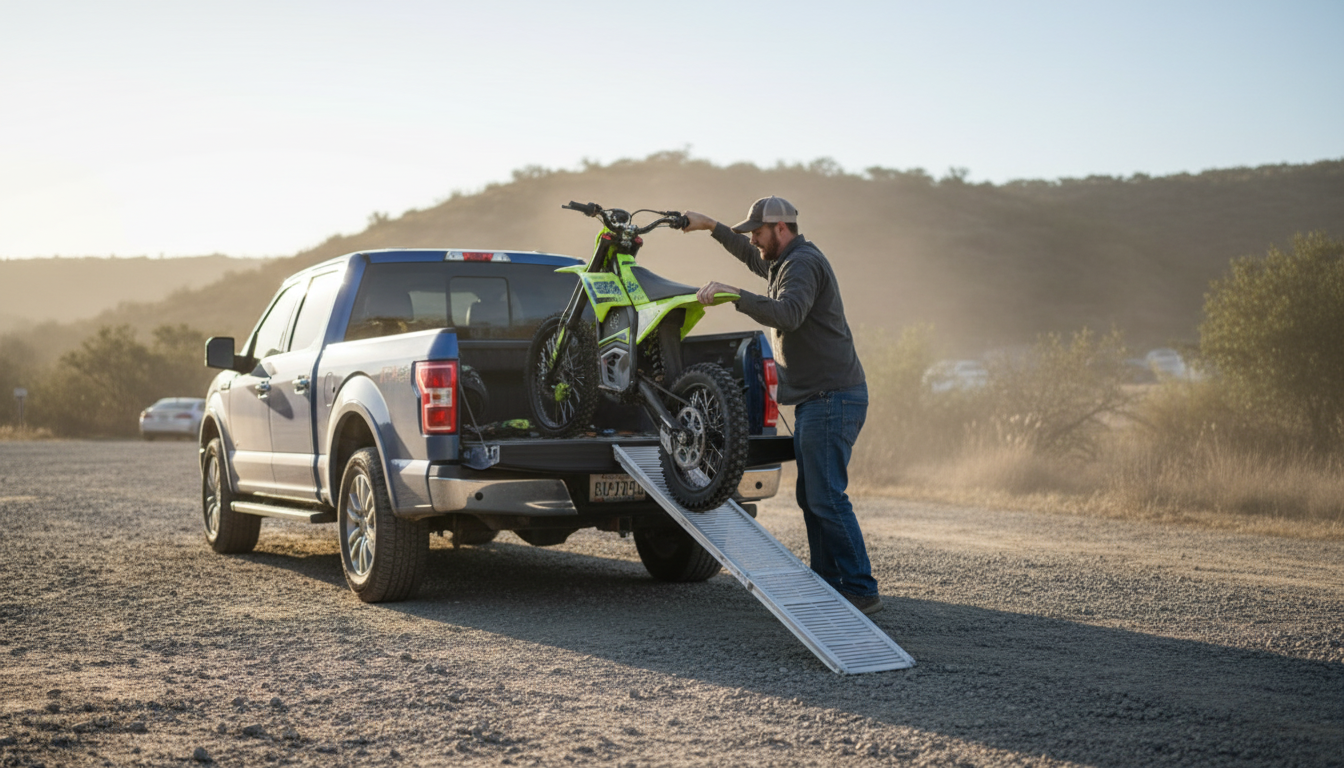
Loading it in the truck and driving to an OHV trail is fine. Riding it there on public roads is not. And that two-mile stretch from your garage to the trailhead gate counts as a public road too. It's easy to talk yourself into thinking it doesn't. It does.
The Risks of Riding Without a License or Registration

The quiet motor won't hide you. That's the part riders bet on and lose. Police stop electric dirt bikes all the time, and it's worse near schools and parks and residential streets where the bike sticks out. And the consequences are a lot more than a $50 fine.
Operating an unregistered motor vehicle generally runs $200 to $500, and it climbs if you keep getting stopped. Florida, again, treats it as a crime. Court date, license points, and they can impound the bike on the spot. Getting it back means showing up with ownership paperwork and paying the fees. If you can't, it stays in the lot.
Honestly the worse case is a crash. If you're riding unregistered on a public road and something happens, your insurer can deny the claim. All of it. Medical bills, the damage to the bike, legal costs, all on you. One bad intersection can run you more than the bike cost in the first place.
|
Insurance check first: Before any ride — even on private trails — confirm with your insurer whether your specific model is covered and under what conditions. Coverage gaps on off-road vehicles are common and almost never surface until a claim is filed. |
Valtinsu Rider Guide — Know Before You Load

The riders who get the most out of Valtinsu's full electric dirt bike lineup build legal access into the trip the same way they check the battery and the tires. It's just another thing on the list before the wheels turn.
Confirm the area before you go
Not every OHV park allows electric motorcycles, and a lot of e-bike trails won't take a high-power eMoto. Look for the signs that say OHV or motorized or eMoto permitted. If it's not clear, call the land manager. Five minutes on the phone is better than a 50-mile drive that ends at a gate you can't go through.
Transport the bike, don't ride it there
Two miles of public road between your garage and the trail is still public road. Load it, drive it, unload it. That truck trip isn't the dull part of the day. It's the part that keeps you out of trouble.
Pre-ride check, every session
Battery seated and locked. Pull the brake lever before you leave the lot, and if it feels soft, you stop and deal with it. Check the tires and the chain. Thirty seconds in the parking lot beats finding out something's wrong a mile down the trail.
Gear up, every time
The EM-5 Pro's geared motor hits 240 N·m low in the rev range. It's instant, not gradual, and that surprises people the first time. Even the slowest mode still needs a DOT helmet, gloves, boots, and riding pants. No exceptions on this one.
Which Valtinsu Fits Your Riding?
|
EM-5 — Ages 13+ — Trail Starter 48V | 3,840W peak | 190 N·m | 37 mph | IPX6. Three modes. The only Valtinsu model rated under 18. |
|
EM-5 Pro — Adults 18+ only — Performance Trail 60V | 4,800W peak | 240 N·m | 43 mph | IPX6. Black or Volt Green. Geared motor for fire roads, singletrack, and 30°+ grades. View the EM-5 Pro — performance trail motorcycle for adult riders — $1,699 → |
|
Age rule — no exceptions: EM-5 = 13+ | EM-5 Pro = 18+ adults only. Parents shopping for a rider under 18 must choose the EM-5. |
The Bottom Line
So, do you need a license for an electric dirt bike? Off-road, almost never. On a public road, almost always, and for most Valtinsu bikes that road option isn't really there anyway. They're off-highway vehicles. A quiet motor doesn't change that, no matter how much you want it to.
Marcus took the easy route. He kept it off the street and loaded the truck. Other people learn it the hard way instead, with a ticket or an impound lot or a denied insurance claim after a wreck that should've been nothing. The way to avoid all of it is one phone call to your state DMV before you buy a part or plan a ride. Ask the boring question first. It's cheaper than the alternative every single time.
If you're riding on trails anyway, on private land or in OHV parks or out on the fire roads where these bikes actually belong, then most of this licensing headache just doesn't touch you. The EM-5 or the EM-5 Pro is already the right bike for that. Ride it where it's meant to go, wear your gear, and let the truck deal with the pavement.
Conclusion
Electric dirt bikes are fun off-road machines, but most are not street legal from the factory. If you plan to ride on public roads, check your local DMV rules first.
High-power models can fall into motorcycle-style rules because of their speed and motor output. That can mean a license, registration, insurance, DOT-approved lights, turn signals, mirrors, and other road equipment.
Do not assume a quiet electric bike is automatically legal on the street. If your goal is trail riding, an off-road electric dirt bike may be the right fit. If your goal is daily road use, a factory street-legal model is usually the safer choice.
FAQs
Do you need a license to ride an electric dirt bike?
Off-road, usually not. Private land, OHV parks, closed tracks rarely ask for one. On a public road you do need one, full motorcycle registration plus a Class M license or endorsement. The location decides it, not the bike.
Can an electric dirt bike be ridden on the road?
Only if it's registered as a motorcycle in your state. The EM-5 Pro is 60V, 4,800W peak, 43 mph, no pedals. That's a motor vehicle, not an e-bike. Without a plate and insurance, keep it off public roads.
Do I need a permit for an electric dirt bike?
For the road it's registration, not a permit. For OHV parks and Forest Service trails, most states want a separate OHV sticker or trail permit, which is its own thing apart from road registration. Check with your DMV and the land manager both before you go.
Is a 3000W electric bike street legal?
Not under normal e-bike rules. Most states cap a bicycle at 750W, pedals, and 28 mph. A 3,000W machine is way past that, so it lands in motorcycle or OHV territory. Different paperwork, different license, different registration.
What happens if you get caught on an electric bike?
Usually a fine in the $200 to $500 range, and the bike can get impounded. Florida treats it as a crime under Statute 320.02. And if you crash while you're riding unregistered, your insurer can deny the claim outright, which is often the worst of it.
Do cops pull over electric bikes?
Yes, they do. No plate, riding on a sidewalk, going where motorized vehicles aren't allowed, any of it gets you stopped. The quiet motor doesn't hide the bike from traffic cops.
Can I ride my dirt bike around my neighborhood?
Not legally unless it's registered as a motorcycle and your local rules allow it. Neighborhood streets are public roads. A quiet motor and a neighbor who hasn't complained yet don't change how the bike is classified.
Do kids need a license to ride an electric dirt bike?
For off-road riding on private land, tracks, or OHV parks, generally not, though age limits and supervision rules come up a lot. The EM-5 is 13+, the EM-5 Pro 18+. Neither is street legal, so the road rules don't loosen just because the rider is a kid.
Sources
- California DMV — “Register an Off-Highway Vehicle (OHV).”
- New York DMV — “Register a Limited Use Motorcycle / Moped.”
- Florida Legislature — “Florida Statutes Chapter 320 (Statute 320.02).”
- NHTSA — “Motorcycle Safety.”
- U.S. Forest Service — “Off-Highway Vehicle (OHV) Riding.”
- Valtinsu — “EM-5 Electric Off-Road Adult Dirt Bike.”
- Valtinsu — “EM-5 Pro Electric Dirt Bike.”


Looking for something else?
Electric Dirt Bike Replacement Parts Availability: What Buyers Should Verify Before Ordering
LEARN MORE
How to Check an Electric Dirt Bike for Safety Recalls by Model and Serial Number
LEARN MORE
How to Choose an Electric Dirt Bike Repair Shop: Questions to Ask Before Service
LEARN MORE
How to Lift a Fallen Electric Dirt Bike Without Hurting Yourself or the Bike
LEARN MORELooking for something else?
Electric Dirt Bike Fall Riding on Wet Leaves: Grip, Hidden Obstacles and Braking
LEARN MORE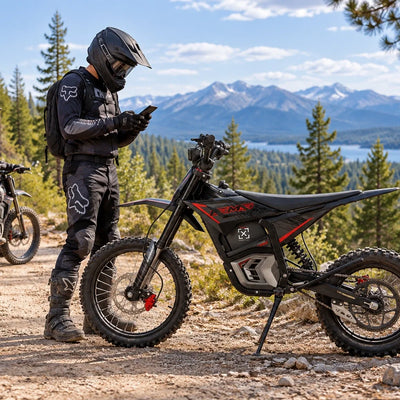
Electric Dirt Bike Trailside Power Loss: Recovery Plan When the Battery Is Dead
LEARN MORE