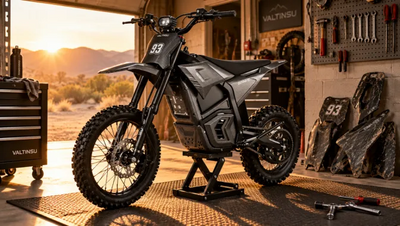
Electric Dirt Bike for Hunting & Fishing: Silent, Lightweight & Trail-Ready
An electric dirt bike for hunting & fishing earns its spot on a hunt the second the engine noise dies, providing a silent, lightweight, and trail-ready ride.
Still a real off-road machine, though. An adult electric off-road motorcycle puts down instant torque and runs at off-road speeds, so the right pick is about land rules, terrain, range, and load, not the biggest number on the sticker. Light bikes thread tight timber. Higher-torque bikes claw up wet grades with a loaded pack.
What follows is the field version. Why these bikes work, how they stack up against an e-bike and an ATV, the specs that matter, hunting and fishing setups, terrain, the legal part, and a buyer’s shortlist with key specs and honest pros and cons for each pick.
|
Quick answer. For hunting and fishing, pick the quietest bike with enough low-speed torque, fat grippy tires, hydraulic brakes, and payload for you plus gear, then confirm it is legal where you ride. Speed is the least useful spec out here. |
|
Why Electric Dirt Bikes Work for Hunting and Fishing |
Three problems wreck a field trip before it starts: noise, access, and fatigue. A quiet off-road bike solves all three at once. Hunters slip closer to a stand without an engine announcing them. Anglers hit four ponds before dark instead of one, without hauling tackle on foot the whole way.
Fastest is rarely best here. A balanced bike with real battery range and a safe way to strap down gear beats a speed machine you cannot load.
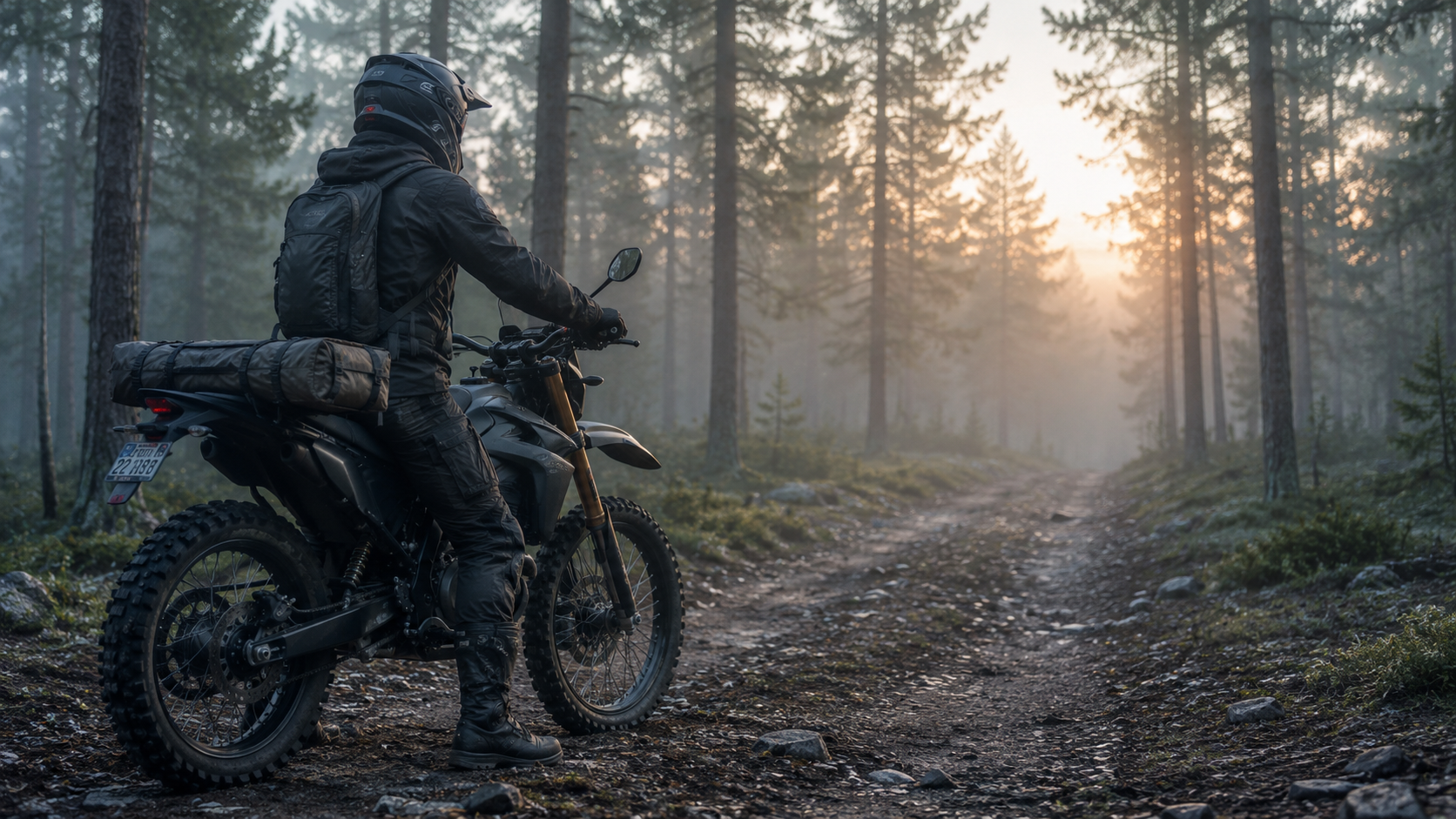
Silent Riding for Low-Impact Access
A gas dirt bike throws sound, heat, and exhaust. An electric one runs near-silent, which matters when you are easing past a bedding area or a lake at sunrise.A quiet electric dirt bike is noticeably different from a typical hunting e-bike or ATV, producing far less noise and allowing easier access to remote or sensitive areas without disturbing wildlife.

Quiet is not invisible. Tires still crunch gravel, a loose strap still rattles, a dry brake still squeaks. Cinch the pack, ease off near your spot, coast the last stretch when the trail lets you.
Less Scent and Noise Than a Gas Rig
Deer and elk read human scent, and gas exhaust rides on the wind ahead of you. An electric bike burns nothing, so the fuel smell is simply gone.
Your boots and clothes still carry scent. The real gain is time. Less ground time on the walk in means a thinner scent line between the truck and the stand.
Faster Travel to Stands, Banks, and Far Corners
A two-mile pack-in cooks your legs before legal light. Ride it instead and you save the effort for the climb, the glassing, the cast, the pack-out.
For fishing, the win is coverage. Roll from one creek bend to the next checking water, rods and tackle riding with you, not slung over a shoulder the entire morning.
Why Lightweight Handling Matters Outdoors
A lighter bike is easier to push, turn, load, and pick up when it tips, and out here it will tip. That counts on narrow trail, wet grass, loose gravel, and the lip of a soft bank.
Heavy bikes feel planted on open ground, then fight you the second you add a pack, a bow, a rifle case, and a cooler. Buy the bike you can control at a crawl, not the one that only looks tough parked. The EM-5 Pro sits in this lane: a 28.3-inch seat, 126 lb, and smooth 40 mph power that does not punish a low-speed mistake.

Electric Dirt Bike vs E-Bike vs ATV |
All three help outdoors, and they do different jobs. The split comes down to access, cargo weight, distance, and how wide your trail is.
A dirt-bike-style machine gives the most control on rough ground. A pedal e-bike adds leg backup. An ATV hauls the most but needs room and makes more noise.
|
Electric dirt bike |
Pedal e-bike |
ATV |
|
|
Best at |
Throttle control on rough, steep, loose trail |
Long mellow access roads with leg backup |
Hauling heavy loads and large game |
|
Trail width |
Narrow to medium singletrack and two-track |
Narrow; fits the most trail systems |
Wide; needs roads or open track |
|
Noise |
Near-silent |
Near-silent |
Loud |
|
Watch-out |
High-power models may be treated as motor vehicles |
Lower power; class rules cap speed |
Size and noise lock you out of tight ground |
Electric Dirt Bikes for Power and Trail Control
These are built for throttle response, low-end torque, and rough ground. Hills, ruts, loose dirt, private-land trails where motorized access is allowed, that is their home.
They are not right for every public trail. A high-powered model can get classed as a motor vehicle. Settle the access question before the bike arrives, not after.
E-Bikes for Pedal Backup and Longer Access
A pedal hunting e-bike helps when range is the worry. Battery drops, you pedal home, even if it is a slog.
Pedal-assist bikes also fit more trail systems than a high-powered dirt bike in some areas. Less power, sure, but often the smarter tool for long access roads and light gear near a stand.
ATVs for Heavy Loads and Wider Trails
An ATV is the hauler: feed, stands, a full deer, rough farm two-track, no problem.
The trade is footprint and noise. It needs space, leaves a wide track, and may be banned where a slim bike rolls right through. On tight hunting ground or narrow water access, a smaller bike wins.
When a Smaller Bike Is the Better Call
Tight trail, moderate load, quiet access over raw power, that is the smaller bike’s case. It also drops into a truck bed or a small trailer without a ramp wrestling match.
A big machine turns into a liability when you have to lift the front wheel over a blowdown, three-point-turn on a goat path, or cross a soft bank. Pick the smallest bike that safely carries you and your gear.
Key Features to Look for Before Buying |
Match the bike to how you ride, not to the photo. Torque, range, tires, suspension, payload, brakes. All of it before top speed.
Most bad buys chase one big number. A huge wattage rating means nothing on weak tires, soft brakes, a low payload, or a pack that wilts under load. Here is what each spec actually buys you in the field.
|
Feature |
What it does in the field |
What to look for |
|
Low-speed torque |
Pulls you from a dead stop, up grades, through mud, started heavy |
148–184 lb-ft on adult bikes; smooth, not jumpy |
|
Battery range |
How far out-and-back before range math kicks in |
Plan double your one-way; a spare often beats more speed |
|
Fat tires |
Grip and float on sand, mud, grass, snow, chewed gravel |
Aggressive tread sized for your worst ground |
|
Suspension |
Settles the bike, spares your back and the battery on hits |
5.9-in fork plus a rear shock you can tune for load |
|
Payload |
Carries you plus pack, weapon, tackle, water, racks |
250 lb+ rated before racks or tongue weight |
|
Hydraulic brakes |
Stops a loaded bike on hills and wet grass without fade |
Front and rear hydraulic discs, tested loaded |
|
Ride modes |
Start gentle, dial up power as load or confidence changes |
Three modes; a calm low mode for a loaded crawl |
|
Lighting |
Sees ruts and roots on pre-dawn and after-dark rides |
LED headlight and horn; carry a handheld backup |
Motor Power and Hill-Climbing Torque
Torque beats top speed on hunting and fishing trails. You want smooth pull from a stop, climbing a grade, crossing mud, starting heavy.
Power helps only if it is controllable. A jumpy throttle spins the rear on wet grass. Look for ride modes and a clean, progressive feel. Every Valtinsu ships with three modes, so a new rider starts gentle and a loaded rider keeps the launch civil.
Battery Range for Full-Day Trips
Range claims assume a light rider, flat ground, easy throttle. Real trail range drops when you climb, ride mud, pin it, or tow.
Plan every trip as an out-and-back. Ten miles to the spot means budgeting for twenty plus a buffer. A spare battery is often worth more than extra speed. If range is the deciding factor, compare battery and range across the lineup before you commit.
Fat Tires for Mud, Sand, Grass, and Gravel
Fat tires add grip and float on soft ground, which is most ground out here: sand, mud, grass, snow, chewed-up gravel.
Tread matters as much as width. A slick rolls fast on hardpack and slides on a wet trail. Buy tread for your worst day, not your easiest road.
Suspension for Ruts, Roots, and Rough Trails
Suspension keeps the bike settled when the trail turns ugly, and it spares your back, your gear, and the battery from the hard hits.
A front fork covers light trail. Add real travel front and rear once you carry a pack, tow, or ride roots and ruts. On the off-road Valtinsu models that is a 5.9-inch hydraulic fork with a rear adjustable air shock, so you can dial sag for a light rider or a loaded one without swapping parts.
Payload Capacity for Rider, Pack, and Gear
Payload is everything the bike carries: you, clothing, pack, weapon case, tackle, water, tools, racks, cargo.
Do not size it to your body weight alone. A 200-lb rider with 50 lb of gear needs at least 250 lb of rated payload before racks or tongue weight. For context, the EM-5 carries 243 lb, and the EM-5 Pro and EM23 step up to 287 lb and 265 lb. More load also means a longer stop.
Hydraulic Brakes for Loaded Riding
Hydraulic disc brakes are the right call for loaded off-road riding. More stopping force, better control, less fade than basic mechanical discs.
This shows up on hills, wet grass, and gravel. A bike that climbs well has to stop well too. Test the brakes loaded before you trust them on a hunt. Every Valtinsu runs front and rear hydraulic discs.
Hunting Setup: Gear, Cargo, and Game Hauling |
A hunting setup carries gear safely without wrecking the balance. Keep weight low, tight, and centered.
Loose gear is loud and dangerous. A rifle, bow, pack, or tool bag must never swing into the wheel, chain, rotor, or your legs.
Rear Racks and Cargo Platforms
A rear rack handles small packs, calls, layers, gloves, food, a compact tool kit, rain gear. Keep the heavy stuff close to center, because a tall load back there makes the bike skittish. Straps that stay tight after a few bumps are not optional. Racks and mounts live in parts & accessories.
Game Trailers for Deer and Heavy Loads
A game trailer moves a deer, decoys, bait, or camp gear, and keeps the weight off your back and off the seat.
A trailer changes how the bike turns and stops. Slow down, leave more room to brake, skip sharp turns on a slope. Check the hitch every single trip.
Bow, Rifle, and Tool Mounts
A bow or rifle mount holds the weapon firmly without blocking the bars, and keeps it clear of the front wheel and brake lines.
Hard case or padded mount when the trail is rough. A tire plug kit, zip ties, and a small pump have saved more trips than horsepower ever has.
Headlights for Early and Late Rides
Hunters ride in the dark on both ends of the day. A bright headlight catches the ruts, rocks, roots, and low branches before they catch you.
A rear light helps near camp lanes and shared ground. Carry a small backup in the pack. The off-road Valtinsu models ship with an LED headlight and horn; spare lighting is cheap insurance.
Spare Battery and Field Charging
A spare pack pays off on long scouting days, in cold, and under heavy loads, because cold air and steep climbs eat range faster than you expect.
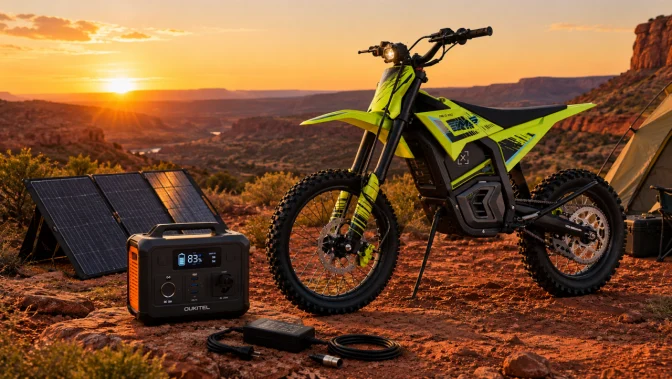
Field charging works off a power station, a truck inverter, or a camp outlet if your charger allows it. Keep packs dry and protected, and never let metal tools touch the terminals. Our battery-care guide covers charge and storage habits that decide whether a pack lasts three years or eight.

Fishing Setup: Rods, Tackle, and Shoreline Access |
Fishing is the use case most hunting-bike guides skip. An electric dirt bike is just as handy for anglers chasing ponds, creeks, spillways, and quiet banks.
The challenge is gear shape. Rods are long, hard cases are awkward, coolers add weight fast. A clean setup keeps it all secure without making the bike a handful.

Rod Holder Placement
Rod holders keep rods clear of the wheels, chain, and rider. Side or rear works, as long as the tips do not stab brush or block your turn. Break long rods down on tight trail, sleeve the guides, and remember a short ride can still snap a rod that bounces off the frame.
Tackle Box and Dry Bag Storage
A hard box should sit flat and stay latched on rough ground; a soft bag is usually easier to strap. Put your phone, wallet, license, and small tools in a dry bag, because mud and spray reach gear even when the trail looks dry. Hooks and knives go in closed storage.
Cooler or Small Cargo
A small cooler carries drinks, bait, or your catch, but the weight climbs quick, so keep it low and centered. Skip the big cooler stacked high on the rack, it makes the bike top-heavy in turns. Need more space than that, run a small trailer instead of building a tower.
Riding to Ponds, Creeks, and Riverbanks
These bikes shine on farm lanes, levee roads, gravel paths, and dry shoreline trail, the in-between spots too far to walk and too narrow to drive. Stay off soft banks that can collapse or tear up habitat. Park back from the water and walk the last bit; it protects the bike and the shoreline both.
Protecting Gear From Mud, Rain, and Spray
Mud packs into brakes, tires, and racks; rain soaks bags and loosens straps. Run waterproof bags for the small stuff and rinse the bike after muddy rides. One easy thing to miss: check that no fishing line wrapped the hub, rotor, chain, or motor. Line can slice a seal or jam something that matters.
Best Terrain for a Trail-Ready Electric Dirt Bike |
Match the bike to where you ride most. A flat farm lane and a steep mountain trail ask for different setups.
Think about your worst common condition, not your best. Land that turns to soup after rain means buying for mud. A sandy fishing route means buying for float and grip.
Private Land and Farm Roads
Private ground gives you control over access, routes, and storage, and farm roads, logging lanes, and fence lines suit most electric bikes well. These routes lean on range, comfort, and cargo more than raw power. A quiet bike gets you from the truck to a stand or blind without firing up an ATV. For open ground and graded road, the bigger-wheeled EM23 and its 19-inch front feel right at home.
Steep Hills and Mountain Routes
Hills need torque, strong brakes, and balance. A high-torque electric dirt bike pulls a long climb without complaint. The downhill counts too, since heavy cargo shoves you faster than you planned, so brake early and skip steep sidehills with a trailer until you have tested the rig. For loaded climbs the EM-5 Pro’s 5,600W geared motor and 45-degree climb rating give real headroom.

Mud, Marsh, and Wet Grass
Mud and wet grass break traction on any bike. Fat tires, the right tread, and a calm throttle hand do the work. Do not spin the rear just because the motor has it to give, because spinning digs ruts, drains the pack, and buries the wheel. If the ground is too soft, walk it.
Sand, Gravel, and Riverbank Paths
Sand wants float and steady momentum; gravel wants stable tires and early braking. Riverbank trail tends to be narrow, uneven, and loose at the edge, so ride slow near water and avoid sudden turns. A lighter bike is far easier to save when the ground shifts under you.

Snow, Slush, and Late Season
Snow and slush call for wide tires, lower speed, and careful range math, since cold cuts battery performance. Late-season hunters also pile on clothing and heavier packs, which adds weight and drag. Test your winter range close to home before you trust it miles out.
Legal Rules and Trail Access to Check First |
Rules decide whether a bike is an asset or a paperweight. Some areas allow pedal e-bikes but not throttle bikes. Others treat a high-powered electric dirt bike exactly like a motor vehicle.
Check before you buy. Read state wildlife rules, land-manager maps, trailhead signs, and local OHV law.
|
Off-road use only. Valtinsu electric dirt bikes are built for private property, closed courses, and designated off-road areas. They are not street legal. Confirm your local rules before every ride, and match the model to the rider’s age: EM-5 is 13+, EM23 is 16+, and the EM-5 Pro and Ultra are 18+, adults only. |
Public Land vs Private Land
Private land is simpler when the owner allows motorized or electric access, though state hunting, fishing, and vehicle rules still apply. Public land is the maze: parks, national forests, BLM ground, state land, wildlife areas, and local trails can each set their own rules, and a bike that is fine on one road may be banned on the trail beside it.
Motorized vs Non-Motorized Trails
A non-motorized trail may bar an electric dirt bike even when it is quiet, and some managers also limit certain e-bike classes. Motorized trails and OHV routes are the better bet. Read the official map, not a forum post, and let the trailhead sign make the final call.
Class 1, 2, and 3 E-Bike Limits
Class 1 is pedal-assist to 20 mph. Class 2 adds a throttle, still capped at 20. Class 3 is pedal-assist to 28 in many states. A high-powered electric dirt bike often falls outside all three, and that changes trail access, road use, insurance, and registration. The federal land agencies spell out how e-bikes are defined and where they are allowed (NPS, BLM, Forest Service).
Off-Road and OHV Rules
On public land some electric dirt bikes must follow OHV rules: route limits, permits, age rules, helmets, registration. Electric does not automatically mean bicycle access. No pedals, high wattage, or high speed, and many areas treat the bike as an off-road motorcycle. The federal definitions in 36 CFR 1.4 are the baseline; ask the land manager when it is unclear.
Why Some Trails Ban E-Bikes
Trails ban e-bikes for safety, crowding, erosion, wildlife, user conflict, or wilderness rules, and some were simply built for walking, horses, or pedal bikes. Quiet does not equal allowed. PeopleForBikes tracks how access rules differ by state. Respecting them protects riders, hunters, anglers, and the next season of access.
Key Specs of Each Valtinsu Pick |
Three bikes cover most hunting and fishing jobs. Here are the field-relevant specs for each, plus the honest trade-offs. All figures verified on the live spec sheet, June 2026. Off-road use only.
EM-5 — the light, quiet starter ($1,259, 13+)
The pick for tight timber, fishing access, and anyone who loads solo. Low seat, light frame, smooth power that forgives a slow-speed mistake.
|
EM-5 spec |
Spec |
|
Motor |
48V geared mid-drive, 3,840W peak (1,200W rated) |
|
Torque |
148 lb-ft (200 N·m) |
|
Top speed |
40 mph — three modes: 22 / 32 / 40 |
|
Battery |
48V 23.4Ah lithium-ion |
|
Range |
~50 miles (varies with load and terrain) |
|
Brakes |
Front and rear hydraulic disc |
|
Wheels |
Front 14" / rear 12" |
|
Suspension |
5.9" hydraulic fork; rear adjustable air |
|
Seat / weight |
28.3" seat; 126 lb |
|
Max load |
243 lb |
|
Water / age |
IPX6; 13+ |
|
Pros |
Cons |
|
|
EM-5 Pro — the climber for hills and loaded grades ($1,699, 18+)
The pick when the route goes up. Most torque on tap of the trail models, the deepest battery, a 45-degree climb rating. Adults only.
|
EM-5 Pro spec |
Spec |
|
Motor |
60V geared, 5,600W peak (2,500W rated) |
|
Torque |
177 lb-ft (240 N·m) |
|
Top speed |
52 mph — three modes: 26 / 40 / 52 |
|
Battery |
60V 27Ah lithium-ion (~1,620Wh) |
|
Range |
~59 miles |
|
Climb angle |
45° |
|
Brakes |
Front and rear hydraulic disc |
|
Wheels |
Front 17" / rear 14" |
|
Suspension |
5.9" hydraulic fork; rear 2.0" adjustable air |
|
Max load |
287 lb |
|
Colors / water / age |
Volt Green or black; IPX6; 18+ |
|
Pros |
Cons |
|
|
EM23 — the big-wheel cruiser for open ground ($1,999, 16+)
The pick for farm roads and open terrain. Biggest wheels in the range, stable cruiser geometry, highest torque figure. Built for road-and-light-trail, not river crossings.
|
EM23 spec |
Spec |
|
Motor |
60V geared, 4,000W peak (2,500W rated) |
|
Torque |
184 lb-ft (250 N·m) — highest in lineup |
|
Top speed |
43.5 mph — three modes: 16 / 28 / 43.5 |
|
Battery |
60V 27Ah lithium-ion |
|
Acceleration |
4 seconds |
|
Brakes |
Front and rear hydraulic disc |
|
Wheels |
Front 19" / rear 17" (cruiser geometry) |
|
Suspension |
5.9" hydraulic fork; rear coil |
|
Seat |
31.9" |
|
Max load |
265 lb |
|
Water / age |
IPX4 (light splash, not full off-road); 16+ |
|
Pros |
Cons |
|
|
|
On the EM-5 Ultra. The 72V EM-5 Ultra (Samsung cells, ~75-mile range) is now live and rated 18+. We kept it out of the picks above while its listing specs settle, but for maximum range on long backcountry loops, check it against the lineup. |
How to Choose the Right Model for Your Use Case |
Start with the main job, then build the bike around it. A whitetail hunter, a mountain hunter, and a pond angler do not need the same machine.

Write down your usual distance, load weight, terrain, and access rules. Match the bike to that before you ever look at price. The shortlist below maps common field jobs to the kind of bike that fits, with the Valtinsu pick where it lands honestly.
|
Use case |
What to prioritize |
Where a Valtinsu fits |
|
Whitetail / farm |
Quiet, stable, easy before light; rack + light; moderate cargo |
EM-5 — calm 40 mph, low seat, easy to load |
|
Hill / mountain |
Torque, strong brakes, battery for loaded climbs |
EM-5 Pro — 5,600W, 52 mph, 45° climb, ~59 mi |
|
Fishing access |
Rod + dry storage, smooth low-speed handling, soft-ground tires |
EM-5 — light, controllable, simple to rig |
|
Open ground / cruiser |
Big wheels, stable geometry, all-day comfort |
EM23 — 19/17-in wheels, highest torque feel |
|
Lightweight / solo load |
Low weight, plant-a-foot seat height, easy push |
EM-5 — 126 lb, 28.3-in seat |
|
Budget-first |
Safe brakes, real tires, honest payload over flashy specs |
EM-5 — $1,259, full hydraulic discs |
Whitetail and Farm
Quiet, stable, easy to ride in the dark. A rack, a light, and moderate cargo space cover most of it. Routes are usually farm lanes and logging roads, so you need low-speed control and range more than speed.
Hill and Mountain
Torque, brakes, and battery, in that order. The bike should climb without cooking the pack, and a lighter frame helps on switchbacks. Carrying meat out means slow exits and shorter range, so plan for it.
Fishing
Rod storage, dry storage, simple cargo, and a smooth ride so tackle stays put and rods survive. You rarely need the biggest motor for ponds and banks; a stable rack and calm handling matter more.
Open Ground and Lightweight
Open terrain rewards bigger wheels and stable geometry. Tight timber and solo loading reward low weight and a seat height that lets you plant a foot with gear on. Confidence at a crawl beats a big top-end number every time.
Common Buying Mistakes to Avoid |
Most field-bike regret traces back to a few errors. Catch them before you spend.
- Buying top speed over torque. Most field riding is slow. Climbing and starting heavy need torque, not a high number you never use.
- Ignoring payload and tongue weight. Boots, pack, water, weapon, tackle, cooler, racks, it adds up past your body weight fast.
- Forgetting range drops under load. Weight, hills, cold, and heavy throttle all cut it. Plan the return heavier than the ride in.
- Wrong tires for the ground. Narrow or slick tires fight mud, sand, and wet grass. Match tread to your land.
- Skipping local access rules. A perfect bike is useless where it is banned. Read the map and the signs first.
- Carrying gear in a bad spot. Loads that block steering or hit the tire cause crashes. Keep it low, tight, and tested at low speed.
Pre-Ride Checklist for Hunting and Fishing Trips |
A two-minute check beats a long push-out. Run it before you leave the truck, and run it harder when you ride alone, because small problems feel big miles from help.
Battery and Backup Power
Charge the main pack full, and the spare too if you carry one. Confirm it locks in and the display reads right. Pack the charger if a truck, cabin, or power station is in reach.
Trail and Land Access
Recheck rules each trip, since access shifts with hunting seasons, wet weather, fire risk, and maintenance. Save offline maps where signal is thin, know where the motorized route ends, and park before any closed area.
Secure the Gear
Strap packs, rods, bows, rifle cases, coolers, and tackle, then shake each by hand. Nothing touches the tire, chain, rotor, or controls. Keep sharp tools and hooks closed, and recheck straps after the first mile.
Brakes, Tires, and Lights
Test both brakes before you roll. Check tire pressure, damage, axle tightness, and loose bolts. Run the headlight and rear light if dark is possible, and carry a handheld backup.
Plan the Loaded Return
The ride out is the hard one, with meat, fish, wet clothes, or extra gear aboard. Pick a route that stays safe heavy, skip steep sidehills and tight turns loaded, and leave enough battery for a slow ride home.
How We Picked |
We weigh field use over spec-sheet bragging. Three things decide it.
Field-First Criteria
Quiet running, low-speed torque, fat tires, hydraulic brakes, and honest payload, the traits that actually matter when you are easing toward a stand or a bank with gear strapped on.
Verified Specs, Not Marketing
Every figure here is checked against the live Valtinsu spec sheet as of June 2026, and competitor numbers are spot-checked against current listings. Where a number is not published, we leave it out rather than guess.
Access and Safety Reality
We anchor the legal section to federal land-use sources because access, not horsepower, is what most often decides whether one of these bikes works for your hunt or your water.
The Short Version Before You Buy |
A hunting and fishing bike works when it fits the land, the load, and the route. The fastest bike is almost never the right one. A quiet motor, steady low-speed control, real brakes, the right tires, and safe cargo space carry the day in the field.
For hunters, that means silent access, gear hauling, and an easier walk into the stand. For anglers, it means pond roads, creek trails, and shoreline routes opened up with rods, tackle, and a small cooler aboard. Confirm your trail rules, your e-bike class limits, and your public-land access first, so the bike fits both your trip and the law. Then compare the lineup by range and payload and match a model to how you ride.
FAQs |
What is the best electric dirt bike for hunting?
The one that matches your land, load, and trail rules. For most hunters that means quiet running, strong low-speed torque, fat tires, good brakes, and payload for rider plus gear.
A high-power bike helps on hills and rough trail but may be barred on public routes. A pedal-assist e-bike can fit better where access is tight. A throttle-style electric dirt bike suits private land, OHV routes, and wide farm trail where motorized access is allowed.
- List your distance, gear weight, and terrain first
- Prioritize torque and payload over top speed
- Confirm access before you buy
Are electric bikes worth it for hunting?
For many hunters, yes. They save energy, cut walking time, and add quiet access, and they shine when a stand is too far to walk every trip but too tight or sensitive for an ATV.
They help older hunters, solo hunters, and anyone packing heavy. The value tracks your access and terrain. If your area bans e-bikes or buries tires in deep mud, the gain shrinks; on private lanes and approved routes, it is a strong tool.
- Best for far stands and heavy packs
- Test a loaded bike before buying if you can
What states allow e-bikes for hunting?
Many allow them in some situations, but it depends on the land, trail, bike class, and agency. A state can allow an e-bike on one road and ban it on a non-motorized trail nearby.
Check state wildlife rules, park rules, federal land maps, and trailhead signs. Private land is easier with permission, though hunting law still applies, and public rules differ by class and by high-powered dirt-bike-style models.
- Call the land manager before the season
- Ask about your exact bike class and route
Can you use a dirt bike for hunting?
Yes, where motorized access is allowed. The bike is not the issue; where, when, and how you use it is. An electric dirt bike for hunting is quieter than gas, but still counts as a motor vehicle in most places, so the same access rules apply
It speeds you to a trailhead, stand, camp, or retrieval point and carries gear with racks, bags, or a trailer. Public land often limits dirt bikes to marked motorized or OHV routes, and some areas close routes in season. Electric ones are quieter than gas but may still count as motor vehicles.
- Confirm the route on an official map first
What is the best e-bike for hunting hills?
One with strong torque, reliable brakes, and a battery that climbs under load. A higher-torque electric dirt bike or a mid-drive hunting e-bike both work on steep ground.
Hub motors handle mild hills with enough power and good tires, but steep access needs traction, balance, and braking for the way down too. Towing or carrying meat changes hill performance fast. Among the Valtinsu range, the EM-5 Pro is the climber, with 5,600W and a 45-degree rating.
- Judge a bike on loaded climbing, not flat-ground range
How fast is 3000W in mph?
It depends on voltage, controller, rider weight, tire size, gearing, terrain, and software limits, and many 3000W setups run well past legal e-bike class speeds in the US.
For hunting and fishing, top speed is the wrong yardstick. You spend most of the day slow on dirt, grass, gravel, and mud. A 3000W bike pulls hard but can also be too much for some trails or class rules.
- Check class limits and trail rules before buying a 3000W model
Is a 3000W e-bike street legal?
Usually not, as a normal e-bike. Most class systems are built around lower power and assisted-speed caps, while a 3000W throttle bike often gets treated like a moped, motorcycle, or off-road vehicle.
Street legality turns on state and local rules, equipment, registration, insurance, lights, mirrors, and speed limits. Many high-powered bikes, Valtinsu included, are sold for off-road and private-land use only. Do not rely on a product listing or a forum.
- Ask your DMV about the exact model before any public-road use
Will an e-bike drag a deer?
It can help move one, but dragging a deer straight off the back is rarely smart. A game trailer is the better tool because it keeps the load controlled and eases the strain on the bike.
A deer adds weight, drag, and balance trouble, and it snags on brush, rocks, and ruts. Too much pull drains the pack, heats parts, and cuts braking. Some bikes are rated to tow, others are not.
- Use a rated game trailer, keep speed low
- Test the setup before relying on it after a real hunt
Sources |
- National Park Service, Bicycling and E-bikes in National Parks (2026)
- Bureau of Land Management, E-bikes on BLM-Managed Public Lands (2026)
- U.S. Forest Service, E-bikes on National Forests (2026)
- Cornell Law School, Legal Information Institute, 36 CFR 1.4 — Definitions (2026)
- PeopleForBikes, Electric Bike Policies and Laws (2026)


Looking for something else?
Electric Dirt Bike Replacement Parts Availability: What Buyers Should Verify Before Ordering
LEARN MORE
How to Check an Electric Dirt Bike for Safety Recalls by Model and Serial Number
LEARN MORE
How to Choose an Electric Dirt Bike Repair Shop: Questions to Ask Before Service
LEARN MORE
How to Lift a Fallen Electric Dirt Bike Without Hurting Yourself or the Bike
LEARN MORELooking for something else?
Electric Dirt Bike Fall Riding on Wet Leaves: Grip, Hidden Obstacles and Braking
LEARN MORE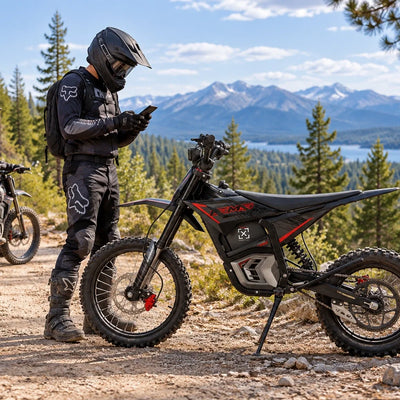
Electric Dirt Bike Trailside Power Loss: Recovery Plan When the Battery Is Dead
LEARN MORE