

How to Choose an Electric Dirt Bike Repair Shop: Questions to Ask Before Service
Choose an electric dirt bike repair shop by matching the shop’s real capability to the actual job. Ask about experience with the model and component, access to manuals and parts, battery isolation and storage, diagnostic method, written estimates, authorization limits and repair warranty. A general bicycle shop may be excellent for tires but decline high-energy electrical work; a motorcycle shop may handle chassis service but lack the product-specific electrical information.
Bring the current Valtinsu user manual and begin support contact through the Valtinsu homepage when warranty authorization or model-specific parts may be involved. Confirm any replacement through Valtinsu accessories rather than asking a shop to infer compatibility from appearance.
Define the service scope before calling
Write the symptom, when it occurs, recent changes and safety effect. Separate the requested task from your suspected cause. “Rear brake drags after warming; wheel turns freely when cold” is a useful scope. “Replace the caliper” commits to a part before diagnosis. Include model, serial range privately, brake/tire/battery configuration and relevant error codes.
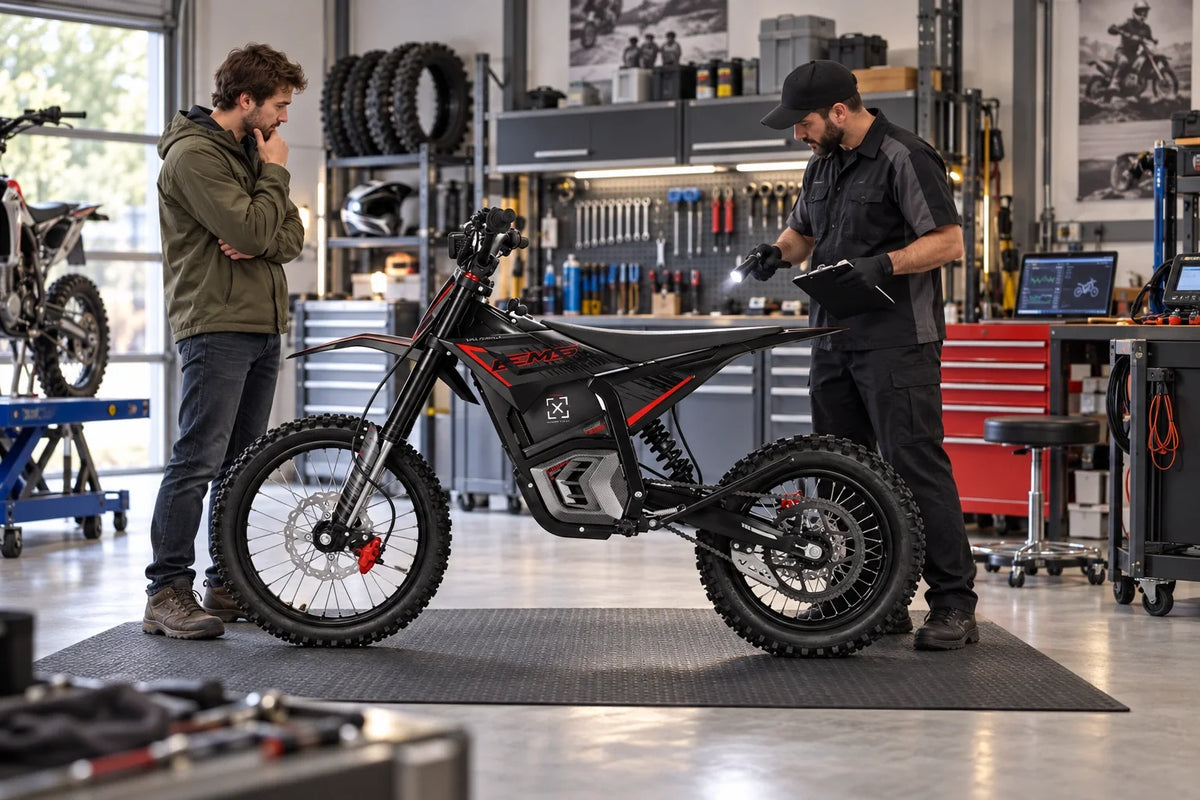
 Figure 1. Official Valtinsu EM5 Pro product image accompanying define the service scope before calling. Confirm component locations and limits against the exact model page and current manual.
Match the shop to the work category
A shop does not need to perform every category. A trustworthy answer can be a clearly defined limitation and referral.
 Figure 2. Official Valtinsu EM-5 product image accompanying match the shop to the work category. Confirm component locations and limits against the exact model page and current manual.
Ask about model and component experience
● Have you serviced this model or the fitted brake, suspension and electrical system?
● Can you access the current manual, diagrams and service bulletins?
● How will you confirm part numbers and production revisions?
● Which procedures require manufacturer authorization or software?
● What work do you decline or refer elsewhere?
Certification can indicate training, but the FTC notes that certification alone is not a guarantee. Specific experience, process and documentation matter.
 Figure 3. Official Valtinsu EM5 Ultra product image accompanying ask about model and component experience. Confirm component locations and limits against the exact model page and current manual.
Inspect battery safety before leaving the bike
Ask how the shop identifies, isolates, stores and monitors lithium-ion batteries, and what it does with a damaged or overheating pack. The answer should not involve opening an enclosure without authorization, charging with a universal charger or placing a suspect pack beside ordinary inventory. Confirm whether the shop can accept the battery at all and how transport must occur.
 Figure 4. Official Valtinsu EM5 Ultra product image accompanying inspect battery safety before leaving the bike. Confirm component locations and limits against the exact model page and current manual.
Understand diagnostic fees
Diagnosis is work even when it does not lead to repair. Ask the hourly or flat diagnostic charge, what tests are included, whether the fee applies to repair, and what output you receive. Set a written authorization limit: the shop must contact you before exceeding an amount or moving from non-invasive checks to disassembly.
Get a written estimate
The FTC recommends a written estimate identifying the condition, parts and anticipated labor. Local law may add requirements. Do not authorize blank work orders or verbal “whatever it takes” limits.
Confirm parts, firmware and removed-part handling
Ask who supplies parts, how compatibility is documented and whether electrical items need pairing or firmware. If you provide a part, clarify responsibility for fit, labor and warranty. Request return of replaced parts where permitted, except hazardous or warranty-return components that must follow documented handling.
Evaluate communication with one test question
Ask the shop to explain the first diagnostic branch and what evidence would move to the next. A strong answer distinguishes observation from conclusion. It does not promise a controller, battery or motor before basic connections, supply, sensor and load conditions are checked.
Review the completed repair order
● Confirm the original concern and diagnosis.
● Check every part number, labor line and approved additional charge.
● Ask for measurements, codes and test results where relevant.
● Obtain the repair warranty and limitations.
● Confirm software or configuration changes.
● Perform a static inspection and conservative verification before normal riding.
 Figure 5. Official Valtinsu EM5 Pro product image accompanying review the completed repair order. Confirm component locations and limits against the exact model page and current manual.
Use a second opinion for high-cost or uncertain work
A second opinion is reasonable when diagnosis is not supported by tests, the repair is expensive, battery replacement is proposed from a single symptom, or the shop cannot explain compatibility. Share the same evidence package with both shops so the comparison is fair.
Red flags
● Universal charger proposed for diagnosis.
● High-energy electrical work without isolation or battery policy.
● No written estimate or authorization limit.
● Part replacement without basic evidence.
● Refusal to identify installed parts or provide a completed repair order.
● Pressure to bypass a safety sensor or ride-test an unsafe condition.
Start with a low-risk evaluation when possible
When the bike does not have an urgent safety fault, a routine inspection or clearly scoped wear service can reveal how the shop documents intake, protects components and communicates findings. Do not manufacture a test problem. Review whether the technician records existing damage, verifies model identity, covers or separates friction surfaces, and returns the bike with a clear repair order.
Score the process, not the workshop appearance
A clean shop is helpful, but process evidence matters more: correct support equipment, calibrated tools where required, protected battery storage, labeled parts, controlled fluids, access to technical information and a clear approval path. Ask how mistakes or comeback repairs are handled. A confident shop should be able to describe the limits of its work without making every job sound simple.
Plan transport and intake
Confirm whether the battery should remain installed, its allowed state for transport, and how the bike must be secured. Tell the shop about any heat, impact or intermittent power event before arrival. Do not arrive with a potentially damaged battery unannounced. Record bike condition, mileage or hours, accessories and keys at handoff, and obtain an intake receipt.
Define the Diagnostic Scope Before Drop-Off
A repair authorization should state what the shop may inspect, test and disassemble before additional approval is required. Describe the symptom and safety concern without prescribing the failed part. Ask the shop to confirm whether its initial fee covers visual inspection, electronic diagnosis, road testing, battery evaluation and a written estimate.
Verify battery and high-voltage handling
Ask where lithium-ion batteries are stored, how damaged or suspect packs are isolated and whether the shop works on the bike's voltage and connector system. A shop that accepts mechanical work may still decline sealed battery, BMS or charger diagnosis. Clarify that boundary before transporting a battery with heat, swelling, odor or impact damage.
Set authorization and evidence rules
Require approval before parts substitution, firmware changes, battery opening or work beyond the estimate. Ask for removed parts, test results and photos where practical. The final invoice should identify the cause found, part number installed and verification performed. A vague line such as "electrical repair" provides little value for future service or warranty records.
Bring the Repair Shop Exact Model Information
A repair shop can give a better answer when it knows the bike's voltage platform, brake type, wheel format and symptom history before the appointment. Use the Valtinsu electric dirt bike collection to identify the model, then send the shop the relevant page, manual and unedited photos. Ask whether it can diagnose that system rather than whether it repairs e-bikes in general.
For the Valtinsu EM-5 Pro, the product page identifies a 60V/27Ah adult off-road platform with hydraulic disc brakes. That information helps the shop assess battery-handling capability, tools and likely parts access before accepting the job. Require a written diagnostic boundary and estimate, and do not authorize battery opening, firmware changes or substitute electrical parts without clear approval.
Use Valtinsu's electric dirt bike service and ownership resources as the broad ownership reference, then confirm every procedure, part and limit against the exact model page and current manual.
Quick Decision Table
|
Shop criterion |
What good looks like |
Red flag |
|
Model capability |
Names the systems and limits it can service |
Promises to fix any e-bike without asking the model. |
|
Battery safety |
Has isolation, storage and damaged-pack procedures |
No clear process for heat, swelling or impact damage. |
|
Authorization |
Written scope, estimate and approval threshold |
Open-ended replacement permission. |
|
Verification |
Documents measurements and post-repair checks |
A test ride is the only stated proof. |
FAQs
Does a shop need a specific electric dirt bike certification?
Requirements vary. Verify applicable licenses, relevant training, model/component experience and a safe process rather than relying on one badge.
Use this quick classification:
● Capability: experience with the bike's voltage class, brakes, suspension and diagnostic interfaces.
● Safety process: battery isolation, damaged-pack handling, storage and emergency procedure.
● Documentation: written scope, estimate, authorization limits, parts policy and post-repair test method.
Can a mobile mechanic service the bike?
For limited mechanical work, possibly. Battery, hydraulic, alignment or complex electrical work may require a controlled facility and equipment.
Should I pay a diagnostic fee?
It can be reasonable when scope and output are clear. Get the amount and authorization limit in writing.
Can I bring my own parts?
Ask first. The shop may limit labor warranty or refuse unverified safety-critical parts.
Follow this check sequence:
1. Describe the fault, trigger and current rideability before transporting the bike.
2. Ask for a diagnostic scope and estimate that separates inspection from parts replacement.
3. Review the completed work order, measurements, replaced parts and verification result before pickup.
What if the bike is under warranty?
Read the written warranty and obtain required authorization before repair. Coverage and reimbursement rules vary.
When should I get a second opinion?
When the diagnosis is unsupported, cost is high, scope expands unexpectedly or a major electrical assembly is proposed without foundational tests.
Should a repair shop test ride my electric dirt bike?
A test ride may be appropriate after some repairs, but the shop should explain who rides, where, under what conditions and how pre-existing damage is documented. Brake, steering or intermittent power faults may require static checks and a controlled low-speed test before any normal-speed verification. Put authorization in writing and remove personal accessories or data when practical. If the shop cannot describe its battery-safety process, insurance, diagnostic limits or post-repair checks, do not treat a road or trail ride as a substitute for a documented repair procedure.


Looking for something else?
Electric Dirt Bike Loses Power Under Load: Causes and How to Fix It
LEARN MORE
Electric Dirt Bike Bolt Torque Checklist: What to Check and Where the Numbers Come From
LEARN MORE
How to Bleed Electric Dirt Bike Brakes Safely
LEARN MORE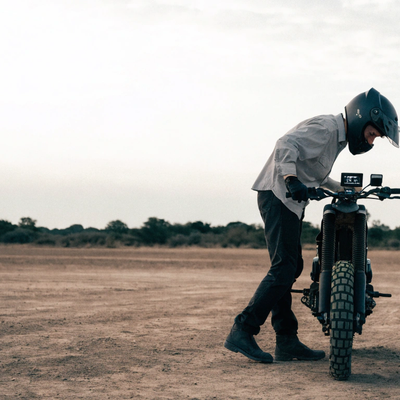
Electric Dirt Bike Throttle Not Working: What to Check First
LEARN MORELooking for something else?
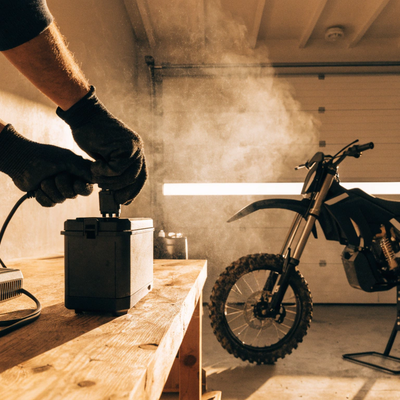
Electric Bike Battery Not Charging? Work Through This Before You Buy a New One
LEARN MORE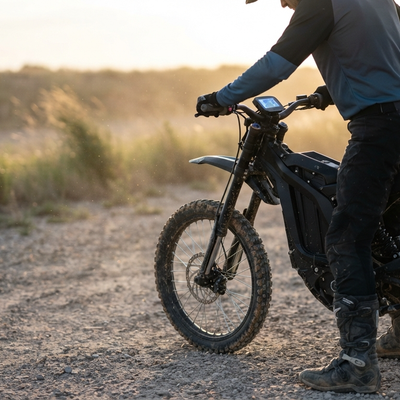
Electric Dirt Bike Error Codes: What They Mean and What to Check First
LEARN MORE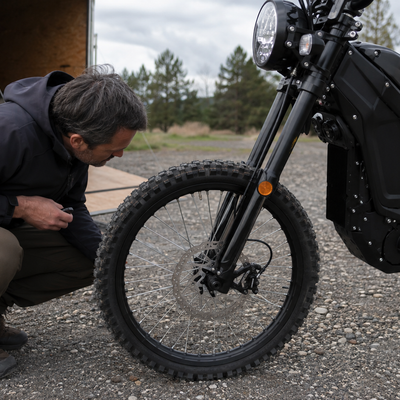
Electric Dirt Bike Brake Rotor Rubbing: Diagnose the Cause Before Adjusting
LEARN MOREYou may also like
VALTINSU EM-5 Off-Road Electric Dirt Bike
VALTINSU EM-5 Pro Off-Road Black Electric Dirt Bike
VALTINSU EM-5 Pro Green Electric Dirt Bike
VALTINSU EM-5 Ultra Electric Dirt Bike
VALTINSU EM-5 & EM-5 Pro Combo
Further reading
Electric Dirt Bike Trailside Power Loss: Recovery Plan When the Battery Is Dead
Electric Dirt Bike Fall Riding on Wet Leaves: Grip, Hidden Obstacles and Braking
How to Lift a Fallen Electric Dirt Bike Without Hurting Yourself or the Bike