How to Maintain an Electric Dirt Bike: Cleaning, Chain, and Battery Care
Most of how to maintain an electric dirt bike comes down to keeping it clean. Protect the battery. Check the chain, and look for wear after rough rides. That is most of what maintaining an electric dirt bike comes down to. No oil changes, no spark plugs, no air filters. But an adult electric off-road motorcycle still takes mud, dust, water, jumps, and hard stops, and all of that wears parts down if you ignore it.
The payoff is real. Stronger range, brakes you trust, a longer lifespan. The bike that hides cracks under dried mud is the one that surprises you on the trail. A clean one shows you the problem first.
Why an Electric Dirt Bike Still Needs Regular Maintenance
Fewer moving parts are not maintenance-free. Dirt, water, heat, and vibration still go after the frame, chain, brake pads, tire sidewalls, suspension, and wiring. A dry chain does not announce itself. A loose bolt does not either. They just turn into a worse ride, then a bill.
A clean bike is the whole game. Wipe the mud off the frame, wheels, chain, and motor area and the leaks, cracks, worn parts, and chafed wires show up while they are still cheap to fix. Skip it and the first sign of trouble is the trail.
|
Quick reframe. On an electric dirt bike the battery is your engine. Give charging, heat, and storage the respect a gas rider gives oil changes, and most headaches never start.
|
Electric Dirt Bike maintenance Pros and Cons
First, the honest trade. Electric is lighter on maintenance than gas. Not zero, though, and a couple of care points are actually stricter. Here is the split we see across the bikes we run:
|
Pros (vs a gas dirt bike)
|
Cons / what still needs you
|
|
No oil, fuel, spark plugs, or air filter
|
Battery care is non-negotiable: heat, charging, storage
|
|
Fewer moving parts, so fewer mechanical failures
|
Electrical faults can imitate motor problems
|
|
Quiet, instant torque, no warm-up or tuning
|
Water and pressure washing are riskier near electronics
|
|
Cheaper, faster routine upkeep over a year
|
Chain, brakes, tires, suspension still wear normally
|
|
A pre-ride check takes a minute, not a morning
|
Battery replacement is the priciest single part
|
Less work, but the work left matters more. Get the battery and the chain right and most of the left column takes care of itself.
Electric Dirt Bike Maintenance Schedule
Match the check to how hard and how recently you rode. This is the cadence we run on test bikes. Wet or rocky trails, move things up a column.
|
Interval
|
Battery & electrical
|
Drivetrain & brakes
|
Chassis & tires
|
|
Every ride
|
Wipe case dry, confirm it locks in
|
Squeeze brakes, lube chain if wet
|
Knock off mud, quick damage scan
|
|
Weekly
|
Check terminals, connector seating
|
Chain tension, pad thickness
|
Tire pressure, bolts, tread
|
|
Monthly
|
Battery case, charger cord, controller
|
Rotors, sprocket teeth, chain wear
|
Fork seals, shock, spokes
|
|
Every 3–6 mo
|
Full connector + wiring inspection
|
Brake bleed if soft, chain replace if worn
|
Bearing check, suspension service
|
|
Before storage
|
Store cool at manual’s charge level
|
Clean and lube chain, then park it
|
Clean, dry, lift or rotate wheels
|
The intervals blur in practice. A muddy weekend folds next week’s checks into tonight, and that is fine. Two notes on reading it. After a ride, shut the bike off and let hot parts cool before you touch the chain or charge. Dried mud hides cracks and loose bolts, so clear it early. And once a month, go deeper on the things that fail slow: fork seals, rotors, sprocket teeth, and the battery case, terminals, and connectors. See swelling, corrosion, melted plastic, or bare wire? Stop riding until it is checked.
|
Storage trap. A lot of packs should not sit fully drained. Charge to the maker’s storage level first, then check it once a month so it never deep-discharges in the garage.e.g., 30–60%
|
The Complete Electric Dirt Bike Maintenance Checklist
Print this, tape it inside the garage, and tick the boxes. It folds the whole routine into one place so nothing slips between rides.
Before Every Ride (2 minutes)
☐ Tire pressure set with a gauge, both tires
☐ Brake levers firm, neither pulls to the grip
☐ Throttle responds clean, no stick
☐ Battery locked in, charge level good for the ride
☐ Quick scan: chain, bolts, frame, front end
After Every Ride
☐ Knock off heavy mud before it dries
☐ Wipe frame, fork legs, motor area, battery area dry
☐ Wet or muddy ride: clean and lube the chain once dry
☐ Squeeze the brakes, flag anything soft or noisy
☐ Let the battery cool before you charge it
Weekly
☐ Chain tension inside the manual’s slack range
☐ Brake pad thickness, listen for grind or squeal
☐ Tires for cuts, cracks, low tread, sidewall damage
☐ Bolts snug: axle, bars, pegs, caliper, mounts
☐ Visible wiring clipped and unrubbed
Monthly and Before Storage
☐ Fork and shock: oil, dirt rings, seal damage
☐ Rotors and sprocket teeth for wear
☐ Battery case, terminals, charger cord, connectors
☐ Bearings feel smooth, wheels true
☐ For storage: clean, dry, battery cool at the manual’s charge level
Miss a box now and then. It happens. The point is the habit, not a perfect record.
How to Clean an Electric Dirt Bike Without Wrecking It
Cleaning is a core step in how to maintain an electric dirt bike, ensuring performance, longevity, and safety while preventing damage during washing. Here is the safe order, start to finish.

Power Down and Cool Off
Off first. Removable battery? Pull it before the frame gets wet. Let the motor, controller, brakes, and battery area cool down. Washing them hot traps moisture inside. One more thing. No buttons, no throttle, no charging while the bike is wet.
Protect the Battery, Use Low Pressure
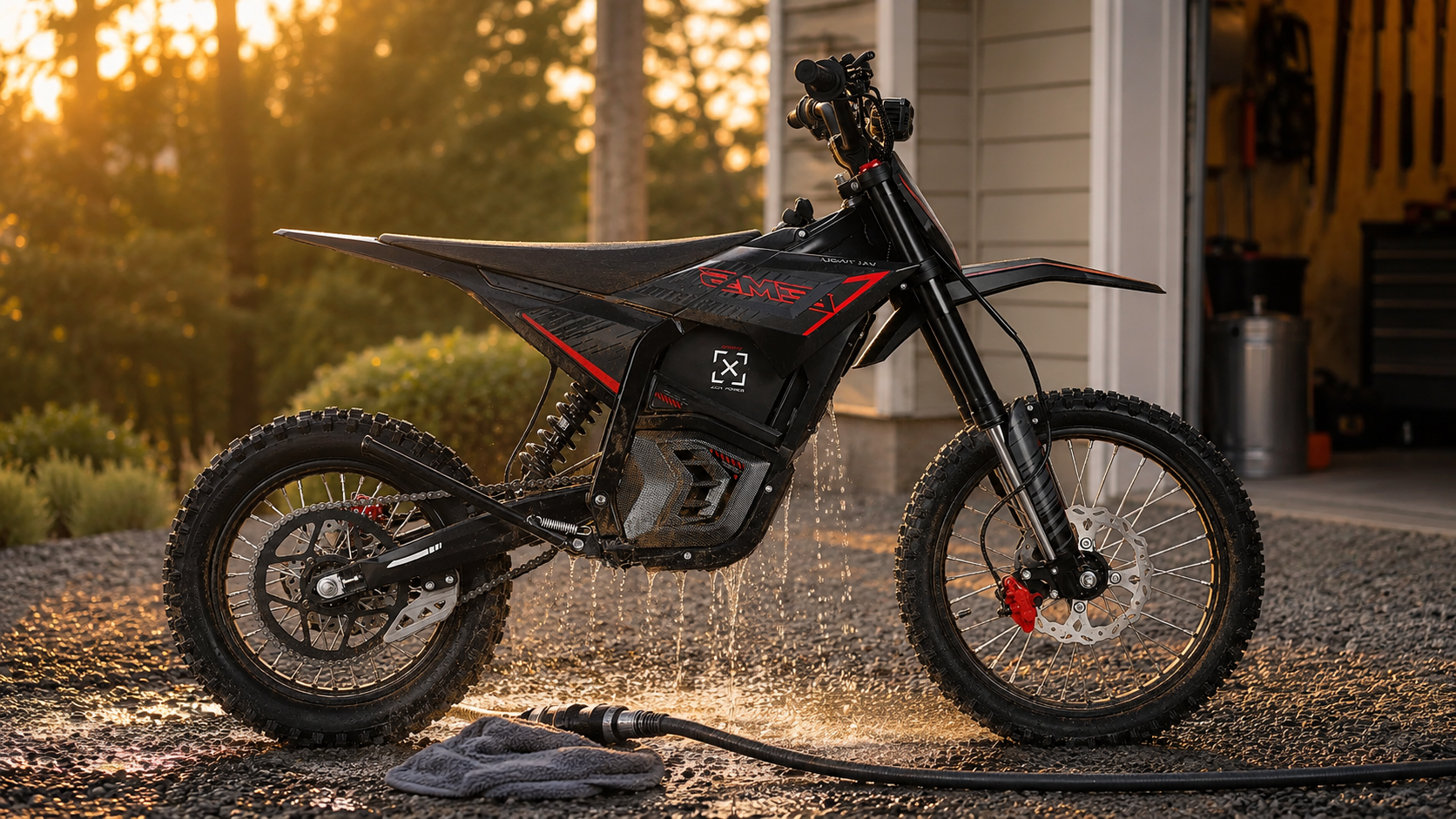
Battery out? Wipe the case with a dry cloth, not a spray. Battery on? Cover it, and keep water off the port, the seam, and the plugs. Bosch is blunt about this. No direct jet, no high-pressure hose, and pull the pack before you wash (Bosch eBike Systems). A garden hose on low beats a pressure washer. Always. High pressure drives water past the seals and into the wiring, so the motor, controller, display, charging port, bearings, and suspension seals all stay out of the stream.
Frame, Wheels, Undercarriage, Then Dry
Big mud zones first. Tires, rims, frame, swingarm, skid plate, undercarriage. Use a mild bike cleaner or gentle soap. A soft brush gets the grit packed around the chain guard, sprockets, pegs, and calipers. Then dry it. All of it. Water sitting on bolts, bearings, and brake parts turns to rust and noise, so let the bike air-dry fully before the battery goes back on or the charger goes in.
|
Never spray straight at: the battery, charger port, controller, motor vents, display, throttle, brake sensors, wiring connectors, suspension seals, or wheel bearings. Water-resistant is not waterproof. The EM-5 and EM-5 Pro are rated IPX6, the EM23 is IPX4. That handles spray and wet trails, not a soaking.
|
Battery Care for Longer Range and Lifespan
The battery is the priciest part to replace, and it sets your range. Most “motor feels weak” complaints we see are not the motor at all. They are charging habits. Heat. A loose connection. Our guide to electric dirt bike battery life digs in, but it comes down to four habits.
Charge Smart, Cool, and Correct
Do not run it to 0% in normal riding. Deep discharges stress the cells and eat range. Top up before a long trail day. Use the charger that came with the bike, or one the maker approves, because the wrong one can cook the pack. And the nightly top-off when it is still half full? Skip it. Let the pack cool first, too. Heat builds on climbs and in deep sand, and charging hot only stacks more on top. Full means unplug.
Store Cool, Check for Damage
Cool, dry, indoors. A hot car, a freezing garage, a damp shed, all of them shorten battery life. For long layoffs Bosch suggests roughly 30 to 60% charge at about 50 to 60°F (Bosch eBike Systems). Your manual wins if it differs. Then a quick look. Terminals for dirt, corrosion, or burn marks; case wiped dry; the pack locked in tight before you ride. Cracks, swelling, leaks, a strange smell, melted spots. Any one of those, stop.

|
Charge where you can hear a smoke alarm. The U.S. CPSC ties most lithium-battery fires to charging. It recommends only the maker’s charger, a space with a working smoke detector, and never a damaged or recalled pack (U.S. CPSC).
|
Chain and Drivetrain Maintenance
The chain takes the abuse. Mud, sand, dust, all of it packs into the links and grinds like sandpaper. A neglected chain makes a strong bike feel slow and loud. Park Tool’s rule is the one to keep. Clean, dry, then lube. Lube only works on a clean, dry chain (Park Tool).
Clean, Dry, Then Lube
Work a chain cleaner or bike-safe degreaser between the links with a soft brush. Fingers clear of the sprockets. Do not leave mud on overnight, because dried grit breeds rust and stiff links. Wipe it dry. Then lube the inside of the chain, where it meets the sprockets, matched to your trails. Dry-dusty and wet-muddy want different formulas. Last step, wipe the excess. A flooded chain just pulls in dirt and turns to paste.
Tension and Sprockets
Two checks keep the drivetrain honest after hard rides and jumps.
-
Tension: too loose and the chain slaps, skips, or drops; too tight and it stresses bearings, sprockets, and the motor output. Use the manual’s slack range.
-
Worn sprockets chew up a new chain fast, so check for hooked, bent, or missing teeth and replace chain and sprockets together when they are done.

Brakes, Tires, and Suspension Checks
Instant torque is only as safe as the parts that slow you down and keep you planted.
Brakes and Tires
Pads wear faster in mud, sand, and steep terrain. Check thickness often. Listen for grind or squeal. Squeeze each lever before you ride; it should feel firm. Soft and spongy means air in the line, low fluid, or worn pads, and SHIMANO’s service manual covers bleeding and pad work if it never firms up (SHIMANO). Tires next. Gauge the pressure cold, not by thumb. Too low and the rim dents easily. Too high and grip drops on loose ground. Scan tread and sidewalls for cuts, cracks, or missing knobs.
Suspension and Loose Bolts
Check the fork legs and rear shock for oil, dirt rings, or seal damage. Then push down and watch it come back. Smooth, no sticking, no clunk. Wipe the fork legs after dusty rides so grit never reaches the seals. Then the bolts vibration loves to loosen: axle, bars, caliper, suspension, motor mount, pegs. A torque wrench on the important ones, so you neither strip threads nor leave parts moving.

Motor and Electrical Component Care
The electrical side fails quietly. Keep the motor vents and cooling areas clear of mud, grass, and packed dust. A blocked motor traps heat on long climbs and can pull power back. Dry cloth or soft brush only. Never push water into vents, seams, or wiring exits. After rough rides, scan the wires and connectors for loose plugs, rubbed insulation, or pinched runs, and keep wiring clipped off the tire, chain, and sharp edges. A small wiring fault can read like a battery, motor, or throttle problem.
|
Cutting out or lagging? Start with the cheap, common causes before you suspect the motor: battery charge, battery mount, connectors, chain tension, tire pressure. If it keeps happening, get it checked.
|
Common Mistakes That Quietly Cost You
Most of the damage we trace on owner bikes comes from a short list of habits. Dodge these and you dodge most repairs.
|
Mistake
|
Why it hurts
|
Do instead
|
|
Pressure washing
|
Forces water into bearings, seals, and electronics
|
Low-pressure hose, soft brush, dry cloth
|
|
Charging every night out of habit
|
Extra heat and full-charge time age the pack
|
Charge for your next ride and storage plan
|
|
Leaving the chain dirty
|
Grit grinds the drivetrain and hides tension issues
|
Clean after muddy rides, lube when dry
|
|
Over-lubricating
|
Excess oil attracts dirt into a grinding paste
|
Light coat, wipe the excess
|
|
Ignoring low tire pressure
|
Pinch flats, rim dents, vague steering
|
Gauge it before every ride
|
|
Storing the battery drained
|
Deep discharge can harm health and charging
|
Store at the manual’s charge level, check monthly
|
The Tools That Make It Easy
No full workshop needed. A short kit covers almost everything above, and the rest goes to a shop. Parts, brakes, and chargers for the lineup live in the replacement parts and accessories collection.
-
Chain cleaner plus a bike-safe degreaser lifts the mud and old lube that water leaves behind.
-
Pick a chain lube for your conditions. Dry-trail and wet-trail formulas are not interchangeable.
-
Microfiber cloths, kept separate for dirty and clean jobs so an oily rag never touches a rotor.
-
A soft brush reaches the chain, sprockets, calipers, and frame joints. No metal bristles on paint, plastic, or seals.
-
A tire pressure gauge, the one-minute check that protects traction and rims.
-
Hex keys and a torque wrench for bolts. Use the right size, and follow the manual’s torque values on axles, calipers, and mounts.

When to Stop and Call a Pro
Some jobs are not DIY. Hand these off rather than risk a bigger failure or a safety problem.
-
Battery swelling, cracks, leaks, or odd smells. Do not ride, charge, or store it indoors. Contact the brand or a qualified shop, and keep it away from heat.
-
Repeated electrical cutouts after the simple checks. A technician can test the battery, controller, throttle, wiring, and motor with the right tools.
-
Spongy hydraulic brakes that will not firm up. Air, old fluid, or a leak needs a proper bleed before hard riding.
-
Oil on the fork or shock usually means a seal problem, and seals need clean oil and the right setup to work.
-
Bent wheels, cracked rims, or frame damage after a crash or hard hit. Alignment and structural checks belong in a shop.
FAQs
What maintenance does an electric dirt bike need?
Cleaning, battery care, chain upkeep, brake and tire checks, plus a scan of wires, bolts, and suspension. No fuel system. No oil, plugs, or air filter. The work shifts to the battery, charger, drivetrain, brakes, tires, and wiring. Trail riding piles on mud, dust, water, and vibration, so trouble shows up after rough days. A clean bike makes it easy to spot early.
-
Run a quick after-ride, weekly, monthly, and pre-storage routine.
Is it okay to hose down an electric dirt bike?
Yes, with low-pressure water. Never a pressure washer. A gentle rinse clears mud off the tires, frame, wheels, and undercarriage. Keep it off the sensitive stuff, though. Battery, motor, controller, display, throttle, charger port, plugs, bearings, seals. Those resist riding moisture, not a direct blast. Turn it off, pull the battery if you can, dry it before charging.
-
Low-pressure hose, soft brush, microfiber cloths. Not a pressure washer.
Should I charge my electric dirt bike every night?
Not always. Charge for the next ride and the level you are at, not out of habit. Ride daily and need full range? Nightly is fine. Half full and the bike will sit? Skip it. Do not drain to 0%, and unplug once it tops out. Heat and deep discharge cost you far more than a missed charge.
-
Let it cool after hard riding, then charge only as needed.
How long do electric dirt bikes usually last?
Years, with the right care. It depends on ride style, terrain, battery habits, crashes, and storage. The battery is what most owners notice first, as range slips. Tires, pads, chains, sprockets, seals are normal wear, replaced as they go. Keep the drivetrain clean and the pack stored cool and dry and you get more out of it. Our battery-life guide covers the numbers.
-
Track range, brake feel, chain noise, and tire wear to catch changes early.
Can I use WD-40 on an electric dirt bike chain?
Carefully, but not as your chain lube. A water-displacing spray is not a drivetrain lubricant. On its own it leaves the chain dry. Keep it off the brake pads, rotors, tires, grips, and electrical ports, where overspray makes brakes noisy or weak. Clean with a bike-safe chain cleaner first. Then a proper chain lube.
-
Clean, dry, then lube with a real chain lubricant.
What is the most expensive part of an electric dirt bike?
The battery, usually. It drives range, power, and ride time, and replacement gets the attention because poor care shortens its life. Motors, controllers, suspension, and brakes add up too, more so on higher-power bikes. But the pack is the big one. Heat, water, deep discharge, impact, the wrong charger, all of it costs you, which is why battery care belongs in every routine.
-
Store cool and dry, inspect often, and use only the correct charger.
Do I need to maintain the suspension on an electric dirt bike?
Yes, a light routine keeps it working. Wipe the fork legs after dusty rides so grit never reaches the seals. Check the fork and shock monthly for oil, dirt rings, or seal damage. Push down and feel it return. Adjustable air shocks, like the ones on the EM-5 and EM-5 Pro, also let you tune sag for rider weight.
-
Clean seals, smooth return, correct sag for your weight.
Conclusion
Maintaining an electric dirt bike is a handful of habits, repeated. Clean it after dirty rides, lube the chain when dry, check tire pressure and brake feel before you ride, store the battery cool and dry. That is most of it.
Not a no-maintenance machine. Just a lower-maintenance one. Stay ahead of the mud, water, heat, and vibration and the bike stays ready. Weighing models, or want to compare the full lineup? The EM-5 (13+), EM-5 Pro (18+), and EM23 (16+) all run the same routine above.
Sources
- U.S. Consumer Product Safety Commission, Micromobility Information Center (2026)
- Bosch eBike Systems, How do I optimally care for the battery? (2026)
- Park Tool, How to Clean and Lubricate a Chain (2024)
- SHIMANO, Hydraulic Disc Brake Dealer’s Manual (DM-BR0005) (2019)


Looking for something else?
Electric Dirt Bike Replacement Parts Availability: What Buyers Should Verify Before Ordering
LEARN MORE
How to Check an Electric Dirt Bike for Safety Recalls by Model and Serial Number
LEARN MORE
How to Choose an Electric Dirt Bike Repair Shop: Questions to Ask Before Service
LEARN MORE
How to Lift a Fallen Electric Dirt Bike Without Hurting Yourself or the Bike
LEARN MORELooking for something else?
Electric Dirt Bike Fall Riding on Wet Leaves: Grip, Hidden Obstacles and Braking
LEARN MORE
Electric Dirt Bike Trailside Power Loss: Recovery Plan When the Battery Is Dead
LEARN MORE
Electric Dirt Bike Plastics Replacement Guide: Fitment, Color Kits and Install Order
LEARN MOREYou may also like
VALTINSU EM-5 Off-Road Electric Dirt Bike
$969.00
$1,559.00
VALTINSU EM-5 Pro Off-Road Black Electric Dirt Bike
$1,699.00
$1,899.00
VALTINSU EM-5 Pro Green Electric Dirt Bike
$1,699.00
$1,899.00
VALTINSU EM-5 Ultra Electric Dirt Bike
$2,199.00
$2,499.00
VALTINSU EM-5 & EM-5 Pro Combo
$2,658.00
$3,458.00