

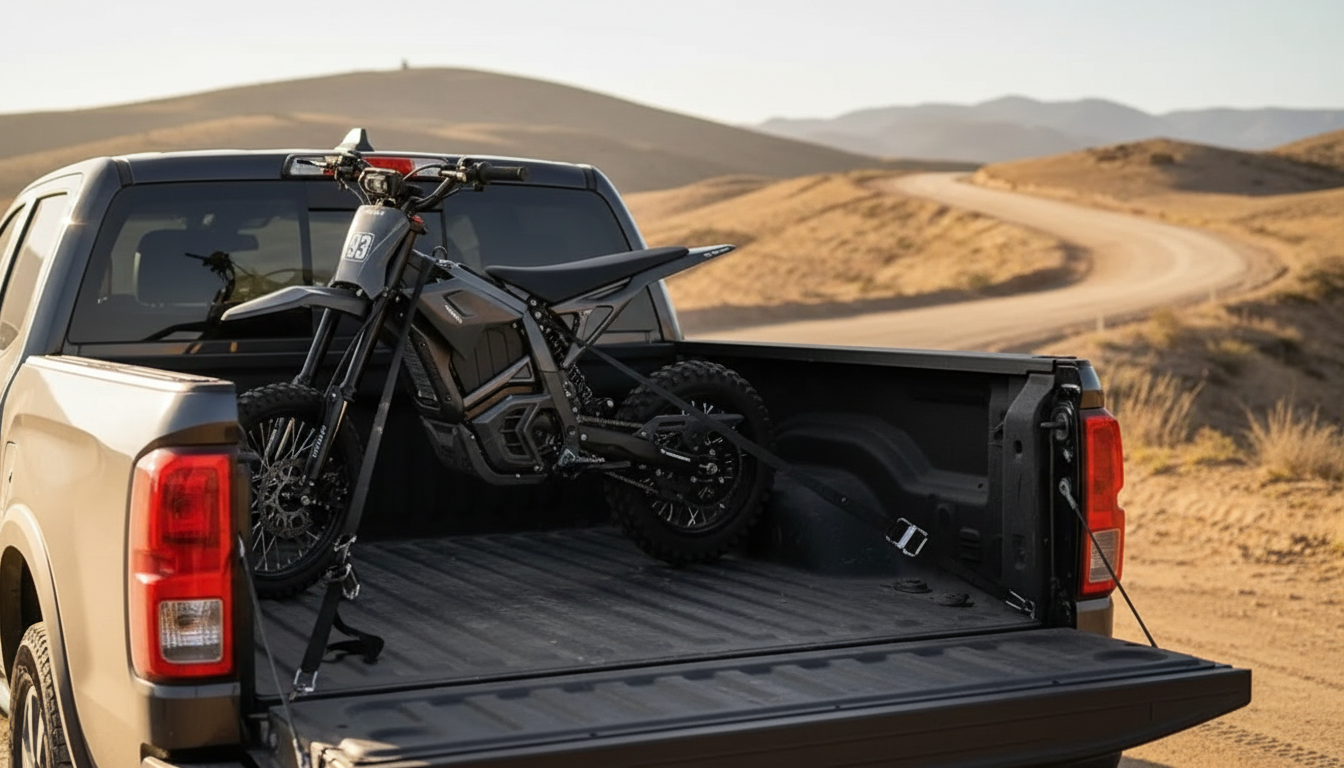
How to Transport an Electric Dirt Bike: Truck, SUV, Hitch Rack & Trailer Tips
How to transport an electric dirt bike is not the same as throwing a bicycle on the back of a car and being done in a minute. An electric dirt bike is a different animal. Heavier. Wider. Packed with parts that hate hard bumps, standing water, and a strap pulled across the wrong spot. How you transport an electric dirt bike comes down to four things, and your route is not one of them: your vehicle, the bike's weight, trip length, and whether someone is around to help you load.
Truck bed, motorcycle-style hitch carrier, or trailer covers most riders. An SUV or van handles a short trip when the bike fits and gets tied down inside. The EM-5 Pro weighs about 143 pounds before gear, so the rack you grab matters more than the miles you drive.
Best Way to Transport an Electric Dirt Bike
To transport an electric dirt bike safely, the electric dirt bike transport setup must keep the bike upright, secure, and supported by gear rated for the full bike weight. That is the entire answer, and the rest of this guide is just detail. Never guess on rack limits, hitch limits, or strap strength, because the lowest number in that chain fails first.
Two jobs, really. Stop the bike from rolling, bouncing, tipping, or rubbing a sharp edge. And keep the battery, display, wiring, levers, and throttle safe for the whole drive. Nail both and the method almost picks itself.

Which Method Fits You: Quick Comparison
Each option is a good one for the right rider. The table sorts them by what they are best at, not by which is better overall. Common electric dirt bike transport options include a pickup truck bed, hitch-mounted motorcycle carrier, trailer, or SUV interior, depending on distance, weight, and how often you need to load the bike.
|
Method
|
Best for
|
Watch out for
|
Effort to load
|
|
Pickup truck bed
|
Riders who already own a truck; everyday trail runs
|
Tailgate fit; overhang rules if it stays down
|
Low with a ramp
|
|
Hitch carrier (moto-style)
|
SUV/truck owners with no bed space
|
Receiver size and tongue weight; plate and lights
|
Low to medium
|
|
Trailer
|
Heavy bikes, long highway trips, two or more bikes
|
Trailer bounces on its own suspension
|
Lowest with a built-in ramp
|
|
SUV or van interior
|
Short trips, lighter models, rain or theft worry
|
Cargo length; dirt and grease inside
|
Medium, lift involved
|
Short version. Own a truck? Use the bed. No bed? A motorcycle-style hitch carrier. Long haul or more than one bike? Trailer. Rain or a quick errand? Inside the SUV, battery out, tied to real anchors.
Why These Bikes Need a Stronger Setup
Battery, motor, controller, beefed-up frame. It all adds mass, and that mass overworks a weak rack or makes the bike a fight to lift into a tall vehicle. Then the road adds force. A bike that feels solid in the driveway can buck hard on rough pavement, speed bumps, and highway expansion joints.
A good setup spreads that load across strong points and stops the wheels and frame from pulling in different directions. Quiet drive versus white-knuckle drive. That is the whole difference.
Where Standard Bicycle Racks Fall Short
Most bicycle racks were built for lighter pedal bikes, and they do that job well. Off-road motorcycle weight is another story. Hanging arms, trunk straps, and small wheel trays were never rated for it.
-
Trunk racks hang off the rear hatch, so straps loosen, paint scratches, and the bike shifts in turns.
-
Roof racks ask you to lift a heavy bike overhead, and the roof rating rarely supports the load anyway.
-
Save those for the pedal bikes. For an adult electric off-road motorcycle, go truck, hitch, or trailer.

What Makes Electric Dirt Bike Transport Different?
Dirt-bike size and electric parts in one machine. Not a heavier bicycle, not a gas dirt bike. Three needs run every decision, and a safe setup handles all three before the bike leaves the driveway.
-
Weight support. Rate every link for the full bike, not the average bike.
-
Battery care. Keep the pack dry, padded, and away from impacts.
-
Part protection. Pad the display, levers, and wiring; never strap across them.
Extra Weight From the Motor and Battery
The motor and battery sit low. Great for trail stability, less great when you are wrestling the bike up a ramp. Pull the battery and you drop real weight while taking stress off the battery mount during the bounce. One more number people forget: the carrier itself. On a hitch setup, bike plus carrier both count against the vehicle and hitch limits. Add them up before you buy.
Electronic Parts That Need Protection
Display, controller, battery wiring, charging port, throttle leads. A gas bike has almost none of this, and hard straps, road spray, or pressure from other gear can ruin any of it. These are riding inputs, not tie-down points. Cover or pad anything exposed first. A towel, foam wrap, or soft cloth stops rub marks and saves the small wires that are a nightmare to replace.
No Fuel Leak Risk, But Battery Care Still Matters
No tank means no fuel to weep if the bike tips. The battery is the part that needs watching. Water, road salt, dust, and sharp impacts cause trouble around the case, terminals, and wiring. Keep the pack dry, padded, and clear of loose tools. Cracked, swollen, hot, or odd-smelling? Stop. Treat it as a safety issue and follow the maker's instructions; the U.S. Consumer Product Safety Commission tracks micromobility battery incidents for exactly this reason.
Pre-Transport Checklist Before Loading
Five minutes here saves broken parts and a loose-gear scramble on the shoulder. Run these before the bike rolls onto a bed, rack, trailer, or SUV floor. A lighter, prepped bike is also far easier to steer up a ramp.

-
Pull the battery when the design allows. Lighter bike, and the pack rides inside, away from vibration and rain.
-
Strip anything loose. Mirrors, phone mounts, cameras, bags, bottles, clip-on tools. Each one is a road hazard waiting to happen.
-
Wrap the controls. Display, levers, throttle, switch cluster. Tie back any cable that could flap.
-
Look over tires, chain, and suspension. Soft tire wanders in a chock. Loose chain slaps the frame. A leaking fork gets fixed before any strap pressure.
-
Stage your gear. Ramp, soft loops, rated straps, a chock, padding. Lay it out so you are not hunting mid-load.
-
Still choosing a bike and weight is the deciding factor? The electric dirt bike lineup lists net weight, seat height, and max load for every model. Those three numbers decide how it loads.
How to Transport an Electric Dirt Bike in a Pickup Truck
Hard to beat a truck bed. Space, strong anchor points, room to stand the bike upright. The whole skill is loading slow and tying down at more than one point. No leaning on the tailgate, no rolling side to side, no knocking the bed wall. Work through it in order.

-
Use a rated ramp. Narrow, weak, or slick ramps slip with the bike halfway up. Walk beside it, guide it slow, one hand on the brake if it has a walk mode. Never muscle a 130-plus-pound machine up solo.
-
Stand it upright, front wheel to the cab. Keeps the bike short in the bed and gives the front tire a hard stop. Lay it flat only if there is truly no other way.
-
Brace the front wheel. A motorcycle chock, a bed-mounted brace, or a solid hauling block. After the first straps tighten, the wheel should not move left or right. The kickstand is not a brace; it folds.
-
Tie down front and rear. Two front straps, at least one rear. Four points for long or rough roads. Pull the front straps slightly forward and down so the bike stays planted; lock the rear wheel so it cannot hop sideways.
-
Recheck after a few miles. Straps settle. Federal cargo securement rules exist because loads shift, and yours will too.
-
Tailgate up only if the bike clears it. If it has to stay down, add straps and check your local overhang rules before you pull out.
How to Transport an Electric Dirt Bike in an SUV or Van
Works well when the bike fits without forcing the hatch, bending parts, or blocking your view. Best for shorter trips and lighter models. The upside is real: out of the rain, out of sight. The trade is dirt, chain grime, and sharp pegs riding inside with you, so prep earns its keep.

-
Measure first. Front tire to rear tire, then the cargo bay with seats folded. Check height at the bars and pegs. A bike that almost fits can crack a hatch or rear glass.
-
Lay down protection. Thick mat or moving blanket on the floor, a second one between the bike and the side panels. Keep the chain side off clean upholstery; grease does not come out.
-
Battery out. Easier to slide and tilt the bike in, and the pack rides in the footwell away from heat and sharp tools.
-
Strap it three ways. Forward, backward, sideways, using cargo hooks strong enough for the job. Blocks and blankets help, but a closed hatch is not a tie-down.
-
Big-wheel models like the EM23 ride on a 19-inch front wheel and a taller frame, so they need more room than a compact EM-5. Measure that one twice.
How to Transport an Electric Dirt Bike on a Hitch Rack
No truck bed, no trailer? A hitch-mounted motorcycle carrier keeps the bike outside and lower than a roof rack, which is safer and more stable for this weight. This type of hitch-mounted motorcycle carrier must be matched correctly to three ratings: carrier capacity, hitch receiver class, and vehicle towing limit. All three must safely support the bike’s weight plus road load before you use it.

-
Check receiver size and tongue weight. Bike and carrier both hang behind you, so rear weight climbs fast and changes how the vehicle steers, brakes, and sits. Many heavy carriers want a 2-inch receiver.
-
Go motorcycle-style. A strong tray, wheel stop, ramp, and real tie-down points suit an off-road bike far better than a light bicycle rack. Pick one with margin above the bike weight, not one sitting at its limit.
-
Add a ramp and an anti-rattle device. Roll the bike up instead of lifting; cut rack play inside the receiver so the straps and frame bounce less. Shake the loaded rack by hand before you drive.
-
Keep lights and plate visible. Walk behind and look. Blocked taillights or plate? Add an auxiliary light kit or a legal plate-relocation setup for your state.
-
How to Transport an Electric Dirt Bike on a Trailer
For heavy bikes, long highway runs, or more than one machine, a trailer is the smart pick. Most room, easiest loading. One thing to respect: a trailer rides on its own suspension, so a loose bike moves more there than in a truck bed. Load it right and that is a non-issue.

-
Pick the right trailer. A motorcycle trailer usually has a rail, ramp, and chock built in. A utility trailer works with strong anchors and a stable deck. Use metal anchors bolted to the frame, not thin wood rails.
-
Load straight and centered. Front wheel in line, not turned. Center it left to right unless you are carrying two.
-
Balance over the axle. Steady tongue weight matters: too much at the rear brings sway, too much up front overloads the hitch. For one bike, the front wheel usually sits a touch ahead of the axle.
-
Pre-trip the trailer. Brake lights, signals, running lights, tire pressure, bearings, lug nuts. A blown trailer tire can take the bike with it.
-
After loading, glance at the tow vehicle. Rear sagging hard, or the trailer nose pointing up or down? Adjust the load before you roll.
How to Tie Down an Electric Dirt Bike Safely
A good tie-down stops movement in every direction—forward, back, side, and vertical—when using ratchet straps or heavy-duty cam straps together with soft loops, plus an anti-rattle device on hitch racks. The bike should feel like part of the vehicle and not shift during braking or cornering. Quality straps, solid anchors, and correct angles matter more than anything else. Weak straps or poor setup can fail quickly under load, so always double-check tension and placement before driving.

|
Step
|
What to do
|
What to avoid
|
|
Pick the straps
|
Motorcycle tie-downs or heavy-duty cam/ratchet straps; check the working load limit on the label
|
Bungee cords as a main tie-down; they stretch and let go
|
|
Add soft loops
|
Wrap strong frame and bar areas so hooks never bite paint or wires
|
Hooking bare metal edges or cables
|
|
Front end first
|
Strap near the bar clamp or fork, pull down and slightly forward, tighten both sides evenly
|
Straps over the display, brake hose, or throttle lead
|
|
Lock the rear
|
Strap the rear wheel or frame to the bed, tray, or deck so it cannot walk sideways
|
Straps touching the chain, rotor, or spokes
|
|
Set the forks
|
Snug the suspension so the bike does not bounce
|
Crushing the forks fully; it stresses the seals on a long drive
|
On a hitch carrier especially, that rear-wheel strap is what stops the bike walking sideways behind you. Do not skip it.
Can You Lay an Electric Dirt Bike Down to Transport It?
Some bikes, short trips, yes. Upright still wins. On its side, weight lands on parts that were never built to carry it. If you have no other choice, pull the battery, pad every contact point, and strap it so it cannot slide an inch.
Why Upright Is the Safer Choice
Upright keeps the tires, suspension, and frame where they belong and keeps pressure off the levers, throttle, display, and panels. It is also easier to strap, since you pull the frame down into the bed instead of fighting a flat bike that wants to slide. Lay it down and the weight can settle on a lever, peg, rotor, or panel; a small pressure point becomes a cracked part after a few hundred highway miles. Wires pinch under the frame too, and a squeezed throttle or display lead can stop the bike powering up later.
If It Must Lie Down
Treat this as the backup plan, for a short slow trip or the only way to fit a van. Steps stay simple.
-
Battery out, plus any accessory that can snap off.
-
Thick blanket or foam mat underneath. Extra padding under the bar end, peg, lever, axle, and frame contact points.
-
Display and throttle off the floor; choose the side with fewer exposed controls.
-
Strap it so it cannot slide any direction, then stop after a short distance and check for rub marks.
Common Electric Dirt Bike Transport Mistakes
Most problems trace back to three things: weak gear, a skipped weight check, or a rushed load. Before every trip, ask one question. Can the bike move if I brake hard, turn fast, or hit a pothole? If yes, fix it before you pull out. The usual offenders:
|
Mistake
|
Why it bites
|
The fix
|
|
Rack rated too low
|
Road bumps, wind, and overhang pile stress on a rack near its limit
|
Add up bike, battery, carrier, hitch, and vehicle ratings; the lowest number is the real one
|
|
Battery left on for a long haul
|
On a rear rack it eats wind, dust, water, and vibration the whole way
|
Pull it and carry it padded inside the cabin
|
|
Plate or lights blocked
|
A hidden plate or taillight can get you stopped and is unsafe
|
Check the rear view; add a light kit or plate holder if needed
|
|
Bungees as the main tie-down
|
They stretch, bounce, and let go without warning
|
Rated straps with soft loops; keep bungees for a cover only
|
|
No recheck on the road
|
Straps settle in the first few miles
|
Stop and retighten early, then check again at fuel stops
|
Hear a new rattle or feel the load sway? Pull over and look. That instinct is right far more often than it is wrong.
How We Put This Guide Together
We move adult electric off-road motorcycles for a living. Everything here is what holds up on a real loading ramp, not just on paper.
Weights From the Spec Sheet, Not a Guess
Every weight comes straight from the current Valtinsu spec sheet and product pages. It matters more than it sounds. A 17-pound swing between a 126-pound EM-5 and a 143-pound EM-5 Pro can push you into a different rack class.
Rules Cross-Checked With Federal Sources
Securement, towing, and battery guidance is checked against four bodies: FMCSA cargo rules, NHTSA, the CPSC micromobility center, and NFPA lithium-ion safety. So the safety steps are not opinion.
Loaded Every Way Owners Do
Truck bed. SUV interior. Hitch carrier. Trailer. We loaded the same bikes each way, and the failure points in the mistakes table are the ones we have actually watched happen.
Load It Right, Then Go Ride
Three things, every trip. The right vehicle setup. The right tie-down. Smart battery care. Get those and the drive is boring, which is exactly what you want.
Truck bed, motorcycle-style hitch carrier, or trailer for a heavy bike. SUV or van for the short, lighter trips, strapped so it cannot slide. Pull the battery when you can, pad the display and wiring, keep the bike upright, and run rated straps with soft loops instead of bungees. Then recheck after a few miles. Still matching a bike to your truck or trailer? The EM-5 spec page lists the weight and dimensions you need to size a rack right.
FAQs
Can I lay a dirt bike down to transport?
Sometimes, for a short trip. Upright is still safer. With an electric dirt bike the stakes climb, because the battery, display, wiring, and controls all need care. On its side the weight can settle on a lever, throttle, peg, rotor, or bar, and the bike may look fine at first, then slide on a turn or rub through padding on a longer drive.
-
Use upright transport whenever you can.
-
If you must lay it down, remove the battery and pad every contact point.
Should I remove my battery when transporting?
Yes, whenever the design allows. A lighter bike, and one of its priciest parts rides away from vibration, road spray, and impact. Pulling the pack also takes stress off the battery latch and frame mount, which matters most on a hitch rack or trailer.
-
Carry it inside in a padded bag or box.
-
Keep it away from loose tools, direct sun, and heavy gear.
-
Before reinstalling, check the case and contacts; the Support Center can help if anything looks off.
Can you lay down an electric dirt bike?
You can if there is no better option, but it should not be your first choice. Upright protects the controls, battery mount, wiring, brakes, and panels. Side transport can work inside a van, SUV, or truck bed for a short trip, but the bike may rest on parts never meant to hold its full weight, and it can slide under braking if the straps only hold one direction.
-
Remove the battery first if you can.
-
After the trip, test brakes, throttle, display, and battery fit before riding.
Can electric bikes be laid down?
Yes, in some cases, but treat it as a backup method rather than the normal plan. Batteries, wiring, displays, sensors, and brake parts can all be hurt by pressure or rubbing. Folding e-bikes lay down more easily because they are built for trunks and bins, while a full-size electric dirt bike is heavier, taller, and far less friendly to side loading.
-
Use upright transport for highway trips and rough roads.
-
If you lay one down, remove the battery, protect the controls, and strap it tight.
Is it okay to transport a dirt bike on its side?
For a short trip it can be okay, but it is not the best method. Upright gives you better control, safer strap angles, and less pressure on small parts. A gas bike may leak fuel or oil on its side; an electric one avoids that but still has a battery, wires, switches, and brake parts to protect, and it is harder to stop a flat bike from sliding without several straps and good padding.
-
Keep the trip short and drive gently if you have to.
-
Haul often? Buy a rated hitch carrier, truck chock, or small motorcycle trailer.
What is the best way to transport an electric bike?
A hitch-mounted platform rack rated for the weight. Or a pickup bed. Or an inside cargo area where the bike ties down. For an electric dirt bike specifically, a motorcycle-style hitch carrier, truck bed, or trailer beats a normal bicycle rack. The right pick rides on weight, wheelbase, tire size, and your vehicle.
-
Remove the battery when you can; protect the display, levers, and wiring.
-
Pick the method that lets the bike stay upright and fully strapped front and rear. Compare model weights across the lineup before sizing a rack.
Why are police cracking down on e-bikes?
Mostly because of where and how some are ridden, not transport. Enforcement has grown around throttle e-bikes and off-road machines on public roads, sidewalks, and bike paths where they are not allowed, plus underage riders on faster models. An electric dirt bike is an off-highway vehicle, so it belongs on dirt tracks, private land, and designated OHV areas, never public roads.
-
Check your state's OHV rules before riding anywhere public.
-
Transporting the bike legally to a riding area is the simplest way to stay clear of trouble.
Sources
-
Federal Motor Carrier Safety Administration, Cargo Securement Rules (2002)
-
National Highway Traffic Safety Administration, Trailers: Federal Safety Regulations (2022)
-
U.S. Consumer Product Safety Commission, Micromobility Information Center (2026)
-
National Fire Protection Association, Lithium-ion Battery Safety (2025)


Looking for something else?
Electric Dirt Bike Loses Power Under Load: Causes and How to Fix It
LEARN MORE
Electric Dirt Bike Bolt Torque Checklist: What to Check and Where the Numbers Come From
LEARN MORE
How to Bleed Electric Dirt Bike Brakes Safely
LEARN MORE
Electric Dirt Bike Throttle Not Working: What to Check First
LEARN MORELooking for something else?
Electric Bike Battery Not Charging? Work Through This Before You Buy a New One
LEARN MORE
Electric Dirt Bike Error Codes: What They Mean and What to Check First
LEARN MORE
Electric Dirt Bike Brake Rotor Rubbing: Diagnose the Cause Before Adjusting
LEARN MOREYou may also like
VALTINSU EM-5 Off-Road Electric Dirt Bike
$969.00
$1,559.00
VALTINSU EM-5 Pro Off-Road Black Electric Dirt Bike
$1,699.00
$1,899.00
VALTINSU EM-5 Pro Green Electric Dirt Bike
$1,699.00
$1,899.00
VALTINSU EM-5 Ultra Electric Dirt Bike
$2,199.00
$2,499.00
VALTINSU EM-5 & EM-5 Pro Combo
$2,658.00
$3,458.00
Further reading
Electric Dirt Bike Trailside Power Loss: Recovery Plan When the Battery Is Dead
When an electric dirt bike loses power on the trail, first make the scene safe and decide whether the battery is simply depleted or the bike has a fault. Move out of the travel line if the bike can...
Electric Dirt Bike Fall Riding on Wet Leaves: Grip, Hidden Obstacles and Braking
Wet leaves reduce grip and hide the surface that determines it. A thin layer on firm soil may slide under braking; a deep layer can conceal roots, rocks, ruts and holes; decomposing leaves can beha...
How to Lift a Fallen Electric Dirt Bike Without Hurting Yourself or the Bike
Do not lift a fallen electric dirt bike until people, terrain and battery hazards are assessed. A bike on a slope, near traffic, pinning a rider or showing battery heat, smoke, hissing, odor, swell...
How to Choose an Electric Dirt Bike Repair Shop: Questions to Ask Before Service
Choose an electric dirt bike repair shop by matching the shop’s real capability to the actual job. Ask about experience with the model and component, access to manuals and parts, battery isolation ...