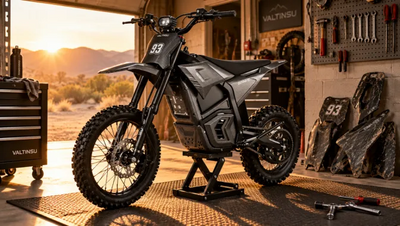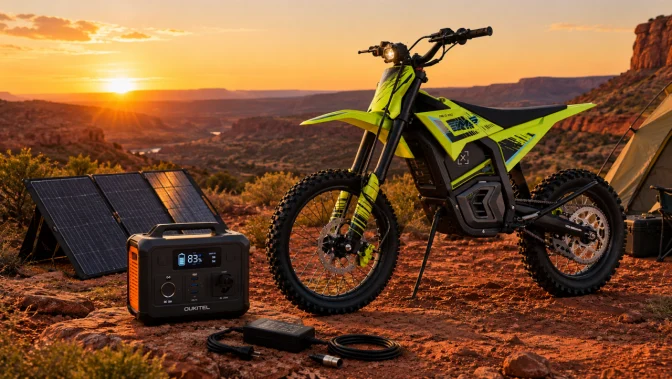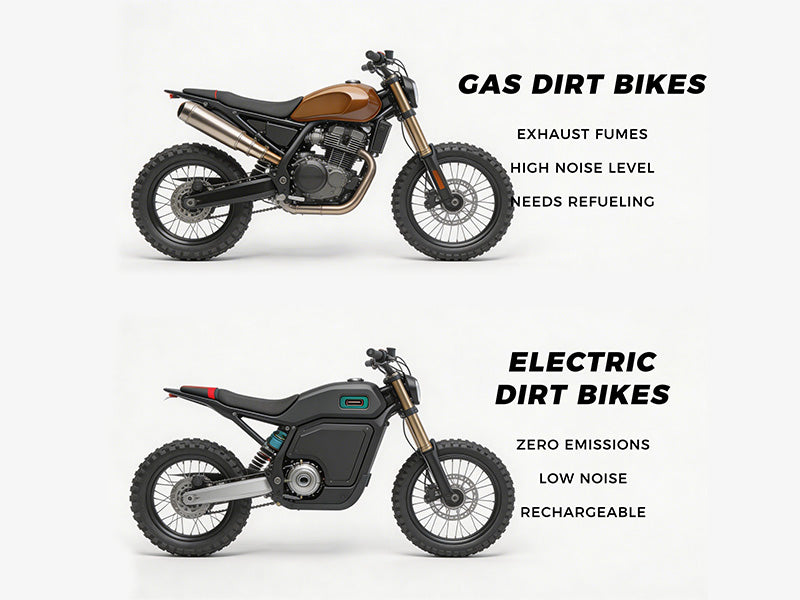
Why Riders Are Switching from Gas to Electric Dirt Bikes
Something has shifted in the off-road riding community. Riders who spent years defending their gas-powered machines — who dismissed electric dirt bikes as underpowered toys for casual riders — are quietly making the switch. Not all of them. Not overnight. But the trend is real, it's accelerating, and the reasons behind it are more practical than ideological.
This isn't a piece about saving the planet. It's about why experienced adult riders are choosing electric over gas for reasons that come down to money, convenience, access, and — perhaps most surprisingly — the quality of the riding experience itself.
At Valtinsusport.com, we hear from riders making this switch every week. Here's what they tell us — and what the data backs up.

Table of Contents
- Reason 1: Electric Opens Up Riding Locations That Gas Bikes Can't Access
- Reason 2: Maintenance Costs Are Dramatically Lower
- Reason 3: Instant Torque Changes How a Dirt Bike Actually Feels
- Reason 4: Running Costs Are a Fraction of Gas
- Reason 5: The Learning Curve Is Genuinely Easier
- Reason 6: Noise — More Significant Than Most Riders Expect
- The Honest Trade-offs: What You Give Up Going Electric
- Battery Range in 2026: The Real Numbers
- Who Should Make the Switch — and Who Shouldn't
- The Valtinsu Electric Dirt Bike Lineup for Adult Riders
- Frequently Asked Questions
Reason 1: Electric Opens Up Riding Locations That Gas Bikes Can't Access
This is the reason that surprises riders most — and the one that ends up mattering most in practice.
Gas-powered dirt bikes are banned or restricted in a significant and growing number of riding environments: state parks, national forest areas, private land in residential zones, campgrounds, and any location where noise ordinances apply. The reasons are straightforward — noise and emissions. A two-stroke gas dirt bike at full throttle generates 90–100 decibels at close range. That sound carries, it disturbs neighbors, and it closes doors.
An electric dirt bike running at the same speed produces a fraction of that noise — a mechanical whir and chain sound that measures somewhere in the range of a loud bicycle. The practical consequence for riders is significant:
Private land access opens up. Neighbors who would never allow a gas bike on adjacent or shared land often have no objection to electric. A rider who previously had to trailer their bike to an official track can now ride on their own land, a friend's property, or rural areas where noise was previously the limiting factor.
Earlier and later riding hours become possible. The quiet operation of electric dirt bikes means riding at 7am before the rest of the household wakes up, or at dusk after a workday, without creating the neighborhood friction that a gas bike would generate in the same scenario.
Trail access in sensitive areas. Some trail systems that prohibit gas bikes permit electric — particularly in protected natural areas where emissions and noise are the specific concerns. This varies by jurisdiction and changes as regulations evolve, but the general trend is toward more permissive rules for electric off-road vehicles.
For riders who've spent years dealing with restricted access — who've been told to pack up by a landowner, turned away from a trail head, or limited to specific hours at their riding location — this single factor alone is often decisive in the switch to electric.
Reason 2: Maintenance Costs Are Dramatically Lower
Gas dirt bike riders who track their actual maintenance spending are often surprised by the total. A typical recreational gas dirt bike requires:
- Oil changes every 5–15 hours of riding (depending on engine type)
- Air filter cleaning and replacement
- Spark plug replacement
- Carburetor or fuel injection servicing
- Valve clearance checks (every 20–40 hours on four-strokes)
- Coolant changes on liquid-cooled engines
- Clutch pack inspection and replacement
- Jetting adjustments for altitude and temperature changes (on carbureted bikes)
The cumulative cost of consumables, parts, and labor adds up to several hundred dollars per year for a regularly ridden recreational gas dirt bike — more if any major service items arise. Beyond the direct cost, there's time: the hours spent on maintenance, or the waiting time if a bike is at a shop.
An electric dirt bike's powertrain maintenance list is short by comparison:
- Chain lubrication and tension check (every 5–10 rides)
- Brake pad inspection (monthly or as needed)
- Tire pressure check before each ride
- Battery care — charge after every session, avoid deep discharge
- Periodic visual inspection of bolts and connections
No oil. No filter. No spark plugs. No carburetor. No clutch. No valve checks. The electric powertrain's reduced mechanical complexity isn't just a selling point — it's a fundamental engineering reality with direct implications for maintenance time and cost.
For riders who spend a meaningful portion of their weekends on maintenance rather than riding, this shift in time allocation is often described as transformative. One of the most common things we hear from gas-to-electric converts: "I spend my weekend riding now instead of wrenching."
The Valtinsu EM-5, EM-5 Pro, and EM23 all use 420 heavy-duty chain drives — the same chain standard as serious off-road gas bikes — which requires the standard maintenance of any chain-drive machine. Outside of that, the powertrain maintenance is genuinely minimal.
Reason 3: Instant Torque Changes How a Dirt Bike Actually Feels
This is the reason that converts experienced riders — the ones who expected to miss the power delivery of their gas bikes and discovered something different instead.
A gas engine produces its peak torque at a specific RPM range — the so-called power band. Below that RPM, the engine feels lazy. Above it, power tapers. Getting the most out of a gas dirt bike means working the throttle and clutch to keep the engine in that RPM window, particularly on technical terrain or climbs. This is a skill — and it's one of the things experienced gas riders take pride in having developed.
An electric motor produces maximum torque at zero RPM and delivers it linearly across the entire speed range. There is no power band. There is no lag. From a standstill, the motor's full torque is immediately available the moment you open the throttle.
In practice, this changes the riding experience in several specific ways:
Hillclimbing becomes more controlled. On a gas bike, losing momentum on a steep climb means dropping into the power band, managing the clutch, and timing the throttle carefully to avoid wheelspin or stalling. On an electric bike with instant torque, you can attack a climb from almost any speed and maintain traction with finer throttle control — because there's no gear ratio or RPM management involved.
The Valtinsu EM-5, for example, produces 193 Nm of torque at the rear axle with a 40° maximum climbing rating. The EM23's 80A controller delivers 71.9 Nm at the rear axle. These aren't theoretical figures — riders report that both bikes handle inclines that would require careful clutch work on an equivalent gas machine.
Technical terrain becomes more manageable. Low-speed technical sections — rock gardens, tight switchbacks, root-covered descents — require precise throttle modulation at speeds where a gas engine is below its power band and prone to stalling. Electric's instant, linear response at any speed makes these sections smoother and less demanding technically.
Acceleration at speed is consistent. Gas engines feel different at different speeds because of the RPM and gear relationship. An electric motor's power delivery is consistent regardless of speed — which some riders find more predictable and easier to manage, particularly when learning a new trail or pushing pace on familiar terrain.
The honest caveat for experienced gas riders: the absence of a power band and clutch management removes one layer of skill expression that some riders genuinely enjoy. If the mechanical engagement of managing a gas engine is part of what you love about riding, electric will feel different — not necessarily worse, but different.
Reason 4: Running Costs Are a Fraction of Gas
Fuel costs for gas dirt bikes vary by engine size and riding style, but a recreational rider doing a two-hour session on a typical 250cc–450cc machine will consume roughly 1–3 liters of gasoline, depending on terrain and throttle usage. At current US fuel prices, that's $1.50–$6.00 per session in fuel alone — not including oil and consumables.
Charging a lithium battery to the capacity of the Valtinsu EM-5 Pro or EM23's 60V 27Ah pack (1,620 Wh) costs approximately $0.16–$0.25 at average US residential electricity rates. For the EM-5's 48V 23.4Ah pack (1,123 Wh), the cost is approximately $0.11–$0.17 per full charge.
Over a season of weekly riding (approximately 50 sessions per year), the fuel cost comparison looks like this:
- Gas dirt bike: $75–$300 in fuel per year, plus $100–$400 in maintenance consumables
- Electric dirt bike: $5.50–$12.50 in electricity per year for full charges
The operational cost difference is not marginal — it's an order of magnitude. The total cost of ownership over three years, accounting for purchase price, fuel or electricity, and maintenance, shifts the calculation significantly in favor of electric for regular recreational riders.
This doesn't mean electric is always cheaper overall — battery replacement cost is a real factor at the end of a battery's service life. A quality lithium pack rated for 500+ charge cycles (the standard on Valtinsu bikes) at one full charge per week lasts approximately 10 years before meaningful capacity degradation. But if and when a battery requires replacement, that cost should be factored into long-term ownership calculations.

Reason 5: The Learning Curve Is Genuinely Easier
This reason matters most to two groups: adults returning to dirt bikes after a long break, and riders introducing family members — partners, teenagers, children — to off-road riding for the first time.
A gas dirt bike requires simultaneous management of throttle, clutch, gear selection, and engine RPM. For someone learning to ride, this is a significant cognitive load on top of the basic balance, braking, and steering demands of off-road riding. Stalling at inconvenient moments, dropping the bike on a climb because of a missed gear, or overcooking throttle in the power band — these are normal parts of the gas bike learning experience, but they're also discouraging and occasionally dangerous for new riders.
An electric dirt bike removes the clutch and gear management entirely. The rider controls throttle and brakes. That's it. The reduction in cognitive load is real, and it directly translates to faster skill development and more confidence earlier in the learning process.
The three-speed mode system on Valtinsu bikes adds another layer of appropriate progression for new riders. The EM-5, for example, limits maximum speed to approximately 16 mph in Eco mode, 25 mph in Standard, and 40 mph in Sport mode. A new rider can spend their first several sessions entirely in Eco mode — focusing on balance, throttle control, braking technique, and terrain reading — before progressively unlocking more performance as their skills develop. This is how riding schools teach new students on dedicated training bikes, applied to a machine that can eventually perform at a genuinely high level.
For riders returning to dirt bikes after years away from the sport, the electric learning curve is also more forgiving. Muscle memory for clutch and gear management fades. The instant, predictable torque of an electric bike is more intuitive for adults who haven't ridden in a decade than the careful throttle-clutch management of a gas machine.
Reason 6: Noise — More Significant Than Most Riders Expect
Most riders who switch from gas to electric underestimate how much the noise difference matters until they've experienced it in practice.
The obvious benefit is access — as covered in Reason 1. But there's a subtler dimension that regular riders describe consistently: riding an electric dirt bike is a qualitatively different sensory experience that many find preferable once they've adapted.
Without an engine generating 90+ decibels next to your head, the riding experience changes. You hear the trail. You hear the tires tracking across different surfaces. You hear the suspension working. You hear birds, wind, and the environment you're riding through. Riders who've made the switch often describe this as making off-road riding feel more connected to the terrain — more like trail running or mountain biking than the isolated, engine-dominated sensory environment of a gas bike.
There's also a practical communication dimension. On a gas dirt bike, communicating with other riders requires hand signals, shouting, or stopping — the engine makes normal conversation at riding distance impossible. On an electric bike, you can talk to a riding partner at normal volume while moving. For group rides, for instructing new riders, and for the general social dimension of riding, this is a meaningful quality-of-life improvement.
And the obvious point that deserves stating plainly: if you ride with a family, the quiet operation of an electric dirt bike means you're not subjecting everyone in the vicinity to extended engine noise. For parents who ride while children are napping, or anyone whose riding space is adjacent to others' living space, this matters.
The Honest Trade-offs: What You Give Up Going Electric
A fair comparison requires acknowledging what gas bikes still do better — and being specific about it.
Refueling speed and range flexibility. A gas bike can be refueled in two minutes and ridden indefinitely as long as fuel is available. An electric bike requires 5–8 hours to fully recharge from flat. For multi-day trail expeditions, remote riding areas without power access, or any scenario where you can't plan around charge availability, gas remains the more practical choice. A second battery partially addresses this — it doubles your riding time before a mandatory charge break — but it doesn't fully replicate the refueling flexibility of gas.
Maximum performance at the extreme end. The most powerful gas-powered motocross and enduro bikes in the $3,000–$8,000 range still outperform adult electric dirt bikes in the under-$2,000 category on raw horsepower, suspension travel, and competition-specification components. Riders who specifically compete in motocross, enduro, or off-road racing at a serious level will likely find gas bikes still hold performance advantages that matter in competition contexts.
The mechanical engagement of a gas engine. This is subjective, but real. Some riders genuinely love the mechanical complexity of a gas powertrain — the sounds, the feel of the power band, the clutch work, the whole sensory and skill package of managing a combustion engine at its limits. Electric's smoothness and simplicity, which most riders find advantageous, is experienced by some as a loss of engagement. This is a legitimate preference, not a misconception to be corrected.
Resale market maturity. The used market for gas dirt bikes is well-established and liquid. The used electric dirt bike market is smaller and less predictable. For buyers who factor resale value into their purchase decision, gas bikes currently have a more established secondary market.
Cold weather performance. Lithium batteries lose capacity in cold temperatures — typically 10–20% capacity reduction below 10°C (50°F), with more significant losses below freezing. Gas engines are also harder to start in cold weather, but their performance once running is less affected by ambient temperature. Riders in cold-weather climates should factor this into seasonal riding expectations.
Understanding these trade-offs clearly is more useful than pretending they don't exist. For most adult recreational off-road riders, the practical advantages of electric outweigh these limitations in their day-to-day riding context. For some riders, particularly those doing remote multi-day rides or competing seriously, gas remains the better tool.
Battery Range in 2026: The Real Numbers
Range anxiety is the most commonly cited hesitation about electric dirt bikes — and it deserves a honest, specific treatment rather than vague reassurance.
How long a battery lasts depends on four variables: battery capacity (watt-hours), motor power consumption under load, rider weight, and terrain. Here's what the Valtinsu lineup delivers under realistic conditions:
Valtinsu EM-5 — 48V 23.4Ah (1,123 Wh) — Advertised range: 53 miles
At 75% of advertised range in real mixed-terrain riding: approximately 40 miles. At a typical off-road average speed of 15–20 mph, that's 2–2.5 hours of active riding time. For most recreational riding sessions, this is sufficient.
Valtinsu EM-5 Pro — 60V 27Ah (1,620 Wh) — Advertised range: 50+ miles
At 75% of advertised range: approximately 37–40 miles. The larger battery compensates for the higher-powered 60V motor's increased consumption, delivering comparable real-world range to the EM-5 despite the performance upgrade.
Valtinsu EM23 — 60V 27Ah (1,620 Wh) — Advertised range: 43–50 miles, measured at 15.5 mph average
At 75% of the midpoint advertised range: approximately 35–40 miles. The EM23's range figures are published with a specific, verifiable test condition (15.5 mph average) — one of the more transparent range disclosures in this category.
For riders whose sessions typically run 60–90 minutes of active riding, all three models provide adequate range. For riders who do multi-hour sessions without natural breaks, a second battery is worth considering — both the EM-5 and EM23 batteries are removable, enabling hot-swapping between charged packs.
Charge time is the more meaningful practical constraint. All three Valtinsu models require 5–8 hours for a full charge from flat. The practical implication: charge after every session, not before. Treat it like a phone — plug it in when you're done, and it's full the next time you ride.
Who Should Make the Switch — and Who Shouldn't
Electric is the right choice if:
- You ride primarily on private land or in areas where noise is a constraint
- You do most of your riding within 30–50 miles per session and have reliable charging access at home
- Maintenance time is a meaningful friction point — you'd rather ride than wrench
- You're introducing a family member or new rider to the sport and want a more manageable learning curve
- Running costs matter and you ride regularly enough for the fuel savings to accumulate meaningfully
- You're returning to dirt bikes after a break and want a more forgiving, intuitive machine
- Riding hours matter — early morning, late evening, or any time noise would be a problem
Gas remains the better choice if:
- You do multi-day, remote trail rides where charging infrastructure is unavailable
- You compete seriously in motocross, enduro, or off-road racing where maximum performance matters
- Range per charge is a hard constraint for your riding style and a second battery doesn't adequately address it
- The mechanical engagement of a gas engine is a core part of why you ride, not an obstacle you work around
- You ride primarily in below-freezing temperatures where battery performance degradation is significant
The honest answer for most adult recreational riders who do regular sessions on accessible terrain: electric is worth trying. The riders who regret switching are genuinely in the minority. The more common experience is discovering that the practical advantages are larger than expected and the performance gap is smaller than assumed.
The Valtinsu Electric Dirt Bike Lineup for Adult Riders
Three models. Three different performance profiles. All adult-grade — hydraulic suspension front and rear, hydraulic disc brakes front and rear, removable battery, real warranty coverage for off-road use.
Valtinsu EM-5 — $1,299 — Shop Now
48V 2,600W brushless mid-drive motor | 48V 23.4Ah UL-certified battery | 53-mile range | 40 mph top speed | IPX6 waterproofing | Seat height 28 in | Max load 130 kg | 41 reviews, 4.9 stars
The most proven model in the lineup and the best entry point for adult riders switching from gas. The 2,600W continuous motor delivers strong, predictable torque (193 Nm at rear axle, 40° climb rating) in a package that's lighter (57 kg) and more maneuverable than the larger models. Best for riders who want the best spec-to-price ratio, the widest height compatibility (47–73 inches), and IPX6 rain riding capability with a UL-certified battery.
Valtinsu EM-5 Pro — $1,699 — Shop Now
60V / 4,800W peak / 2,500W rated | 60V 27Ah battery (1,620 Wh) | 50+ mile range | 51 mph top speed | IP65 waterproofing | Wheels 17"/14" | Seat height 31 in | Max load 130 kg
The performance upgrade for adult riders who want a 60V system, 51 mph top speed, and the best environmental protection in the lineup (IP65 — fully dust-tight and rain-rated). The 17"/14" wheel format and larger frame geometry suit taller adult riders and provide better stability at the Pro's higher speed range. For riders switching from gas who want meaningful performance headroom from day one.
Valtinsu EM23 — $1,999 — Shop Now
60V 2,500W rated / 4,000W peak | 60V 27Ah battery (1,620 Wh) | 43–50 mile range | 43.5 mph top speed | 22-inch off-road wheels | 5 color options | Max load 120 kg | 7 reviews, 5.0 stars | Currently $600 off retail
The closest electric equivalent to a traditional gas dirt bike in proportions and feel. The 22-inch wheel format — the defining feature of the EM23 — rolls over terrain the way full-sized gas bikes do. For adult riders switching from gas who want the most authentic off-road feel in an electric package, the EM23 is the answer. Currently discounted $600 from its regular retail price.
All three models include: Free US shipping (3–7 days) · 2-year motor and controller warranty · 1-year battery warranty · 365-day manufacturer warranty · US phone support (1-888-830-0737) · 24-hour email support (service@valtinsu.com)
Frequently Asked Questions
Is an electric dirt bike as fast as a gas dirt bike?
In the under-$2,000 category, electric dirt bikes match or exceed equivalent gas bikes in low-to-mid speed performance due to instant torque delivery. The Valtinsu EM-5 Pro reaches 51 mph and the EM23 reaches 43.5 mph — comparable to most recreational gas dirt bikes in the same price range. At the top end of the performance spectrum ($3,000+), high-powered gas motocross bikes still hold a raw power advantage. For recreational adult trail riding, the performance gap is smaller than most riders expect before trying electric.
How long does an electric dirt bike battery last before it needs replacing?
Quality lithium battery packs are typically rated for 500+ charge cycles before meaningful capacity degradation. At one full charge per week, that's approximately 10 years of use. Factors that extend battery life: avoiding full discharge, charging at room temperature, and not storing the battery at very low charge levels for extended periods. Valtinsu provides a 1-year warranty on all batteries.
Can I convert my gas dirt bike to electric?
Electric conversion kits exist, but they are complex, expensive relative to the outcome, and typically result in a machine that underperforms compared to a purpose-built electric dirt bike. For most riders, purchasing a dedicated electric machine is more practical and cost-effective than converting a gas bike.
Are electric dirt bikes suitable for experienced gas bike riders?
Yes — the majority of gas-to-electric converts are experienced riders, not beginners. The riding skill set transfers directly: throttle control, braking technique, body position, and terrain reading all apply equally. The main adjustment is the absence of clutch and gear management, and the different feel of instant torque vs power band delivery. Most experienced riders adapt within one or two sessions.
Do electric dirt bikes require any special storage or care?
The main storage consideration is the battery. Store lithium batteries at 40–80% charge for extended periods (not at zero or 100%). Avoid storing in extreme cold (below -10°C / 14°F) or extreme heat (above 50°C / 122°F) for prolonged periods. For winter storage, remove the battery and store it indoors in a temperature-stable environment. Otherwise, electric dirt bikes require no special storage considerations compared to gas bikes.
What's the minimum budget for a genuinely capable adult electric dirt bike?
$1,000–$1,300 is the realistic floor for adult-grade specifications — hydraulic suspension, hydraulic disc brakes, certified lithium battery with BMS, and a continuous motor output above 1,500W. Below $1,000, the components that matter most (suspension, brakes, battery quality) are typically compromised. The Valtinsu EM-5 at $1,299 is the best-value entry point for adult riders who want a machine that performs like an adult dirt bike, not a scaled-up children's toy.
How do Valtinsu electric dirt bikes compare to buying a used gas bike at the same price?
A used gas dirt bike at $1,000–$1,500 typically comes with unknown service history, deferred maintenance, and wear on high-cost components like the engine, suspension seals, and brakes. A new electric bike at the same price has no wear, full warranty coverage, and a powertrain with significantly lower ongoing maintenance requirements. For buyers who don't have the experience to thoroughly evaluate a used gas bike's mechanical condition, a new electric bike is typically the lower-risk purchase at this price point.
Are Valtinsu electric dirt bikes street legal?
No. All Valtinsu electric dirt bikes are off-road only vehicles designed for private property, closed courses, and designated off-road areas. They are not street legal and must not be ridden on public roads, sidewalks, or highways. Always verify local off-road vehicle regulations before riding.
Ready to Make the Switch?
The riders who've made the switch from gas to electric consistently report the same thing: the practical advantages are larger than they expected, and the performance trade-offs are smaller. Quieter riding, near-zero maintenance, instant torque, access to locations gas bikes can't go, and running costs measured in cents rather than dollars — these aren't minor footnotes. They're a fundamentally different ownership experience.
If you're considering the switch, the Valtinsu lineup gives you three genuine adult-grade options:
- Best value entry point: Valtinsu EM-5 — $1,299 — 41 reviews, 4.9 stars, proven
- Best performance upgrade: Valtinsu EM-5 Pro — $1,699 — 51 mph, IP65, 60V system
- Most authentic gas-bike feel: Valtinsu EM23 — $1,999 — 22-inch wheels, $600 off retail
All three ship free to US addresses in 3–7 days with full warranty coverage and real customer support at Valtinsusport.com.
Questions about which model fits your riding style? Call 1(888)830-0737 (Mon–Fri 9am–5:30pm EST) or email service@valtinsu.com.
All product specifications sourced from Valtinsusport.com product pages. Specifications subject to change — verify current details at the product page before purchasing.


Looking for something else?
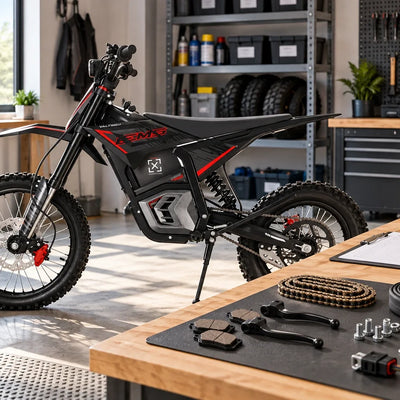
Electric Dirt Bike Replacement Parts Availability: What Buyers Should Verify Before Ordering
LEARN MORE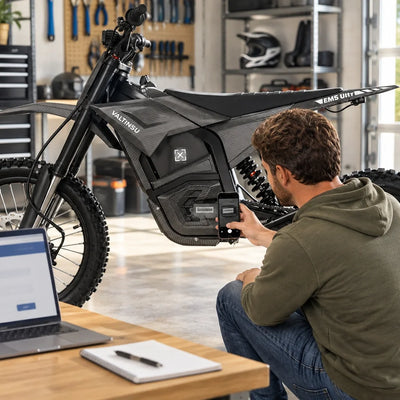
How to Check an Electric Dirt Bike for Safety Recalls by Model and Serial Number
LEARN MORE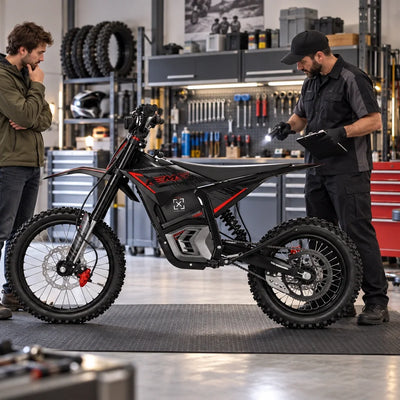
How to Choose an Electric Dirt Bike Repair Shop: Questions to Ask Before Service
LEARN MORE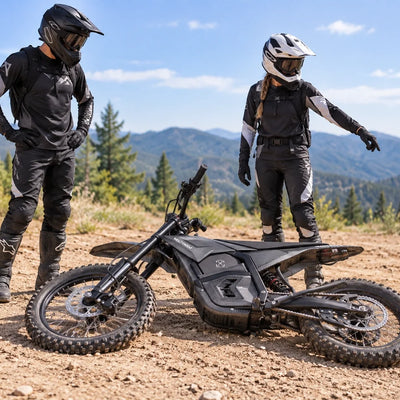
How to Lift a Fallen Electric Dirt Bike Without Hurting Yourself or the Bike
LEARN MORELooking for something else?
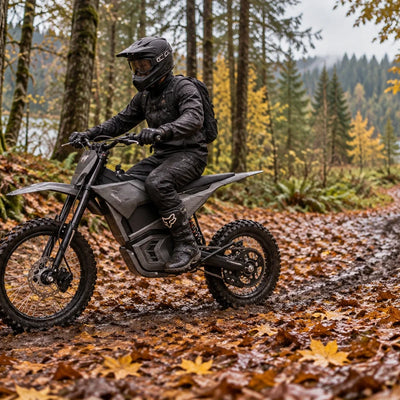
Electric Dirt Bike Fall Riding on Wet Leaves: Grip, Hidden Obstacles and Braking
LEARN MORE
Electric Dirt Bike Trailside Power Loss: Recovery Plan When the Battery Is Dead
LEARN MORE