Electric Dirt Bike Weight Limit: What Riders Over 200 lbs Need to Know
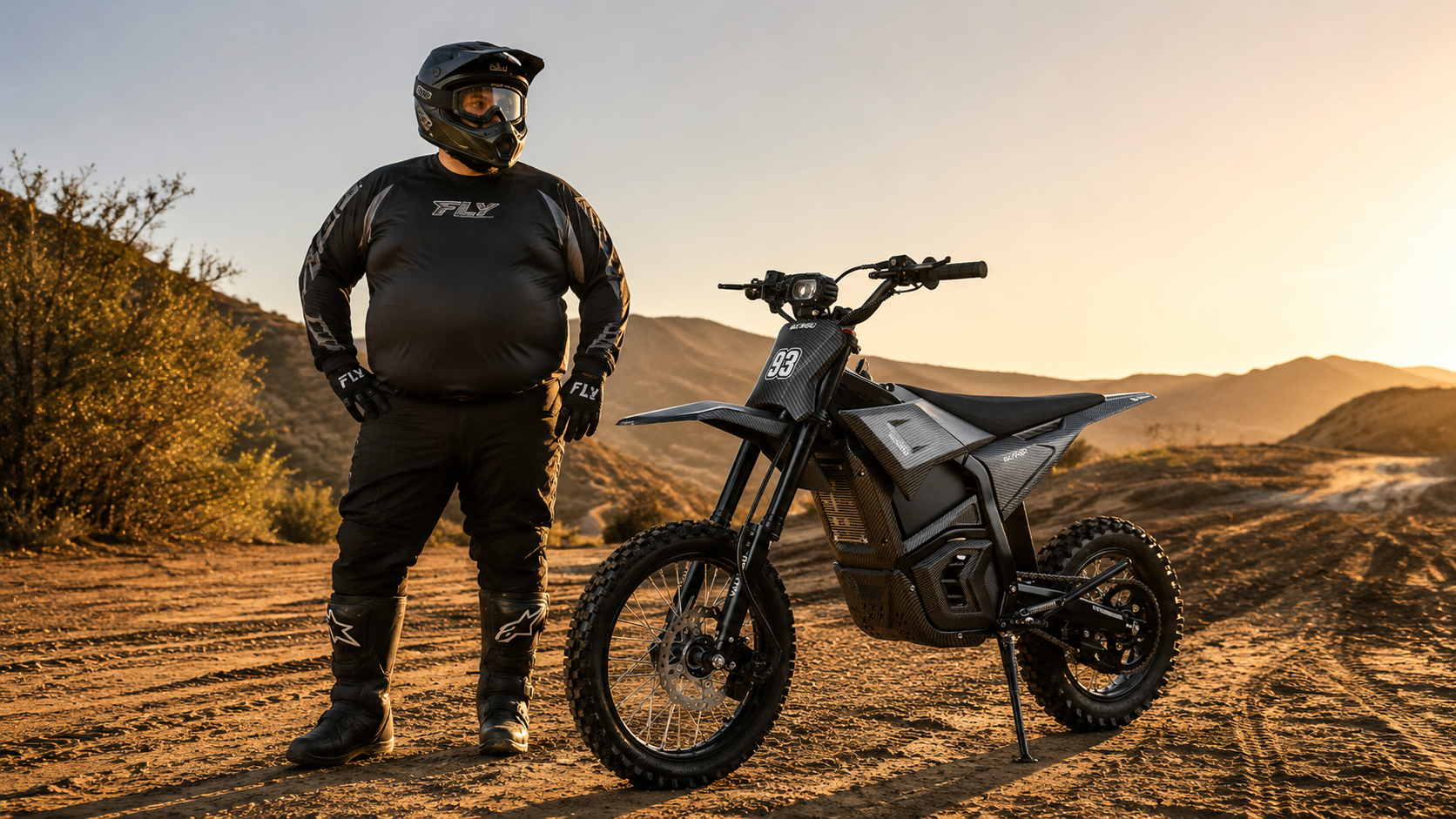
Most electric dirt bike weight limits fall between 150 and 400 lbs. That is the range most electric dirt bikes hold, and the number a rider over 200 lbs should check before anything else. Not seat strength. The total the bike is rated to carry, all of it.
On an adult electric off-road motorcycle that figure is a full-system rating. You, your gear, whatever is bolted to the frame. It sets how the bike launches, how it stops, how it climbs, whether it survives a season of trail riding. Shop by body weight alone and the math comes up short on the first rocky climb. So here is the real range by bike type, what counts toward the limit, and how to size one past 200 lbs.
|
Quick Answer: Electric Dirt Bike Weight Limit by Rider Type Youth bikes carry 100 to 150 lbs. Standard adult models, 220 to 300. Heavy-duty machines and full-size electric motorcycles reach 300 to 400 lbs or more. That listed figure almost always counts the rider plus all gear, so leave 10 to 15 percent of margin for rough ground. |
Weight Capacity by Bike Type: The Short List
Match the bike to the job first. Speed and color come later. Here is how the field sorts by payload.
- Lightest real load (100 to 150 lbs): youth electric dirt bikes. Built for kids and smaller teens, not adult riders.
- Everyday adult range (220 to 300 lbs): standard adult trail bikes. Works for many riders once gear is counted.
- Heavy-duty (300 to 400+ lbs): reinforced frames, bigger motors, stronger wheels. The category to start in past 250 lbs of total load.
- Cargo and full-size electric motorcycles push highest, sometimes 400 to 500 lbs, but those are a different machine with size, cost, and registration to match.
Payload at a Glance
Where bikes land, side by side. The three Valtinsu numbers are published max-load figures from the current spec sheet. The rest are typical category ranges. Place yourself, then read the detail underneath.

|
Bike type |
Typical max load |
Best for |
Notes |
|
Youth e-dirt bike |
100 to 150 lbs |
Kids, light teens |
Not for adult riders |
|
243 lbs |
New and teen riders, 13+ |
Full-size feel, lower seat |
|
|
265 lbs |
Older teens, cruisers, 16+ |
Big 19 in front wheel |
|
|
287 lbs |
Adult riders, 18+ |
Highest in the line |
|
|
Heavy-duty e-moto |
300 to 400+ lbs |
Larger adults, rough trails |
Reinforced build |
|
Cargo / full-size e-moto |
400 to 500 lbs |
Hauling, two-up |
May need registration |
Rider Weight Is Not Payload Capacity
Two numbers get mixed up constantly. The gap between them is where riders get burned. Rider weight is your body on the scale. Payload capacity is everything the bike will carry at once.
A 250 lb rider on a 300 lb bike does not get a clean 50 lbs of headroom for every situation. Smooth pavement, maybe. A jump, a steep climb, a hard stop on loose dirt loads the frame, wheels, and suspension well past your static weight. Across the setups we have reviewed, the riders who stay happy past a season bought capacity above their real load. Not right at it.
So the move is simple. Total your real riding load. Then buy a bike that clears it with room left over.

Why Gear and Accessories Count Too
Riding kit weighs more than buyers guess. Helmet, boots, jacket, gloves, knee guards, water, a small tool roll. That adds 15 to 35 lbs before you have touched the bike.
Then the bolt-ons. Rear racks, lights, bags, mirrors, a phone mount, spare tubes. Each one is permanent load, carried by the frame and tires every single ride. Remember the manufacturer figure is total payload. So the honest sum is body weight plus the lot, not the number on your bathroom scale.
Why the Weight Limit Matters for Riders Over 200 lbs
Weight changes how an electric dirt bike moves, stops, climbs, and survives rough ground. A bike sitting near its limit still runs. It just may not ride well, and it may not last. Four systems feel the load first.
Battery Range Drops Faster
More mass, harder pull from every stop. The motor burns more to climb, to cross soft dirt, to hold speed. That extra draw eats range. A bike advertised at 50-plus miles can fall well short once rider weight, gear, and hills stack up. Read the real-world range, not the lab figure, and assume hills, mud, and headwind each take their cut.
Motor Power Works Harder
Wattage matters more as the rider gets heavier. Torque matters most. It is what moves you off the line and up a grade, and a weak motor feels slow starting on loose dirt or pushing through sand. This is where a geared motor earns its place, multiplying torque low in the rev range, exactly where a heavy load needs it. Do not judge a bike by top speed. Low-speed pull is the spec that counts off-road.
Braking and Handling Change
Extra load stretches stopping distance. It also makes the bike feel heavy in turns, worst on loose or downhill ground. Hydraulic disc brakes give better control and shed heat better than basic mechanical ones, and a larger rotor helps on long descents. Balance shifts too. A loaded rear rack lightens the front wheel, and the steering goes vague.

Suspension Can Bottom Out
Bottoming out is the shock or fork running clean out of travel. It feels harsh. Over time it breaks parts. Heavier riders should look hard at suspension before buying, because adjustable preload, rebound control, and the option of stiffer springs make a real difference here. An adjustable air shock lets you dial sag for your weight without swapping hardware. That is the quiet advantage on the off-road models that carry one.
How to Calculate Your Real Riding Load
Your real riding load is everything the bike carries while you ride. That is the number that matters, not body weight alone. Four steps.
- Start with body weight. In normal riding clothes, current number. A 220 lb rider is only at step one.
- Add protective gear. Helmet, boots, pads, jacket, gloves. Often 15 lbs and up. Do not skip gear to fit a limit.
- Add the carry. Backpack, tools, water, plus any mounted racks, bags, lights, mirrors.
- Leave a 10 to 15 percent margin. Rough trails, drops, and hard braking load the bike past the static total. More margin if you ride hills, rock, or jumps.
|
Worked example A 230 lb rider, a 20 lb gear kit, a 10 lb loaded pack. That is 260 lbs before a single trail force. On a bike rated 287 lbs, sensible margin for everyday off-road use. On a 265 lb bike it is tight. A youth bike is out of the question. |
Sizing It by Rider: Where Each Bike Fits
Body weight plus gear is the starting point. Past 200 lbs, do not buy a bike that barely meets your total. Here is the practical breakdown, picks across tiers.
Riders Around 200 to 250 lbs
Many adult electric dirt bikes work here, as long as payload is left for gear. A model rated near 287 lbs gives sensible headroom for everyday trail riding. In the value tier, the EM-5 Pro carries 287 lbs, the most in its lineup, on a 5,600W geared motor with an adjustable air shock you set to your weight. It is the over-200-lb pick that skips race-machine money.

|
Pros |
Cons |
|
|
Riders Around 250 to 300 lbs
Be more selective. A standard bike gets close to its limit fast once gear is added, so a published capacity near the top of the adult range, or a heavy-duty build, is the better start. Check the frame, wheels, tires, brakes, and suspension before you read a single speed figure. Those parts decide how a bike behaves under load in the dirt. Steel frames with reinforced wheels are what hold up.
Riders Around 300 to 350 lbs and Up
Heavy-duty territory. You want a clear capacity above your real load, a strong frame, a high-torque motor, fat tires, hydraulic brakes, adjustable suspension. This is also where full-size electric motorcycles and cargo-rated machines come in, with the size, cost, and sometimes registration that follow. Bikes like the HappyRun G100 Pro are built around 400 lb ratings for this exact rider. A test ride helps. Watch the sag, the brake feel, the tire stability, whether the motor struggles on a start or a climb.
What to Check on the Spec Sheet Before You Buy
A spec sheet answers most of this before you pay. Find the max load. Then study the parts that hold it up.
- Frame strength and material. The base of capacity. Steel runs tougher in heavy-duty builds; quality aluminum is lighter. Want a clear rating, not vague copy.
- Motor power and torque. Torque pulls weight off the line and up grades. A heavier rider on steep ground needs more than a 200 lb rider on the flat.
- Battery size and heat control. Heavy loads draw more current and make more heat. Match capacity to your terrain, and treat range claims that ignore rider weight with caution.
- Suspension adjustability. Preload at minimum. Stiffer springs or an air shock keep a heavy rider from sagging the bike into instability.
- Hydraulic brakes and rotor size. A 160 mm rotor or larger sheds heat on long descents. A fast bike that stops poorly is a bad match for a heavy rider.
- Fat tires, spoke count, pressure. Wider tires spread load and add grip. A spoke count of 32-plus resists buckling. Tire pressure should match rider, tire, and terrain.
What Happens If You Exceed an Electric Dirt Bike Weight Limit
Overloading rarely fails a bike in one ride. The damage builds, through heat, stress, fatigue, and it shows up as a worse, shorter-lived machine.
- Shorter range. The motor draws more, and hills, sand, and mud make it worse.
- Slower acceleration, most noticeable starting on a hill or loose ground.
- Accelerated wear on tires, brakes, bearings, spokes, chain, and suspension. Loose spokes and brake fade are early signs.
- Wheel, tire, and brake stress, since the wheels take the hits and the brakes take the heat.
- Warranty and safety risk. Many brands deny claims for damage from riding over the listed limit, and braking and handling both degrade.
|
On warranty Read the manual before the first ride. Most warranties cover the frame, motor, and battery against defects, not damage from carrying more than the rated load. If you are near the limit, that line matters. |
Setup and Maintenance for Heavier Riders
A good setup buys back control and part life. It cannot turn a light bike into a heavy-duty one. It protects what you have. Heavier loads mean more frequent checks, because dirt, impact, and heat all pile on stress. Our maintenance guide covers the full routine. The load-specific basics are below.

Set Tire Pressure Correctly
Pressure drives grip, comfort, range, and rim protection. Heavier riders often need more than lighter ones on the same tire. Too high and grip drops on loose dirt. Too low and you invite rim hits and squirm. Use the tire sidewall range and the manual as your guide.
Adjust Suspension Sag
Sag is how far the bike settles under your weight. Too deep and it rides low and bottoms out. Set preload before you ride, and fit a stiffer spring if the stock setup cannot hold you. Correct sag sharpens steering and traction. It also spares the frame harsh hits.
Check Spokes, Bearings, and Brakes
Spokes loosen faster under heavy loads and rough riding, and loose spokes lead to wobble or rim damage. Bearings take more stress too, so listen for grinding or rough movement. Brakes should feel firm and predictable before every trail. Check pad wear, and replace worn pads before they score the rotor. When something is past saving, replacement parts for the lineup are available.
The Bottom Line:: Choosing an Electric Dirt Bike by Weight Limit
Electric dirt bike weight limit is not a small line on a product page. It shapes how the bike starts, stops, climbs, turns, holds up ride after ride. Total your real load first. Body plus gear plus anything mounted. Then buy capacity above it, with margin to spare.
Past 200 lbs, what makes a bike feel stable instead of stressed is a stronger frame, more torque, adjustable suspension, hydraulic brakes, tire pressure set right. Want a value starting point with the highest payload in its class? The 287 lb EM-5 Pro is the one to weigh, and you can compare the full lineup side by side. Match the bike to your load. Then go ride.
Frequently Asked Questions
Can a 300 lb person ride an electric dirt bike?
Depends on the bike's rating, but yes, it's doable. The number to clear is total load above 300 lbs, since your gear and anything bolted on count against it too. Plenty of adult bikes fall short of that. The ones that hold up tend to be heavy-duty builds rated 350 to 400 lbs.
-
A strong frame and real torque matter more than top speed here.
-
Hydraulic brakes plus fat tires keep the load under control.
-
Weigh yourself in full gear before you buy, then leave a margin on top.
How much weight can an electric dirt bike hold?
Somewhere in the 150 to 400 lb band, model depending. Youth bikes sit at the bottom. Adult trail bikes land in the middle. Heavy-duty machines run higher. Whatever the sticker says, it's usually total payload, which is why a 300 lb limit won't suit a 295 lb rider once boots, pads, and a pack go on.
-
First stop is always the manual and the product spec.
-
No clear figure listed? Ask support, or skip it for a bike that states one.
How fast is a 3000W electric dirt bike in mph?
Call it 35 to 45 mph. Watts set the ceiling, but what you actually hit comes down to your weight, the gearing, and the ground under you. A 3,840W EM-5, for instance, tops out around 40, and a heavier rider gets there slower than a light one.
-
Loaded up or pointed uphill, that top number drops.
-
Acceleration tracks torque, not the wattage on the label.
What e-bike or dirt bike can hold 500 pounds?
That's cargo and full-size electric motorcycle territory, not a trail dirt bike. A real 500 lb rating almost always means a utility or cargo machine. Read the fine print before you trust it. One brand's "payload" is another brand's "gross vehicle weight," and the second number folds in the weight of the bike itself.
-
Hunt for "payload" versus "gross vehicle weight" in the spec.
-
A product title or an ad claim isn't proof of either.
How heavy is too heavy for an electric dirt bike?
The moment your real load tips past what the maker rates. No universal cutoff exists. One bike stops at 250 lbs, the next goes to 400. Trouble shows up when parts haul more than they were designed to, and from there you lose range, lose braking, cook the motor, and wear everything faster.
-
Rough trails? Stay 10 to 15 percent under the rating.
-
Body weight isn't the whole load. Count the gear and the cargo.
What is the weight limit on a standard adult electric dirt bike?
Most land between 220 and 300 lbs. The Valtinsu line bears that out, from 243 lbs on the EM-5 up to 287 on the EM-5 Pro, with the EM23 sitting at 265. Add a full gear kit and heavier riders are better off treating the top of that range, or a heavy-duty bike, as where they start shopping.
-
EM-5: 243 lbs, rated 13+.
-
EM23 steps up to 265 lbs, rated 16+.
-
EM-5 Pro tops the line at 287 lbs, adults only.
Sources
- U.S. Consumer Product Safety Commission, Bicycle Requirements Business Guidance (2026).
- Electronic Code of Federal Regulations, Title 16, Part 1512 Requirements for Bicycles (2026).
- National Highway Traffic Safety Administration, Motorcycle Safety (2026).
- PeopleForBikes, Electric Bike State Laws (2026).
- Schwalbe, Tire Pressure Technology FAQ (2026).


Looking for something else?
Electric Dirt Bike Replacement Parts Availability: What Buyers Should Verify Before Ordering
LEARN MORE
How to Check an Electric Dirt Bike for Safety Recalls by Model and Serial Number
LEARN MORE
How to Choose an Electric Dirt Bike Repair Shop: Questions to Ask Before Service
LEARN MORE
How to Lift a Fallen Electric Dirt Bike Without Hurting Yourself or the Bike
LEARN MORELooking for something else?
Electric Dirt Bike Fall Riding on Wet Leaves: Grip, Hidden Obstacles and Braking
LEARN MORE
Electric Dirt Bike Trailside Power Loss: Recovery Plan When the Battery Is Dead
LEARN MORE