

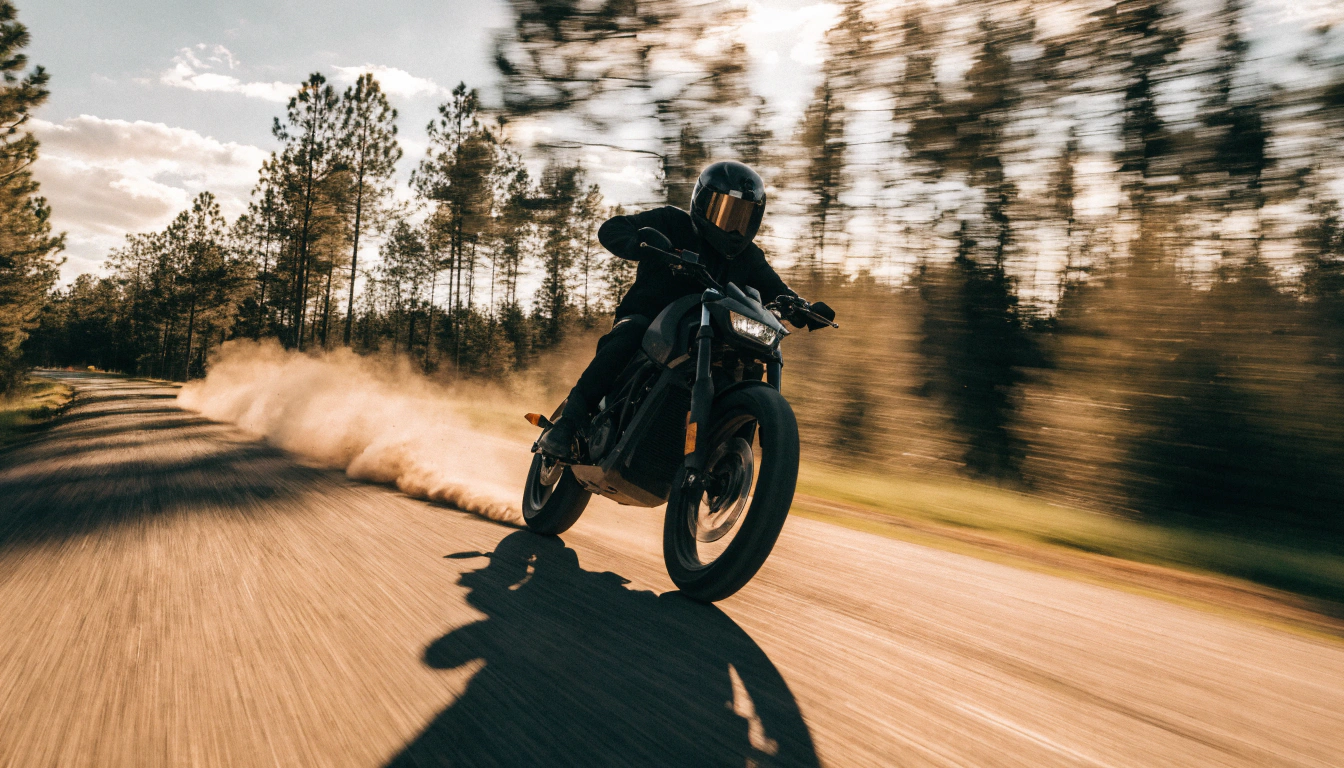
How Fast Is a 48V Electric Bike? 1200W Motor Speed & Performance
Devon kept circling back to one number. 48V. It was printed on the battery, stamped on the spec sheet, slapped across the box. He'd convinced himself that number told him how fast the bike would go. It doesn't. Not even close. A week later, on a hardpack fire road outside Bend, he found out the way most people do — twist the throttle, watch the display climb past what you expected, grin like an idiot.
So here's the honest short version. A 48V electric bike running a 1200W motor does about 28–35 mph on flat ground, assuming nothing's holding it back. But the 48V part? That's not the speed. If you're shopping for a high-power machine — or a real Adult Electric Off-Road Motorcycle that never sees a bike lane — the watts, the controller, and the motor type tell you far more than the voltage on the sticker. Brands like Valtinsu build for that off-road band. Not the commuter one.
|
Quick answer: A 48V 1200W e-bike sits around 28–35 mph on flat ground, uncapped. Step down the wattage and the speed drops with it — 500W runs 20–25 mph, 750W runs 25–28, 1000W lands near 28–32. Voltage is electrical pressure. Watts, controller current, gearing, rider weight and terrain are what actually set the number on your display.
|
How Fast Is a 48V Electric Bike With a 1200W Motor?
A 48V 1200W setup outruns most city e-bikes. On flat pavement, plenty of riders see 28–35 mph once the bike isn't boxed in by software or a speed class. The catch is that the range moves around. A lighter rider on smooth tarmac lands near the top. Add a heavier rider, soft tires, a steep grade, or a half-dead battery, and the number falls off fast. Same bike. Different day.
Typical 48V 1200W top-speed range
Call it 28–35 mph on flat ground. Some bikes feel happiest holding 25–30, where the motor cruises without working up a sweat. You only see the high end when everything lines up at once:
-
A controller that actually delivers its rated current, not a choked-down one
-
A healthy, near-full battery
-
Correct tire pressure on smooth pavement or packed dirt
-
A moderate rider weight, low wind, no big climbs
And the wattage on the box? Not a promise. It tells you how hard the motor can pull when conditions cooperate. Nothing more. Treat it like a ceiling, not a guarantee.
Street-legal speed vs unlocked speed
U.S. e-bikes get sorted into speed classes. Class 1 and Class 2 cut motor help at 20 mph. Class 3 goes to 28. A 1200W motor blows past those numbers in most places — which doesn't make the bike illegal to own, but it does decide where you can legally ride it. Some 48V bikes ship capped at 20 or 28 in firmware. Others arrive unlocked for private land or off-road. Worth knowing which one you've got before you open it up on a public street.
Why voltage alone doesn't decide MPH

Voltage is one slice of the pie. A 48V pack can push strong power, sure — but the final speed also leans on the motor, the controller, the gearing, the tires, your weight, and the ground under you. Two bikes can both say 48V and ride nothing alike. A 48V 500W commuter feels smooth and tidy at 20–25 mph. A 48V 1200W setup pulls harder and holds speed up a hill the commuter would choke on. Think of voltage as the pressure behind the hose. Watts and controller output decide how that pressure turns into actual motion.
|
Valtinsu EM-5 Pro — Adult Electric Off-Road Motorcycle (18+)
60V · 4,800W peak · 240 N·m · 43 mph top mode · IPX6 · Three ride modes
When 28–35 mph from a 48V 1200W bike isn't enough, a purpose-built 60V machine is the honest next step. Geared motor torque arrives low in the rev range — built for fire roads and singletrack, not public roads. From $1,699 USD · Free U.S. shipping.
|
What Does 48V Mean on an Electric Bike?
48V is the battery system's nominal voltage — basically how much electrical pressure the pack can shove through the bike. It's a common choice because it splits the difference well: enough speed, enough torque, decent range. Stronger than many 36V systems. More practical than big high-voltage builds for everyday riding. The Goldilocks voltage, if you want to be cute about it.
Volts vs watts vs amps
These three travel together, and people keep mixing them up. Voltage is the pressure pushing electricity through the system. Amps are the current — the actual volume flowing from battery to motor. Watts are total power. The math is genuinely simple:
Power (W) = Volts (V) × Amps (A)
A 48V system makes strong power without crazy-high current, which keeps heat down when the bike's built right. A 1200W motor on 48V draws more current than a small motor does, so the controller, the wiring, the battery cells — all of it has to be up to the job. Skimp on any one piece and the weakest part decides your real-world speed.
|
Continuous, then torque, then voltage. In that order. Peak is the easiest number to game. Continuous is what the motor will actually do at the bottom of August in Arizona.
— Dana, EV traction engineer
|
Why 48V shows up on performance bikes
48V hands most riders plenty of speed without making the bike a tank or blowing the budget. Stronger launches, better climbing, cleaner power delivery than the lower-voltage stuff. It also plays nice with common motor sizes — 500W, 750W, 1000W, 1200W bikes all run 48V packs. Commuters, heavier riders, trail riders, anyone who wants more shove than a basic low-power bike. Wide net. That's the appeal.
How 48V compares to lower-voltage systems
A 36V bike handles light commuting and flat paths just fine. Put it on a hill, or under a heavier rider, and it goes soft. A 48V bike gives you stronger acceleration, holds speed better, and climbs better with the right motor and controller behind it. Go higher — 52V, 60V — and you get more top-end potential, but only if the battery, controller, display and motor are all matched. Mismatch them and the extra voltage just buys you heat, error codes, and dead parts. Don't do that.
1200W Motor Speed vs 500W, 750W, and 1000W

Motor power shapes how fast a bike feels. A higher-watt motor usually launches harder, carries more load and holds speed with more confidence. More watts isn't automatically better, though. The right motor depends on where you ride, how much speed you need, and whether you have to stay inside street-legal limits. For a deeper breakdown, the watts and torque guide explains why output and torque drive real trail performance.
|
Motor (48V)
|
Typical Top Speed
|
Best Use
|
|
500W
|
20–25 mph
|
City commuting, bike lanes, casual flat riding
|
|
750W
|
25–28 mph
|
All-round riding near Class 3 limits, light hills
|
|
1000W
|
28–32 mph
|
Stronger hill support, light off-road, often beyond class rules
|
|
1200W
|
28–35 mph
|
Hard acceleration, hill confidence, private-road / off-road use
|
48V 500W: smooth and easy
A 48V 500W bike usually settles at 20–25 mph on flat ground. The city-commuter sweet spot. Efficient, predictable, friendly on bike lanes. Where it struggles is hills — put a heavier rider or a real grade in front of it and the speed bleeds off faster than it would on a bigger motor. Fine for what it is. Just know what it is.
48V 750W: the Class 3 line
A 48V 750W bike gets to about 25–28 mph in good conditions. Launches noticeably harder than 500W, carries gear or a bigger rider without complaint. For a lot of U.S. riders this is the ceiling of common e-bike class rules — which is exactly why it's such a popular street pick. Strong enough to feel quick, tame enough to stay legal most places.
48V 1000W: the off-road edge
A 48V 1000W bike runs roughly 28–32 mph depending on setup. Off the line it's meaner than 750W, and it earns its keep on hills and light off-road. The asterisk: it usually slips outside normal e-bike class limits, so check local rules before you take it onto a public road.
48V 1200W: keeps pulling
A 48V 1200W bike hits roughly 28–35 mph on flat ground, uncapped. It feels fast because it keeps pulling after the smaller motors run out of breath — great for hard acceleration, hill support, and private-road or off-road routes. But the fastest setup isn't automatically the best one. A smooth controller, brakes that actually stop you, good tires, a frame that doesn't flex — all of that matters as much as the wattage. Maybe more.
|
Almost every rider asks me about top speed first. Top speed's the dumbest spec to shop on — it's the number you'll use for maybe four seconds out of a two-hour ride. The watts you'll feel every time you crack the throttle.
— Trevor, shop tech, Asheville NC
|
What Affects the Speed of a 48V 1200W E-Bike?
A 48V 1200W bike can be quick. Whether it is, on any given ride, comes down to a lot more than the motor label. Rider weight, tire pressure, road surface, wind, battery charge, controller settings — all of it pulls the number around. That's why one rider swears their bike does 35 and another barely sees 28 on the identical model. Same motor. Different everything else.
Rider weight and cargo
More mass, more power needed to move it. Simple physics, no way around it. A 130-lb rider launches quicker and tops out higher than a 220-lb rider on the same bike. Cargo piles on too — a loaded pack, a spare battery, a full hydration vest all shave acceleration and trim the top end. And it's worst on hills, where the motor's fighting gravity and weight at the same time. Even 1200W bogs under a heavy load on a long climb. It happens.
Flat terrain vs steep hills
Flat ground is where you'll see your real top speed — smooth pavement or hardpack turns power into forward motion with barely any waste. Hills flip the motor's job. Instead of chasing speed, it's making torque to drag you uphill. A 1200W motor climbs better than most lower-power motors, no argument. But long, steep grades still scrub speed, drain the pack quicker, and cook more heat into the system.
Tire pressure, tread and wheel size
Tires steal speed quietly, and most people never notice. Low pressure means more rolling resistance, which means the motor's grinding harder for the same result. Knobby tires grip dirt beautifully and lose top speed on pavement. Wheel size plays in too — bigger wheels roll better at speed, smaller ones feel snappier off the line. Which is right? Depends entirely on what the bike's for.
Battery charge and voltage sag
A full pack gives you the strongest pull. As it drains, the bike goes soft under hard throttle. The culprit is voltage sag — pack voltage dipping under load — and it shows up most on climbs, hard launches, and high-speed runs. It's why a bike feels electric at 90% and tired at 30%. Same battery, just less left in it. For the habits that actually protect your range, the electric dirt bike battery range guide is worth ten minutes.
Controller settings and speed caps
|
The controller is the bouncer. It decides how much power gets from the battery to the motor. The motor might be capable of more — doesn't matter if the controller won't let it through. Makers set caps for safety, battery life, or legal class, so a bike that could physically go faster might just stop assisting at 20 or 28. Messing with those settings touches safety, warranty, and legal use all at once. Don't go poking at power limits unless you actually know the bike's electrical limits.
|
Wind resistance and riding position
Past about 20 mph, wind is the enemy. Sit upright and you're basically a sail — the motor has to fight all that air. Tuck low and forward and you cut the drag, which helps the bike hold speed with less effort. A headwind eats your speed on flat ground; a tailwind gives it back. Just don't count on the wind when you're trying to judge what a bike can really do.
|
The short version of all that
Voltage sets the pressure. Watts, controller current and gearing turn it into speed.
Rider weight and hills are the two biggest real-world speed killers — bigger than most people expect.
A capped bike isn't a weak bike. It's a legal or safety choice you can sometimes change, and sometimes shouldn't.
If the bike feels slow, check tires, chain and charge before you blame the motor.
|
Can a 48V 1200W Electric Bike Reach 30 MPH or More?
Yes. Often, actually. The bike needs enough controller output, the right gearing or motor winding, a healthy charge, and conditions that play along. A 30+ mph ride also asks a lot more of you and the hardware — brakes, tires, frame, suspension, and your gear all start to matter in a way they didn't at 18.
When 30 mph is possible
Flat ground, strong charge, smooth pavement, proper tire pressure, low wind — line those up and a 48V 1200W bike will see 30 without much fuss. It's far likelier when the bike isn't capped at a legal assist limit; some are tuned for private land or off-road, no firmware leash. And a lighter rider gets there quicker than a heavier one. Same bike, completely different character under a different load.
Why some 48V bikes cap at 20 or 28 mph
Lots of 48V bikes are capped to fit the e-bike speed classes — that's why some quit assisting at 20 and others at 28. The cap doesn't mean the motor's weak. It's a legal, safety, or warranty call. A capped bike still feels strong down low, and honestly, for commuting, controlled acceleration and brakes you trust beat a higher top speed every time.
Why higher speed drains range faster
Go faster, drain quicker — because the motor's fighting more wind the whole time. The faster you push, the more energy it takes just to part the air in front of you. Riding at 30–35 mph chews through range way faster than cruising at 18–22, even on dead-flat road. Fast running also stacks heat into the motor, controller, and pack. Which is one good reason to keep the high-speed runs short and deliberate.
48V 1200W Speed vs Range: What to Expect

The fastest possible speed is rarely the best riding speed. A 48V 1200W bike can absolutely touch 30+, but a calmer cruise gives you more range and smoother control. Most riders get the best day out of the bike by mixing it up — save the full power for hills, short open stretches, the off-road bits where it's safe to let it eat.
Best cruising speed for everyday riding
For most people, 18–25 mph is the pocket. Quick enough to feel good, not so quick it drains the pack in an hour. At that speed the motor isn't pinned under constant load, and the bike stays easy to manage in traffic, on paths, around other riders. The extra 1200W of power is there when you need it. Smartest move is to spend it in bursts, not hold it wide open the whole ride.
Why hills and heavier riders cut range
Hills force the motor to fight gravity. Heavier riders and cargo pile on more load, so the motor pulls more current — and every amp of that comes straight out of the battery. Net result: less range, sometimes less top speed. A 1200W motor helps on the climbs, no question, but it isn't magic. Steady throttle, a little help from the pedals, the right assist level — that's what actually stretches the miles.
Is a 48V 1200W Electric Bike Legal?
Maybe not, depending where you are. A 48V 1200W bike often doesn't fit standard e-bike class rules, because 1200W sits above the power limit baked into a lot of U.S. e-bike definitions. And the rules shift by state, city, trail system, and land manager — so check yours before you ride a 1200W bike on public streets, bike lanes, parks, or shared trails. Boring advice. Saves you a ticket.
Class 1, Class 2 and Class 3 limits
Most U.S. rules run on three classes. Class 1: pedal assist, stops at 20 mph. Class 2: adds a throttle, also stops at 20. Class 3: assists up to 28, usually fine on roads and bike lanes but often barred from shared paths. The thing is, these classes hinge on assist speed, throttle, and motor rating — and a 1200W bike can fall outside all three even if you're crawling along at 12.
Why 1200W often exceeds e-bike class rules
A 1200W motor is stronger than the 750W ceiling written into a lot of U.S. e-bike class language. So a 48V 1200W model can get treated like something other than a Class 1, 2, or 3 e-bike. That's not a problem — it just means the bike belongs on private property, off-road areas, farms, or approved trails. And no, bolting on pedals and lights doesn't make it road-legal. Motor rating and local rules still call the shots.
When a high-power bike is treated differently
|
Electric dirt bikes are not e-bikes. A high-power machine can get classed as a moped, an electric motorcycle, or an off-road vehicle depending on where you are — and that changes registration, insurance, helmet rules, age limits, and where you're allowed to ride. Valtinsu's off-road models, like the 60V 4800W EM-5 Pro, are built for dirt and rated off-road use only. Not public roads. "Electric" never automatically means "street legal."
|

Why unlocking speed affects safety and warranty
Unlocking a cap makes the bike faster and the ride riskier, both at once. The brakes, tires, controller, and wiring were all chosen for the original speed range. Push past it and your reaction time shrinks — a pothole or a swung car door turns ugly fast at 30+. The warranty takes the hit too. Change the controller settings, swap the battery, bypass the limiter, and the maker may walk away from anything that breaks. Worth thinking about before you start cutting wires.
How to Make a 48V Electric Bike Faster Safely
The real speed gains come from setup and maintenance, not from sketchy electrical hacks. A clean drivetrain, correct tire pressure, a healthy battery, and a few smart habits will get the bike right up to its honest ability. Skip the shortcuts that overload the controller, battery, or motor — a faster bike only does you any good if it still stops, steers, and stays under your control.
Keep tires properly inflated
Tire pressure drives speed, range, and handling all at once. Run them low and the tire flexes, wastes energy, and drags the whole bike down. Check the sidewall or the manual for the right range, and use an actual gauge — not your thumb. For dirt, some riders bleed pressure off for grip; for pavement and speed, keep them properly aired up and the rolling resistance drops.
Drop unnecessary weight
Every extra pound slows the launch and makes the motor work harder. Strip off the tools, bags, and gear you don't need for that particular ride. Small cuts add up more than you'd think — at stoplights, on climbs. That said, don't get stupid about it. Keep your gear, your lights, your basic repair kit when the ride actually calls for them.
Maintain chain, brakes and drivetrain
A dry chain, a brake that drags, a gritty drivetrain — every one of those quietly steals speed and burns battery. Clean and lube the chain on a schedule. Make sure the wheels spin free and nothing's rubbing. If the bike just feels slow lately, start with the boring stuff. Most speed complaints turn out to be maintenance, not a dying motor.
Use the right mode for the terrain
Most e-bikes give you a few assist or speed modes. Lower modes stretch range; higher modes hand you stronger launches and hill help. Use the high modes when you need them — climbs, loose dirt, a quick blast — then drop back down to cruise. The habit saves range and keeps heat in check, and it gives you way more control than treating every start like a drag race.
Avoid unsafe battery or controller swaps
A bigger battery or a beefier controller sounds like easy free speed. In the real world, mismatched parts overheat, melt wiring, or push unsafe voltage through the system. Don't drop in a higher-voltage battery unless the controller, display, motor, charger, and BMS were all built for it — even parts that plug right in can be electrically wrong. If you genuinely want more speed, buy a bike that was designed for it. For off-road riders, the 48V trail-rated EM-5 makes a lot more sense than flogging a small bike past what it was meant to do.
Is a 48V 1200W Electric Bike Right for You?
A 48V 1200W bike is a strong pick if you want more speed, more hill muscle, and harder acceleration than a basic commuter gives you. It's not for everyone, though. If all you need is a legal 20 mph city ride, a lower-power Class 1 or 2 bike is genuinely easier to live with. But if you ride hills, haul weight, or have private land to play on — 1200W earns its spot. Worth scanning the full electric dirt bike lineup if you've already outgrown the bike-lane category.
Best for stronger acceleration
A 1200W motor pulls off the line harder than most small motors. That's the difference crossing a busy street, launching uphill, or getting moving on loose ground. The extra power feels confident, and it means you're not pinning the motor at its limit every single start. The flip side: it demands a little discipline. Smooth throttle. No wide-open launches on gravel unless you enjoy meeting the ground.
Best for hills and heavier riders
A 48V 1200W bike is a friend to heavier riders and hilly terrain — more power to push against load and grade. It won't rocket up every climb at top speed; long, steep ones still scrub speed and range. What you get is headroom. It holds usable speed where a lower-power setup would be gasping. And headroom is exactly what you want when the trail tilts up.
Not ideal for pure city speeds
If 15–20 mph around town is the whole job, 1200W is overkill — more money, more weight, more legal headaches. A lower-power commuter is easier to park, lift, maintain, and thread through traffic, and it fits local rules far more cleanly. Buy 1200W for the torque, the load support, the private-land speed. Not because the bigger number looks better on paper.
Which Valtinsu Fits Your Riding?
|
EM-5 — Ages 13+
|
EM-5 Pro — Adults 18+
|
EM-23 — Ages 16+
|
|
48V · 3,840W peak
190 N·m · 37 mph
Trail starter. Only Valtinsu model rated under 18.
|
60V · 4,800W peak
240 N·m · 43 mph
Performance trail. Geared motor for fire roads and singletrack.
|
60V · 4,000W peak
250 N·m · 43 mph
Adult cruiser geometry. 19" front wheel for all-day comfort.
|
|
Age rule — no exceptions: EM-5 = 13+ · EM-23 = 16+ · EM-5 Pro = 18+ adults only. Parents shopping for a rider under 18 must choose the EM-5. These are Adult Electric Off-Road Motorcycles, not e-bikes — off-road use only, not street legal.
|
Conclusion
Devon stopped staring at the 48V number after that first fire-road ride. He'd been so sure voltage was the speed. It's the pressure. The watts, the controller, the gearing, and the day's conditions are what turn that pressure into 28, or 32, or 35 mph on the display.
Here's what to actually carry out of all this. A 48V 1200W electric bike runs roughly 28–35 mph on flat ground, uncapped — quicker than a 500W or 750W commuter, slower than a full 2000W machine. Read the spec sheet in context, because the motor's just one piece of a system that also includes the battery, the controller, the brakes, the tires. And don't forget the category line. A 1200W machine usually falls outside e-bike class rules, which is exactly the spot where an Adult Electric Off-Road Dirt Bike— built for dirt, rated off-road only — makes more sense than over-volting a bike that was never meant to move that fast.
So the real question was never "how fast is 48V." It's "how fast do you actually ride, and where do you ride it." Answer that one honestly and the right bike more or less picks itself.
|
Before you buy, remember
48V is electrical pressure — not a speed rating. The watts and controller decide the number.
1200W on 48V means roughly 28–35 mph uncapped, on flat ground, with everything cooperating.
Above 750W, you're usually outside e-bike class rules. Plan to ride off-road or on private land.
Don't over-volt a small bike. Buy one built for the speed you want — and gear up for it.
|
FAQs
How fast should a 48V ebike go?
Most street-built 48V e-bikes land between 20 and 28 mph. A 500W sits around 20–25; a 1200W reaches roughly 28–35 uncapped. The real number depends on motor size, controller, rider weight, and terrain — and a legal class cap can hold the assist well below what the motor could actually do.
Is it possible for a 48 volt battery to go 35 mph?
Yes, though the battery alone isn't what gets you there. A 48V 1200W bike hits 35 with no cap, a full charge, flat ground, and low wind. Swap in a weaker controller or pile on weight and the same bike sits nearer 28–32. Think of 35 as a short private-road number, not a crowded-path cruise.
Is 20 mph fast on an e-bike?
For most riders, absolutely. It feels quick because you're exposed and the bike's light. At 20 mph you cover ground in a hurry and need noticeably more stopping distance than on a pedal bike. It's a genuine sweet spot for commuting — controlled, efficient, legal almost everywhere.
How long does a 48 volt e-bike battery last?
Depends on amp-hours, speed, rider weight, terrain, and assist level. A bigger 48V pack goes further; a small one drains fast under a 1200W motor. Slow, flat cruising stretches way past full-throttle 30+ mph running. Hold a steady speed and recharge before you hit empty — both help a lot.
How to make a 48V ebike go faster?
Fix the cheap stuff first. Tire pressure, chain, brake drag, battery health, extra weight. A clean drivetrain, a full charge, and properly aired tires get the bike to its honest top speed. Electrical swaps — controller, higher-voltage battery — are risky if the parts aren't matched. If you still need more, buy a purpose-built bike.
What e-bikes go 40 mph?
Usually high-power off-road or moped-style machines — stronger motors, bigger controllers, heavier frames. A standard Class 1–3 e-bike isn't built to assist at 40. Some electric dirt bikes reach or pass it, but they need real brakes, tires, suspension, and an experienced rider. And they're off-road only.
What e-bikes go 70 mph?
Not your typical commuter e-bike, that's for sure. At 70 you're talking electric motorcycle, not pedal-assist bicycle. It takes serious motor power, a high-voltage pack, motorcycle-grade brakes and tires, real suspension, and probably registration and a license. For most riders, 70 mph isn't practical or safe on a bike path.
How fast will a 2000 watt electric bike go?
Often 35–45 mph, depending on voltage, controller, rider weight, terrain, and whatever cap is in place. A 2000W motor accelerates and climbs much harder than a street-class bike, and it drinks battery to do it. At that power it usually lands outside standard e-bike rules — and it needs stronger brakes, tires, and gear to match.
Sources
-
U.S. Department of Energy — Electric Vehicles: motor and battery efficiency.
-
U.S. National Highway Traffic Safety Administration — motorcycle safety and motor-vehicle classification.
-
U.S. Bureau of Land Management — e-bike classification on public land.
-
U.S. Environmental Protection Agency — Green Vehicles drivetrain resources.
-
Valtinsu — Electric Dirt Bike Collection.
-
Valtinsu — EM-5 Pro Adult Electric Off-Road Motorcycle.
-
Valtinsu — EM-5 Electric Off-Road Adult Dirt Bike.


Looking for something else?
Electric Dirt Bike Setup for Hardpack Trails
LEARN MORE
Electric Dirt Bike Mud Riding: Setup, Technique and Cleanup
LEARN MORE
Can You Ride an Electric Dirt Bike on Forest Service Roads?
LEARN MORE
Electric Dirt Bikes at OHV Parks: Rules and Checklist
LEARN MORELooking for something else?
Hot-Weather Electric Dirt Bike Guide: Battery, Rider and Range
LEARN MORE
How to Ride an Electric Dirt Bike Over Wet Roots
LEARN MORE
Electric Dirt Bike Ruts and Washouts: Line Choice and Recovery
LEARN MOREYou may also like
VALTINSU EM-5 Off-Road Electric Dirt Bike
$969.00
$1,559.00
VALTINSU EM-5 Pro Off-Road Black Electric Dirt Bike
$1,699.00
$1,899.00
VALTINSU EM-5 Pro Green Electric Dirt Bike
$1,699.00
$1,899.00
VALTINSU EM-5 Ultra Electric Dirt Bike
$2,199.00
$2,499.00
VALTINSU EM-5 & EM-5 Pro Combo
$2,658.00
$3,458.00
Further reading
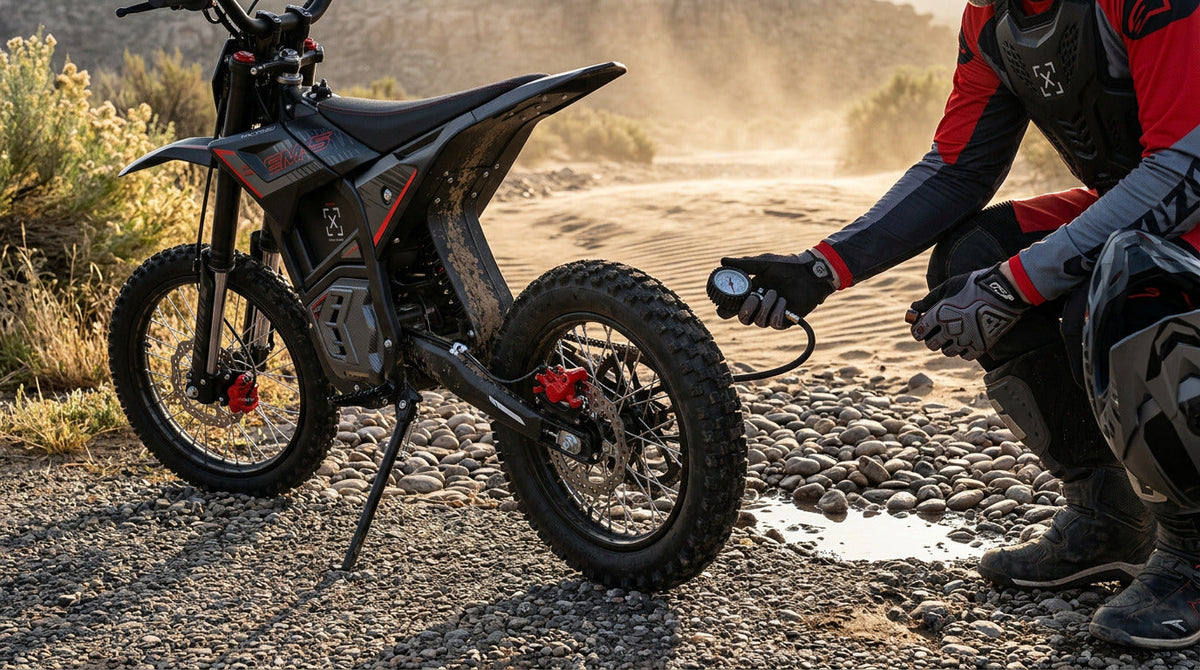
Electric Dirt Bike Tire Pressure by Terrain: PSI Starting Points
Electric dirt bike tire pressure should start with the exact tire and motorcycle limits, then change with terrain, rider load, tire construction and impact risk. Softer ground usually favors a lowe...
Electric Dirt Bike Suspension Sag Setup: A Rider-Weight Method
Electric dirt bike suspension sag setup starts by measuring the rear suspension fully extended, then measuring it again with the bike alone and with you in full riding gear. Use those readings to e...

Your First 100 Miles on an Electric Dirt Bike: Break-In and Service Checklist
The first 100 miles on an electric dirt bike are an inspection period rather than a gas-engine-style mechanical break-in. Check the motorcycle at 0, 25, 50 and 100 miles for hardware settling, chai...
Electric Dirt Bike Ground Clearance vs Suspension Travel: What Each Number Means
Electric dirt bike ground clearance is the vertical space between the ground and the motorcycle’s lowest relevant chassis point, while suspension travel is how far the wheel and suspension can move...