Street Legal Ebike vs Dirt Bike: The Legal Difference, Explained
One line settles the street legal ebike vs dirt bike question. Pedals plus a motor under 750 watts, and the law counts it a bicycle. Strip the pedals, pile on the watts, and now it is a motor vehicle, stuck off-road until you register it. Two wheels either way. Two rulebooks that barely overlap.
And that gap costs people real money. Sell a bike as an "e-bike," then watch it flip into an unregistered motorcycle the moment it clears 750 watts or drops its pedals. Most riders find this out at a traffic stop, never before it. Teenagers especially.
So here is the whole thing, plainly. What keeps an e-bike street legal. What an electric dirt bike actually is. Where each one can ride without a ticket. Plus the over-powered trap that quietly turns a legal e-bike into something the DMV wants to talk about.
E-Bike vs Electric Dirt Bike: The Key Difference
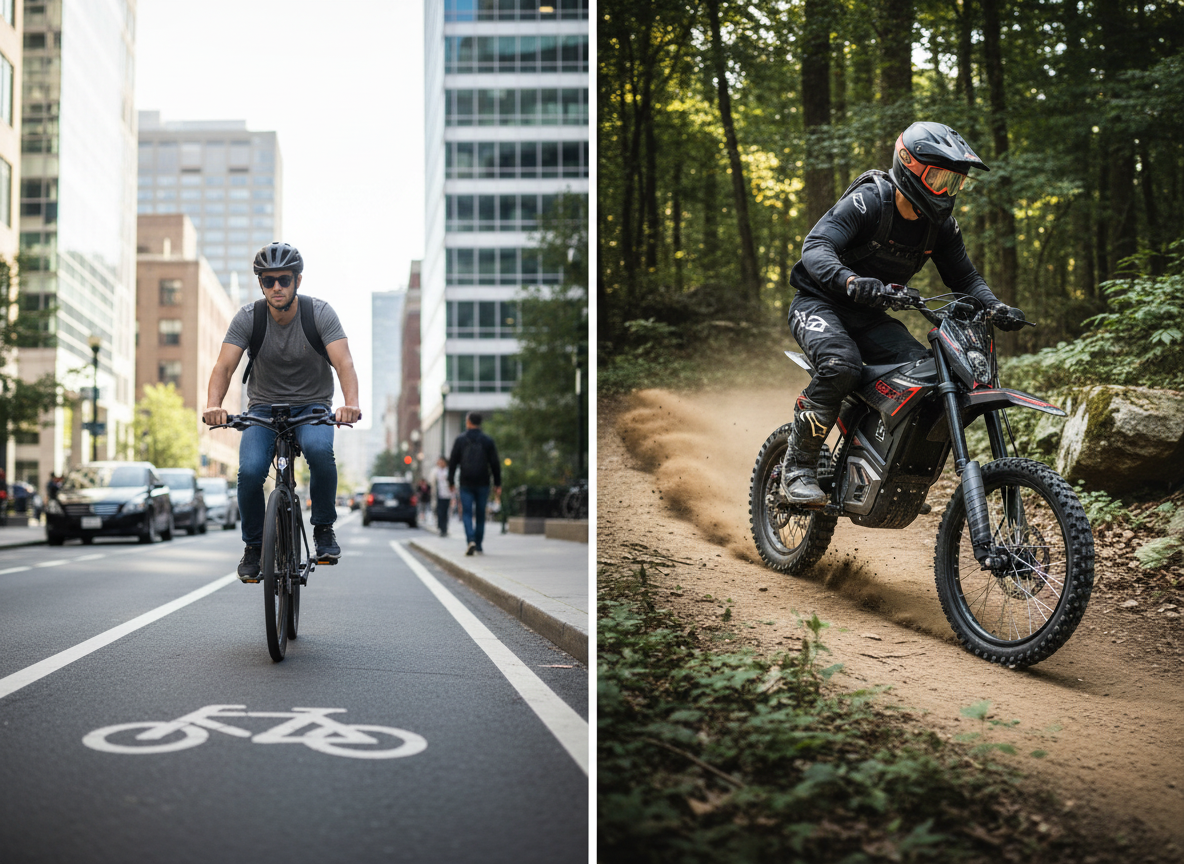
Pedals, motor power, top speed. Those three settle it, and an e-bike has to clear all three limits to stay a bicycle under the law. Miss even one? Now it is a motorcycle, legally speaking. The e-bike keeps working pedals and a motor that only helps you along. The dirt bike, the e-moto, drops the pedals and most of the rules with them.
Side by side, the split looks like this. Same rough checklist a cop or a DMV clerk runs at the curb when they have to call it, bicycle or motorcycle. Three rows carry the decision. Pedals. Watts. Speed.

Alt: E-bike vs electric dirt bike key-difference comparison graphic.
|
Feature
|
Street-legal e-bike
|
Electric dirt bike (e-moto)
|
|
Legal class
|
Bicycle (Class 1/2/3)
|
Off-highway vehicle / motorcycle
|
|
Pedals
|
Fully operable, required
|
None - footpegs and a throttle
|
|
Motor power
|
Under 750W
|
Often 3,000-12,000W+
|
|
Top speed
|
20 or 28 mph (by class)
|
40-60+ mph
|
|
Where
|
Roads, bike lanes, many paths
|
OHV parks, private land, dirt trails
|
|
None in most states
|
Usually required for street use
|
|
|
Examples
|
Trek, Rad, Aventon, Specialized
|
Sur-Ron, Talaria, E Ride Pro
|
Look at the pedals row first. Fastest tell there is. Real pedals you could ride home on, probably a bicycle. Footpegs only, motor vehicle. The power and speed numbers just confirm what the pedals already told you.
|
Myth: "It has pedals, so it counts as a street-legal e-bike."
Reality: Pedals are necessary, not sufficient. The motor still has to stay under 750 watts, and the assist still has to quit by 28 mph. Strap pedals to a 3,000-watt machine and the law reads motor vehicle anyway.
|
What Makes an E-Bike Street Legal?
Three boxes, all checked at once. That is the federal test, written into 15 U.S.C. 2085. Pedals you can actually ride on. A motor that tops out under 750 watts. And, with a 170-pound rider aboard, a motor-only speed that never crosses 20 mph. Plain version: if your own legs can still get the bike home and the motor stops shoving before highway speed, the law leaves you a bicycle. Drop one of the three and that ends.
States build on that floor with a three-class system. PeopleForBikes wrote the model law, and over 40 states run some version of it now. Your class decides where you are actually allowed to ride.
|
Class
|
How it drives
|
Top assisted speed
|
Typical access
|
|
Class 1
|
Pedal-assist only, no throttle
|
20 mph
|
Bike lanes, most paths and trails
|
|
Class 2
|
Throttle, no pedaling needed
|
20 mph
|
Same as Class 1 in most states
|
|
Class 3
|
Pedal-assist only, no throttle
|
28 mph
|
Roads and bike lanes; often barred from shared paths
|
Watch Class 3. That 28 mph gets it kicked off shared paths in a lot of cities, and some states tack on a minimum age or a helmet rule just for it. Class 1 and 2 ride pretty much anywhere a regular bike can. Not one of the three asks for a license, a plate, or an insurance policy in most states. That freedom is the whole reason to stay inside the lines.
Class 1 vs 2 vs 3: Why They Matter Legally

The class is not a marketing tier. It is the line that sets where you are allowed to ride, so knowing yours actually matters.
-
Class 1: pedal-assist, nothing past 20 mph, no throttle at all. It also gets the run of the place, bike lanes plus most paths and trails.
-
Class 2: same 20 mph ceiling, except a throttle does the work, so you can ride without pedaling. Goes where Class 1 goes, give or take the odd trail that bans throttles.
-
Class 3: the fast one, pedal-assist all the way to 28 mph, built for the road and the bike lane. That speed is exactly why a street-legal Class 3 e-bike gets shut out of so many shared multi-use paths.
Sorting out where a Class 3 can go? Roads and on-street bike lanes, usually fine. Shared dirt and park paths, usually not. The signage in your town decides the rest.
What Is an Electric Dirt Bike (E-Moto)?

Alt: Electric dirt bike rider on a designated off-road OHV trail.
Think small electric motorcycle, built for the dirt. Footpegs and a throttle, no pedals to be found. Thousands of watts under it, 40 to 60-plus mph on tap, every e-bike limit gone in one shot. The law looks at that and does not see a bicycle. It sees an off-highway vehicle, or a motorcycle. Sur-Ron, Talaria, E Ride Pro all live in this lane, and so does the Valtinsu off-road lineup.
Motor vehicle status drags motor-vehicle rules along with it. Most of these ship for closed-course and off-road use only. A few states make you slap an OHV registration sticker on even an off-road e-moto before you ride it on public land. Take one out on the street as-is and you are, in almost every case, breaking the law.
Those footpegs are not a styling choice. They are the legal line itself. A bike you cannot move under your own leg power is not a bicycle, no matter what the product listing wants to call it.
Where Can You Legally Ride Each?
An e-bike goes where bicycles go. An electric dirt bike goes where motorized off-road vehicles are allowed. Swap those two up and you are collecting tickets.
Street-Legal E-Bikes
Roads, bike lanes, and a fair share of multi-use paths are open to them. The class rules and your local signage draw the edges. Class 3 is the odd one out, often roads and bike lanes only because of the speed. Not sure on a given path? The bike's class sticker and your city's trail map settle it faster than any forum thread.
Electric Dirt Bikes
Off-road, in practice, and that is it. Designated OHV parks. Private property, with the owner saying yes. Trails or public land specifically marked for motorized use. Two gotchas worth knowing before you load the truck. Some OHV areas still ban electric-powered bikes under old rules written for gas engines, weirdly enough. And many enforce a sound limit around 96 decibels, which an e-moto sails under but a gas bike might not. Check the specific park.
The thing you cannot do: take an unregistered electric dirt bike onto the street, a sidewalk, or a normal bike path. That slip is the most common one in the whole category. It is also the priciest.
License, Registration, and Insurance
Street-legal e-bikes skip all of it in most states. No driver's license, no plate, no insurance policy. That freedom is the whole reason to stay inside the class limits.
Electric dirt bikes flip all of that. Count one as a motor vehicle and it suddenly needs a title, a registration, a motorcycle license or endorsement, liability insurance, and DOT gear, lights and mirrors and a horn, before a wheel ever touches public road. Real conversion work, not a weekend bolt-on. We lay out the full process in our guide to the street-legal conversion route for adults. For most people it pencils out cheaper to keep the e-moto on the dirt and run a class-legal e-bike for the road.
Insurance is the part nobody plans for. A standard e-bike usually rides under your homeowner's or renter's policy for theft and liability, no separate premium. The moment a machine counts as a motorcycle, you are shopping for motorcycle insurance, and underwriters price it like the fast vehicle it is. That annual cost can rival a year of charging the thing. Work it into the price before you buy, not after the fact.
Street-Legal Electric Dirt Bikes: Rare, But They Exist
People search "street legal electric dirt bike" expecting a category. It barely is one. The big off-road names, Sur-Ron and Talaria among them, leave the factory for closed-course and trail use, never the street. A few models do show up with DOT lights, mirrors, a horn, and rated tires already on, or get there through a conversion, and those can wear a motorcycle plate.
Here is the catch worth saying out loud. Over here, a "street-legal electric dirt bike" is nearly always a motorcycle wearing dirt-bike clothes. Plated, sure. It still wants a motorcycle license or M endorsement, registration, and insurance, exactly like any road motorcycle. The knobby looks buy you out of none of it. So when a listing waves "street-legal" around but goes quiet on the license-and-insurance part, that is the marketing talking, not the law.
Speed, Power, and Torque Compared
This is where the gap turns into a canyon, and where the marketing gets slippery. An e-bike just helps you pedal. An e-moto stands in for the engine of a small motorcycle. The numbers are not in the same area code.
|
Metric
|
Street-legal e-bike
|
Electric dirt bike
|
|
Nominal motor power
|
250-750W
|
3,000-12,000W+ peak
|
|
Top speed
|
20-28 mph
|
40-60+ mph
|
|
Torque
|
Light pedal assist
|
Instant, motorcycle-grade
|
|
Best at
|
Commuting, paths, light trail
|
Jumps, climbs, technical dirt
|
Torque is the spec the sheets undersell. From a standstill an e-moto just goes, full power sitting right there at zero rpm, and that is why a tight trail feels quicker on it than the top-speed number ever hints. An e-bike never does that, on purpose. It is there to flatten a hill, not fling you off the top of one.
Is a 3000W or Modified Ebike Street Legal?
No. A 3,000-watt e-bike is not a street-legal bicycle, and neither is one you have unlocked past 28 mph. Cross 750 watts or your capped speed and the bike stops fitting the federal definition. Now it is a motor vehicle under traffic law, full stop. Pedals do not rescue it. CPSC leaves these out of the bicycle safety standard, and officers treat them as unregistered motorcycles.
This trap catches more riders than any other. A bike sold with an "off-road mode" or an unlock sequence rides legal at the limiter and illegal the instant you flip it. Aftermarket kits that crank the wattage run the same con. Step over the line and every protection a street-legal e-bike carried just vanishes. What you pick up instead: the fines, the impound risk, the insurance gap of an unregistered motor vehicle.
Watch the wattage wording too. Nominal power, the rated number, is the one the law actually cares about. Peak power is a short burst, the figure brands lean on to sound bigger than they are allowed to be. So a listing crowing "3000W peak" is quietly admitting it is no legal 750W e-bike, and that holds just the same for a 5,000W, a 10,000W, a 15,000W machine, spin the sheet however you like. A few states do allow a little slack for slightly over-spec bikes. Road access still hangs on speed and class, though, never on a generous wattage label.
Why Enforcement Is Getting Stricter
For years the rules sat on paper and nobody checked. That changed. Cities and police departments have spent the last couple of years posting the e-bike-versus-e-moto difference all over social media, and the posts are not just educational. They are a warning shot.
Young riders caught the brunt of it. You have probably seen the scene: a cop pulls over a knot of kids by a school, clocks a bike wearing an "e-bike" sticker and no class label, power and speed creeping into light-motorcycle territory, no plate, the rider not yet 16. Departments report a jump in exactly those stops, and several now let officers impound a non-compliant machine on the spot. California's recent law lets police seize an over-class bike from an under-16 rider, with other states circling similar rules. In under two years this went from a niche forum gripe to front-page local news.
The takeaway is not fear. It is paperwork. Know your bike's class and wattage before you ride, keep it inside the limits if you want road access, and do not assume an unlit, unmarked rule is an unenforced one anymore.
Does It Vary by State?
Yes, and that is the part a national rule cannot cover for you. The federal 750-watt definition and the three-class system give you a baseline, but the details ride on your state and even your city. Some states put the Class 3 age floor at 14, others at 16. Plenty of cities just keep e-bikes off the sidewalk outright, or bar Class 3 from the shared paths.
A couple of examples make it concrete. Texas and Florida sit on the looser end, both running the three-class framework with lighter limits on where Class 1 and 2 can ride; California sits stricter, with active enforcement and a separate registration path for e-motos (more on that below). Off-road registration splits the same way, one state waving an e-moto onto public OHV land with a sticker, the next demanding full off-highway registration. Which is why any blanket answer, this one too, is only a starting line. PeopleForBikes runs a state-by-state tracker, and the last word lives with your local DMV or parks site.
And it is generous by global standards. The EU and UK set the "bicycle" cutoff far lower, around 250 watts, so plenty of machines sold freely as e-bikes here would need motorcycle registration over there. Worth remembering if you are reading rules written for another country.
California Riders: A Quick Legal Snapshot

Alt: Decision flow: choose a street-legal e-bike or an electric dirt bike by where you ride.
Since California is where a lot of this enforcement started, it is worth a closer look, and the framework rhymes with most other states.
-
E-bikes: the usual three classes apply, Class 1 and 2 held to 20 mph, Class 3 to 28, none of them needing a license or plate. Class 3 does come with a 16-and-up age floor and a helmet rule.
-
Electric motorcycles: SB-586 drops a Sur-Ron or Talaria-class e-moto into the off-highway or electric-motorcycle bucket, not the e-bike one. Ride it off-road and you want OHV registration; ride it on the street and you want the full motorcycle set, registration, license, insurance.
-
Where it bites: around the Bay Area the stops gather where you would guess, school zones, bike lanes, the multi-use trails where an over-powered "e-bike" sticks out. Under-16 rider on a non-compliant machine is exactly who gets waved over.
Which Should You Choose?
Start with where you ride, not the spec sheet. The legal answer falls out of the riding, every single time.
Choose a Street-Legal E-Bike If
Your days are commuting, errands, bike paths, city streets. You want none of the license, registration, or insurance hassle. And you want to ride legally on day one, not after a trip to the DMV. A Class 1 or Class 2 covers almost everybody here. Class 3 buys you speed if your route runs heavy on roads.
Choose an Electric Dirt Bike If
Trails, dirt, private land, and you want power and torque that an e-bike legally cannot give you. You are fine with off-road only, unless you go through the registration work. If that sounds like you, Valtinsu's 60V geared-motor model, the EM-5 Pro, is one honest example of the category: a single-rider, 18-plus electric dirt bike for off-road riding, never sold as a street-legal e-bike. Footpegs, throttle, dirt. The real version of what the words "electric dirt bike" actually mean.

Alt: VALTINSU EM-5 Pro Black Electric Dirt Bike
Or Just Own Both
Plenty of riders quit choosing and buy one of each. A class-legal e-bike for the commute, an e-moto for the weekend trail. Costs less than dragging a single machine through a motorcycle conversion, and each bike does the job it was built for. Two tools, two jobs.
A Warning on the Used Market
Secondhand listings are where the legal lines blur worst. People resell over-powered bikes as "used street legal ebikes" all the time, no class label, specs well past 750 watts. Buy one and you inherit every problem: it is not road-legal, it is hard to resell to the next person, and you cannot insure it as a bicycle.
Before you hand over cash, do three things. Find the class sticker on the frame, the one listing the class, top assisted speed, and motor wattage. Confirm the nominal power reads 750 watts or less, not the peak number. And ask, point blank, whether the bike has an unlock or off-road mode. A missing sticker is not a small detail. It is usually the tell that the bike was never a legal e-bike to begin with.
The cheap way to avoid the trap: go look at a real 750W e-bike with a proper class sticker first, in a shop, so you know what a legal one looks like up close. Then go back to the used listing. With the genuine article fresh in your head, an over-powered "e-bike" gives itself away in seconds.
Reviewed by the Valtinsu Editorial Team
Written by the Valtinsu Editorial Team, which follows e-bike and e-moto regulation and enforcement across the Sur-Ron, Talaria, and Valtinsu rider community. Technical review: the legal points here are checked against the federal definition in 15 U.S.C. 2085, the PeopleForBikes 2026 model laws, and US CPSC guidance, current as of June 2026.
FAQs
Quick map: Are e-bike dirt bikes street legal? · Is a 3000W ebike street legal? · What are the three classes? · Can I convert my dirt bike? · Do I need a license or insurance? Jump to the question that brought you here.
Are e-bike dirt bikes street legal?
Usually not. Most electric dirt bikes clear 750 watts, skip pedals, and pass 28 mph, so they fail the federal e-bike test and land as off-highway vehicles or motorcycles. Off-road only out of the box, unless you register, title, license, and insure one for the street.
-
Over 750W or no pedals = not an e-bike
-
Off-road only as sold
-
Street use needs full motorcycle paperwork
Is an e-bike better than a dirt bike?
Neither wins outright; they do different jobs. An e-bike takes the road and bike paths with no paperwork. An electric dirt bike takes the dirt with power and torque an e-bike legally cannot match. Pick by where you ride, not by which number is bigger.
Is a 3000W ebike street legal?
No. Anything over 750 watts of nominal power stops being a street-legal e-bike. A 3,000W bike counts as a motor vehicle under traffic law, so riding it on public roads without registration, a license, and insurance is illegal, pedals or not. The middle route a lot of riders settle on: keep it for off-road fun only and never take it on the street, which sidesteps the whole registration question.
-
750W nominal is the ceiling
-
Peak-watt claims are a marketing tell
-
Over the limit = unregistered motor vehicle
What are the three classes of e-bikes?
Class 1 gives pedal-assist up to 20 mph. Class 2 adds a throttle, still capped at 20. Class 3 runs pedal-assist up to 28 mph. All three stay under 750 watts. Your class controls where you can legally ride, especially on shared paths.
Is an electric dirt bike a motorcycle?
Legally, often yes. A high-power e-moto with no pedals gets classified as an off-highway vehicle or a motorcycle, not a bicycle. Motor-vehicle rules then apply the moment you want it on the street: registration, a license, and insurance.
Do you need a license for an electric dirt bike?
For off-road riding on private land or in OHV areas, usually no license, though some states still want an OHV registration. For street use, almost always yes: a motorcycle license or endorsement, plus registration and insurance, because the bike is a motor vehicle.
Can I make my electric dirt bike street legal?
Sometimes, but it is a real project. You add DOT lights, mirrors, a horn, and DOT tires, then title and register it as a motorcycle, carry insurance, and hold a motorcycle license. Some states will not register certain off-road models at all, so check first. The full process, DOT accessory list and DMV steps included, is in our guide to the street-legal conversion route for adults.
Do you need insurance for a street-legal e-bike?
Usually not a separate policy. Most street-legal e-bikes ride under your homeowner's or renter's coverage for theft and liability. An electric dirt bike registered for the road is different; it needs motorcycle insurance like any other motor vehicle.
|
A note on legal advice. This is a plain-language guide for riders, not formal legal advice. Road rights, age limits, and registration rules change by state and city, and the DMV or transportation department where you live has the final word. Confirm the specifics for your state before you buy or ride.
|
Last updated: June 2026. Legal points verified against 15 U.S.C. 2085 (Cornell LII), PeopleForBikes, and the US CPSC.
Sources
- PeopleForBikes, Electric Bike Policies and Laws (2026)
- U.S. Consumer Product Safety Commission, Micromobility Information Center (2026)
- Cornell Legal Information Institute, 15 U.S. Code 2085 - Low-Speed Electric Bicycles
- California State Parks OHV Division, Electric Motorcycles and OHV Registration (SB 586 Bulletin) (2025)
- CE Moto Ride, Street-Legal Electric Dirt Bike Rules (2026)


Looking for something else?
Electric Dirt Bike Replacement Parts Availability: What Buyers Should Verify Before Ordering
LEARN MORE
How to Check an Electric Dirt Bike for Safety Recalls by Model and Serial Number
LEARN MORE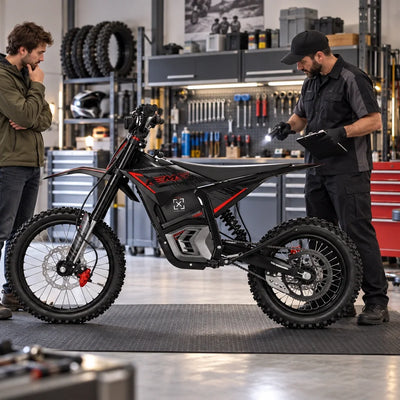
How to Choose an Electric Dirt Bike Repair Shop: Questions to Ask Before Service
LEARN MORE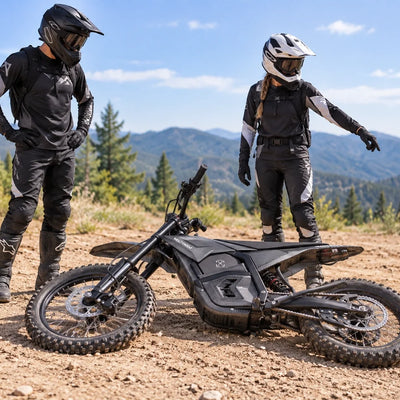
How to Lift a Fallen Electric Dirt Bike Without Hurting Yourself or the Bike
LEARN MORELooking for something else?
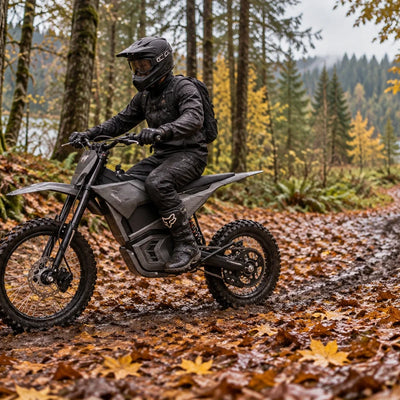
Electric Dirt Bike Fall Riding on Wet Leaves: Grip, Hidden Obstacles and Braking
LEARN MORE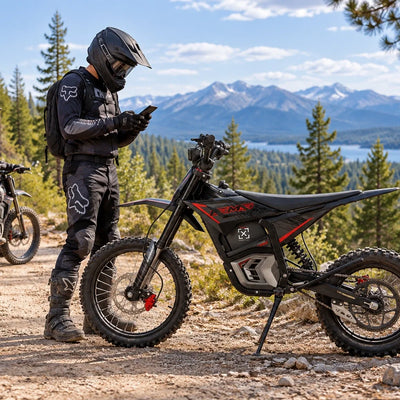
Electric Dirt Bike Trailside Power Loss: Recovery Plan When the Battery Is Dead
LEARN MORE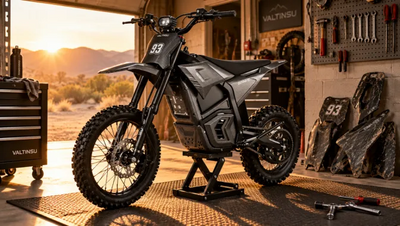
Electric Dirt Bike Plastics Replacement Guide: Fitment, Color Kits and Install Order
LEARN MOREYou may also like
VALTINSU EM-5 Off-Road Electric Dirt Bike
$969.00
$1,559.00
VALTINSU EM-5 Pro Off-Road Black Electric Dirt Bike
$1,699.00
$1,899.00
VALTINSU EM-5 Pro Green Electric Dirt Bike
$1,699.00
$1,899.00
VALTINSU EM-5 Ultra Electric Dirt Bike
$2,199.00
$2,499.00
VALTINSU EM-5 & EM-5 Pro Combo
$2,658.00
$3,458.00