

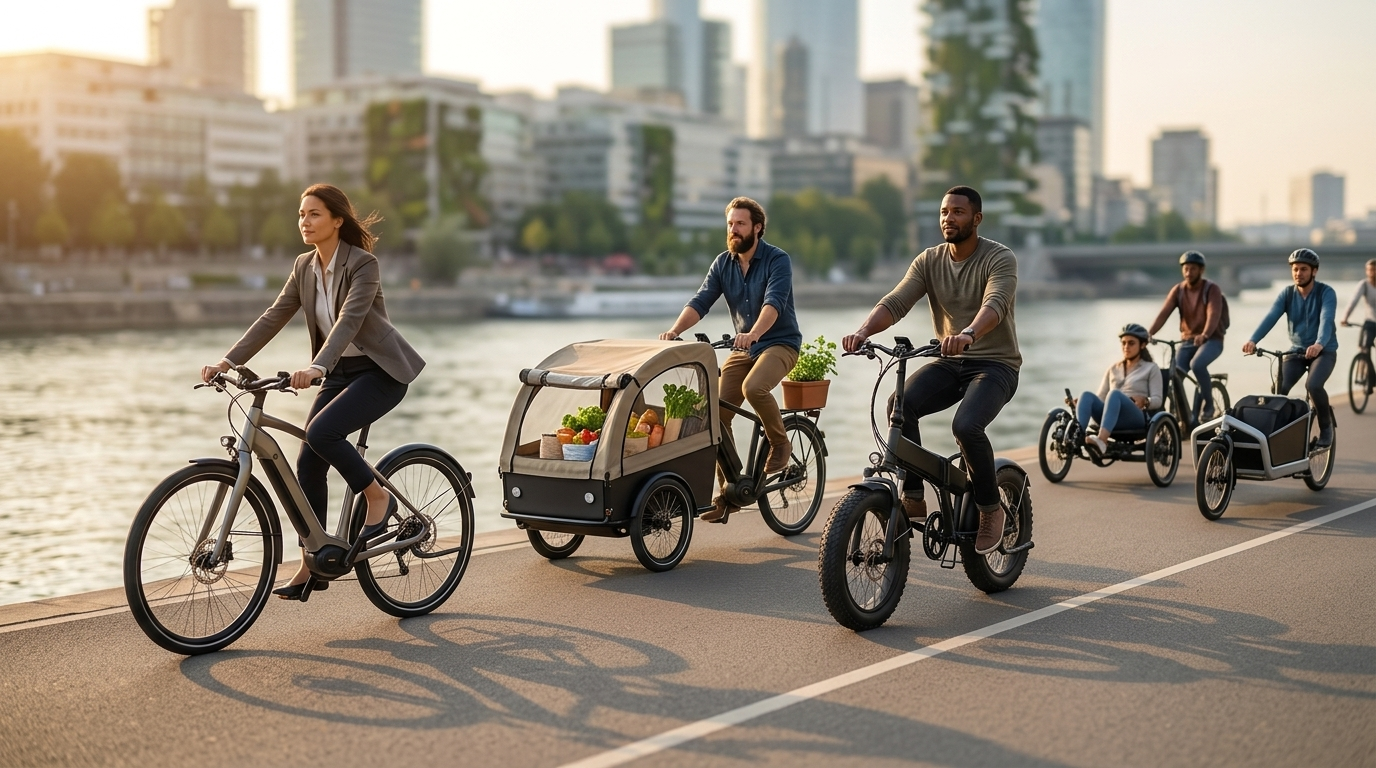
Best E-Bike Brands: Top-Rated Companies Worth Buying in 2026
Here’s what nobody tells you when you start shopping. Two e-bikes can list the exact same numbers — 750W motor, 60-mile range, hydraulic brakes — and one of them quietly falls apart in eight months while the other keeps going for years. The difference isn’t on the spec sheet. It’s whether the company picks up the phone when your battery dies.
Electric bikes aren’t a novelty anymore. People ride them to work, haul groceries, hit the weekend trail, skip the second car. And with new brands launching every few months, the company you buy from matters as much as the bike itself. Maybe more. This guide ranks the best e-bike brands of 2026 the way ownership actually plays out — reliability, parts, warranty, support. There’s also an honest detour at the end, because a lot of “electric bike” searches aren’t really about bike lanes at all. Some of you want dirt.
|
Quick version: for most riders in 2026, Aventon, Lectric, Specialized, and Trek are the safest brand bets. The best one for you depends on budget and whether you want local dealer support or the lowest possible price.
|
Why the Brand Matters More Than the Spec Sheet
A great bike becomes a paperweight the day its maker vanishes. Batteries fade. Brake pads wear down. Displays glitch, software wants an update. How painful those moments are comes down to the brand — not the bike sitting under you.
The good companies spend real money on the boring stuff: customer service, dealer relationships, a parts shelf that’s actually stocked. You don’t notice any of it the week you buy. You notice it a year later, when something breaks and you find out whether help exists. A bike with slightly softer numbers but a brand that answers beats a spec monster you can’t reach by email. Every time.

Two Commuters, One 750W Motor
Two commuter bikes. Same 750W rear hub motor, same torque, near-identical price. On paper, a coin flip. Then a spoke breaks. Brand A ships the part in three days and has a shop across town that’ll fit it. Brand B stops replying. None of that lives in the spec table — it shows up the morning you actually need it.
The Real Cost of the Wrong Brand
The battery is the part that hurts. It can be a third of the bike’s value, and when a company quits making replacements, the whole machine turns into scrap with nice tires. Thin warranty support piles on. That few hundred bucks you saved at checkout? It comes back as a much bigger bill the day a repair turns into a parts scavenger hunt.
Battery safety is the one thing not to gamble on. Look for systems tested to UL 2849 and UL 2271 — the standards covering the electrical system and the battery pack. After a wave of lithium-ion fires, the CPSC leaned on the industry to adopt them, and a few cities now flat-out require it.
How We Ranked the Best E-Bike Brands
These rankings care about year three, not the unboxing. A brand has to hold up across several areas to land near the top — one flashy number doesn’t cut it.
|
Ranking Factor
|
What We Looked For
|
|
Reliability & build
|
Frame strength, component quality, consistency across thousands of miles.
|
|
Motor & battery tech
|
Proven systems (Bosch, Shimano, Bafang, Brose) or solid in-house designs.
|
|
Warranty coverage
|
Clear terms and a support team that actually answers.
|
|
Dealer / service network
|
Local shops that can repair the bike and stock parts.
|
|
Owner satisfaction
|
Real-world feedback, not press releases.
|
|
Value for money
|
Performance, support, and features against the price — not just the cheapest.
|
That last one matters. Test teams at outlets like Bicycling consistently find the sweet spot sits between $1,500 and $3,000 — reliable, practical, no overspending on tech you’ll never use.
Quick Comparison: The Best E-Bike Brands at a Glance
Short on time? This table is the whole market in one screen — price, who each brand suits, and the one thing it does better than the rest. The detailed write-ups follow underneath.
|
Brand
|
Best For
|
Price Range
|
Standout Strength
|
|
Aventon
|
Overall value
|
$1,200–$3,500
|
Feature-to-price balance + dealers
|
|
Lectric
|
Budget buyers
|
$999–$2,000
|
Lowest prices, big support network
|
|
Specialized
|
Premium riders
|
$3,000–$10,000+
|
Best ride quality + fitting
|
|
Trek
|
Dealer support
|
$2,000–$8,000+
|
Largest service network, Bosch
|
|
Rad Power
|
Utility / cargo
|
$1,500–$3,000
|
Cargo and family practicality
|
|
Ride1Up
|
Performance value
|
$1,000–$3,000
|
Biggest specs for the money
|
|
Velotric
|
Everyday riders
|
$1,200–$2,500
|
Comfort and easy handling
|
|
Riese & Müller
|
Luxury buyers
|
$5,000–$12,000+
|
Premium build + long range
|
|
Tern
|
Cargo families
|
$3,000–$7,000
|
Compact cargo that fits a hallway
|
|
Valtinsu
|
Off-road / dirt
|
$1,259–$1,999
|
Adult dirt bikes at half Sur Ron’s price
|
|
One thing other brand lists skip: if you actually want dirt — trails, fire roads, jumps — none of the commuter names above are built for it. That’s a different category (adult electric off-road motorcycles), and it gets its own section below.
|
|||
Best E-Bike Brands Worth Buying in 2026
There’s no single “number one selling e-bike” — it shifts by country, by retailer, by season. But in the U.S., the same handful of names keep turning up in driveways, on bike racks, and at the top of tested-and-recommended lists. Here’s where each one earns its keep, and who it’s really for.
Aventon — Best Overall
Price range: $1,200–$3,500

Aventon takes the top spot because it nails the balance most brands miss — tech, price, and support, all at once. Commuter, fat tire, cargo, electric mountain bike: the lineup is wide enough that most riders find their fit without leaving the badge. The Aventure, Level, and Abound turned it into one of the fastest-growing names in North America, and it shows.
You get torque sensors, hydraulic disc brakes, integrated lights, and app connectivity at prices a normal person can actually stomach. The bigger deal is the growing dealer network — test rides and repairs are easier here than with most order-it-online rivals.
|
✓ Pros
|
⚠ Watch-out
|
|
|
Best for: Commuters and recreational riders who want the best all-around mix of value and backing.
Lectric — Best Budget Brand
Price range: $999–$2,0004

Lectric proved a cheap e-bike doesn’t have to feel cheap. The XP folding series is one of the most popular budget lines in the country, and Lectric keeps the useful stuff — fat tires, integrated racks, lights, a folding frame — hovering right around $1,000.
The catch is a thinner support network than Trek or Specialized. For a first bike or a tight budget, though, the value math still wins by a mile.
|
✓ Pros
|
⚠ Watch-out
|
|
|
Best for: First-time buyers and anyone keeping the spend close to $1,000.
Specialized — Best Premium Brand

Price range: $3,000–$10,000+
Specialized has built bikes for decades, and the Turbo electric line carries that pedigree. The Vado, Como, and Levo focus on ride feel rather than headline wattage — the pedal assist is smooth and natural, closer to a good bicycle than a motorized one.
A deep dealer network means professional fitting, service, software updates, and parts through a local shop. The catch is the sticker: Specialized usually costs well above comparable direct-to-consumer bikes.
|
✓ Pros
|
⚠ Watch-out
|
|
|
Best for: Riders who put ride quality and long-term support ahead of price.
Trek — Best for Dealer Support
Price range: $2,000–$8,000+

Trek is one of the most trusted bike companies on earth, and its electric range — commuter, fitness, cargo, mountain — rides on one of the largest dealer networks available. Many models run Bosch mid-drive systems, which carry a reputation for reliability and wide parts availability.
Service access is the headline. Most cities already have a Trek shop, so repairs and warranty work are far simpler than with online-only brands. You pay for that convenience.
|
✓ Pros
|
⚠ Watch-out
|
|
|
Best for: Riders who want local support and dependable, multi-year ownership.
Rad Power Bikes — Best Utility & Cargo
Price range: $1,500–$3,000

Rad helped make practical electric transport normal. The RadRunner and RadWagon are fixtures for families and car-replacers, built around carrying capacity, stability, and everyday usefulness rather than top speed.
The accessory ecosystem is deep — passenger seats, racks, baskets, storage. Competition in cargo has heated up, but Rad still anchors the utility category.
|
✓ Pros
|
⚠ Watch-out
|
|
|
Best for: Families, commuters, and riders ditching short car trips.
Ride1Up — Best Performance-to-Price
Price range: $1,000–$3,000

Ride1Up wins fans by handing over big specs without premium pricing — strong motors, hydraulic brakes, torque sensors, large batteries, all under typical bike-shop money. The range spans commuters, folders, road-style bikes, and moped-inspired builds.
Sales are direct-to-consumer, which keeps costs down but means some home assembly and mostly online support.
|
✓ Pros
|
⚠ Watch-out
|
|
|
Best for: Riders chasing maximum performance without the premium markup.
Velotric — Best Fast-Growing Brand
Price range: $1,200–$2,5004

Velotric leaned into comfort and ease, and it’s paid off. Upright positions, wide tires, approachable designs — these are bikes for commuters, leisure riders, and people coming back to cycling after years off. App connectivity and multiple ride modes round it out at competitive prices.
It’s newer than the heritage names, so the long-term track record is still being written. Owner interest keeps climbing.
|
✓ Pros
|
⚠ Watch-out
|
|
|
Best for: Casual riders and commuters who want comfort first.
Riese & Müller — Best Luxury Brand
Price range: $5,000–$12,000+

The German end of the market. Riese & Müller chases engineering, comfort, and long-distance ability rather than affordability — Bosch drive systems, advanced suspension, integrated accessories, and big batteries built for touring and serious car replacement.
The quality is real and so is the price. Some models cost more than a used car. Buyers who prize craftsmanship and range tend to think it’s worth it.
|
✓ Pros
|
⚠ Watch-out
|
|
|
Best for: Serious commuters, tourers, and luxury-focused buyers.
Tern — Best Cargo for Tight Spaces
Price range: $3,000–$7,000

Tern specializes in compact cargo bikes that haul like long-tails but park like normal bikes — a big deal for urban families. The GSD and HSD carry kids, groceries, and gear while still fitting in a hallway or elevator, and they stay planted under load.
Premium pricing is the cost of that engineering.
|
✓ Pros
|
⚠ Watch-out
|
|
|
Best for: Urban families wanting a genuine car replacement.
Best E-Bike Brands by Riding Style
The right brand bends to how you ride. A trail rider and a cargo hauler want different things, so match the use case before the logo.
|
Riding Style
|
Strong Brands
|
What to Prioritize
|
|
Commuting
|
Aventon, Trek, Specialized, Velotric
|
Lights, racks, comfort, service access
|
|
Fat tire
|
Aventon, Lectric, Rad Power, Velotric
|
Battery size, brake quality, weight
|
|
Cargo / family
|
Tern, Rad Power, Aventon, Trek
|
Payload, stability, braking
|
|
Mountain (E-MTB)
|
Specialized, Trek, Cannondale, Aventon
|
Suspension, geometry, climbing motor
|
|
Folding
|
Lectric, Ride1Up
|
Folded size and weight
|
|
Long range
|
Riese & Müller, Specialized, Trek, Aventon
|
Battery capacity, motor efficiency
|
Best E-Bike Motor Brands in 2026
The motor decides how a bike accelerates, climbs, and answers your pedaling. The bike brand matters, but the motor brand often sets ride quality and how easy service will be — which is why most top companies partner with proven motor makers instead of rolling their own.
Bosch
Bosch is the most respected name in the field, supplying Trek, Tern, Riese & Müller, and Cannondale. Smooth power, strong hill-climbing, and a wide service network of Bosch-certified shops make it the safe default. The Performance and Cargo lines are commuter and cargo favorites, with software updates handled through dealers.
Shimano
Shimano’s STEPS systems feel natural and predictable — more like traditional cycling than an aggressive shove. Every bike shop already knows Shimano drivetrains and brakes, so service is rarely a problem.
Bafang
One of the largest motor makers in the world, Bafang shows up across affordable and mid-range bikes in both hub and mid-drive form. Power output for the money is strong; ride quality depends heavily on how the bike maker tunes it.
Brose
Brose is the quiet one — smooth, gradual power that several premium brands choose for a refined feel. Dealer presence is thinner than Bosch, but enthusiasts rate it highly.
Mid-Drive vs Rear Hub
This choice shapes the ride as much as the brand does. Rear hub motors live in the back wheel — cheaper, punchy off the line, and honestly all most casual riders ever need. Mid-drive motors sit down at the pedals and pull through the gears, so they climb better and feel more balanced under you. Got hills, or hauling cargo, or chewing through long miles? Go mid-drive. Flat commute? A good hub motor will keep you grinning.

What Makes an E-Bike Brand Reliable?
Speed and range grab the headlines. Reliability is what decides whether you’re still happy a year in. The brands that go the distance obsess over the unglamorous stuff — safety, parts, support — not just the numbers on the box.

Battery Safety & UL Certification
The battery is the costliest part and the one most likely to hurt you if it’s built wrong. So lean toward brands that name their certifications — UL 2849 for the electrical system, UL 2271 for the pack itself. A company that talks openly about how it tests and charges its cells is telling you something. The vague ones are too.
Parts & Service
Everything wears out. Batteries, displays, controllers, pads, chargers — all of it, eventually. The brands worth buying keep stocking parts for older models, which is the whole difference between a bike you fix and a bike you toss. Quick gut check before you buy: can you find a replacement battery on the maker’s own site, and will a shop near you actually work on the thing? Plenty of shops won’t touch no-name online bikes, simply because the parts are a nightmare to track down.
Warranty & Software
A warranty should read like plain English and work without a fight — and what owners say about claims tells you far more than the number of years printed on the card. Most bikes now lean on an app, too, for GPS tracking, ride data, the occasional motor tweak. A brand that keeps fixing and updating that software quietly ages a lot better than one that ships the bike and forgets you exist.
|
Lifespan reality: treat it right and a good e-bike lasts years. The battery usually gives out long before the frame does — so check that the brand still sells replacement packs before you hand over your card. That one question decides whether it’s a smart buy or a slow regret.
|
Choosing the Right E-Bike Brand for Your Budget
Spend shapes everything — performance, support, refinement. Here’s the honest breakdown by price band.
|
Budget
|
Strong Brands
|
Reality Check
|
|
Under $1,000
|
Lectric, entry DTC
|
Focus on safety, warranty, battery quality over features.
|
|
$1,000–$2,000
|
Aventon, Lectric, Ride1Up, Velotric, Rad
|
Best value band — torque sensors, hydraulics, real batteries.
|
|
$2,000–$4,000
|
Trek, Specialized, Cannondale, Aventon, Tern
|
Stronger motors, better frames, dealer support.
|
|
Above $4,000
|
Riese & Müller, Specialized, Trek, Tern
|
Bosch mid-drives, premium suspension — worth it for car replacers.
|
Where Off-Road Electric Dirt Bikes Fit
Now the part most “best e-bike” lists quietly skip. If your search for an electric bike is really about dirt — trails, fire roads, the back of someone’s property — a commuter brand isn’t your answer. You’re shopping for an adult electric off-road motorcycle, and that’s a different machine built for a different job.
That’s the lane electric dirt bikes for adults from Valtinsu live in. These aren’t pedal-assist commuters. No pedals, geared motors, hydraulic disc brakes — dirt bikes that happen to run on electricity. Treating one like a Class 2 e-bike on a bike path is asking for trouble, and most states would back that up, because high-power off-road machines sit outside the Class 1/2/3 e-bike framework that governs bike-lane riding.
The interesting part is the price. The cheap electric dirt bikes under $2,000 in Valtinsu’s lineup run $1,259 to $1,999 — geared motors and adjustable air suspension for a fraction of what hardcore race brands like Sur Ron charge. UL and CE certified, three models, one rule that never bends: built for dirt, not the daily commute. Here’s the lineup, spec for spec.

|
Model
|
Motor
|
Torque
|
Top Speed
|
Battery
|
Age
|
Price
|
|
48V / 3,840W
|
148 lb-ft
|
40 mph
|
48V 23.4Ah
|
13+
|
$1,259
|
|
|
60V / 5,600W
|
177 lb-ft
|
52 mph
|
60V 27Ah
|
18+
|
$1,699
|
|
|
60V / 4,000W
|
184 lb-ft
|
43.5 mph
|
60V 27Ah
|
16+
|
$1,999
|
Common Mistakes to Avoid When Buying an E-Bike
A few avoidable errors cost buyers money and patience. Most come from staring at specs and ignoring everything that happens after the sale.
-
Buying on price alone. The cheapest bike often hides weak support, lower-grade batteries, or thin parts availability. Weigh the whole ownership story.
-
Ignoring local service. Brakes and tires wear; electronics act up. Check whether a nearby shop will touch the brand before you commit.
-
Skipping battery certification. Prioritize clear UL information. A quality pack is both safer and more reliable.
-
Trusting unsupported online sellers. Big specs at shockingly low prices usually mean no parts and no help later.
-
Skipping the test ride. Comfort, handling, and brake feel reveal themselves in minutes — things no spec sheet shows.
Conclusion
The best e-bike brand in 2026 isn’t the one with the biggest motor or the longest claimed range. It’s the one still standing behind your bike when the warranty card is buried in a drawer and the battery needs replacing. Specs get you in the door. Support is what you actually live with.
If you want it boiled down: Aventon is the best all-around pick — value, features, and a real dealer network in one. Lectric owns the budget end. Specialized and Trek are where you go when ride quality and a shop down the street matter more than the price tag. Cargo families should look hard at Tern and Rad Power. And if distance and craftsmanship are the whole point, Riese & Müller earns its premium.
Before you commit, ask three plain questions: how do I ride, where will I get it serviced, and how long do I plan to keep it? Match the brand to those answers and you’ll be happy years down the road — not just on day one.
And if the “electric bike” you actually want is built for dirt, that’s its own conversation. Here’s where Valtinsu fits — with an age ladder that doesn’t bend.
FAQs
What are the top 3 e-bike brands?
Aventon, Specialized, and Trek lead in 2026. Aventon offers the best mix of value and features, while Specialized and Trek stand out for premium ride quality and the largest dealer networks. Budget shoppers should add Lectric to that shortlist.
What is the most reliable e-bike motor brand?
Bosch is the most trusted, with smooth power and a wide certified service network. Shimano, Brose, and Bafang are all solid too — the right pick depends on bike type and budget rather than one motor winning outright.
What should you avoid when buying an e-bike?
Avoid buying on price alone, skipping battery certification, ignoring local service, and trusting no-name online sellers. A cheap bike gets expensive fast when parts and support disappear. Always test ride before you commit.
What is the lifespan of an e-bike?
A quality e-bike lasts several years with regular maintenance. The battery usually wears out before the frame, so confirm the brand still sells replacement batteries before buying — that single check protects long-term value.
Which company is best in electric bikes?
For most buyers, Aventon is the best overall in 2026 because it balances price, features, model range, and service access. Premium riders often prefer Specialized or Trek for ride quality and dealer depth.
How do you choose the right e-bike brand?
Match the brand to your riding style, budget, local service options, battery safety, and warranty. Commuters should weigh comfort and support; cargo riders should check payload and braking; off-road riders need a different category entirely.
Are off-road electric dirt bikes the same as e-bikes?
No. A commuter e-bike is a pedal-assist bicycle in the Class 1/2/3 system. An adult electric off-road motorcycle like a Valtinsu EM-5 has no pedals, a geared motor, and is built for dirt and private land — not bike lanes or public roads.
What is the number one selling e-bike?
There’s no single global answer; sales shift by country and retailer. In the U.S., Aventon, Lectric, Rad Power, and Trek are among the most visible and frequently recommended names.
Sources
- UL Solutions, “E-Bikes Certification: Evaluating and Testing to UL 2849.”
- PeopleForBikes, “Electric Bikes — Policies and Laws.”
- U.S. Consumer Product Safety Commission, “Micromobility Devices and Battery Safety.”
- Bosch eBike Systems, “Premium eBike Systems and Smart Functions.”
- Bicycling, “The Best Electric Bikes, Tested.”
- Valtinsu, “Electric Dirt Bike Collection.”


Looking for something else?
Electric Dirt Bike Loses Power Under Load: Causes and How to Fix It
LEARN MORE
Electric Dirt Bike Bolt Torque Checklist: What to Check and Where the Numbers Come From
LEARN MORE
How to Bleed Electric Dirt Bike Brakes Safely
LEARN MORE
Electric Dirt Bike Throttle Not Working: What to Check First
LEARN MORELooking for something else?
Electric Bike Battery Not Charging? Work Through This Before You Buy a New One
LEARN MORE
Electric Dirt Bike Error Codes: What They Mean and What to Check First
LEARN MORE
Electric Dirt Bike Brake Rotor Rubbing: Diagnose the Cause Before Adjusting
LEARN MOREYou may also like
Moto eléctrica todoterreno para adultos EM-5 con luz
$969.00
$1,559.00
VALTINSU EM-5 Pro Off-Road Black Electric Dirt Bike
$1,699.00
$1,899.00
VALTINSU EM-5 Pro Green Electric Dirt Bike
$1,699.00
$1,899.00
VALTINSU EM-5 Ultra Electric Dirt Bike
$2,199.00
$2,499.00
VALTINSU EM-5 & EM-5 Pro Combo
$2,658.00
$3,458.00
Further reading
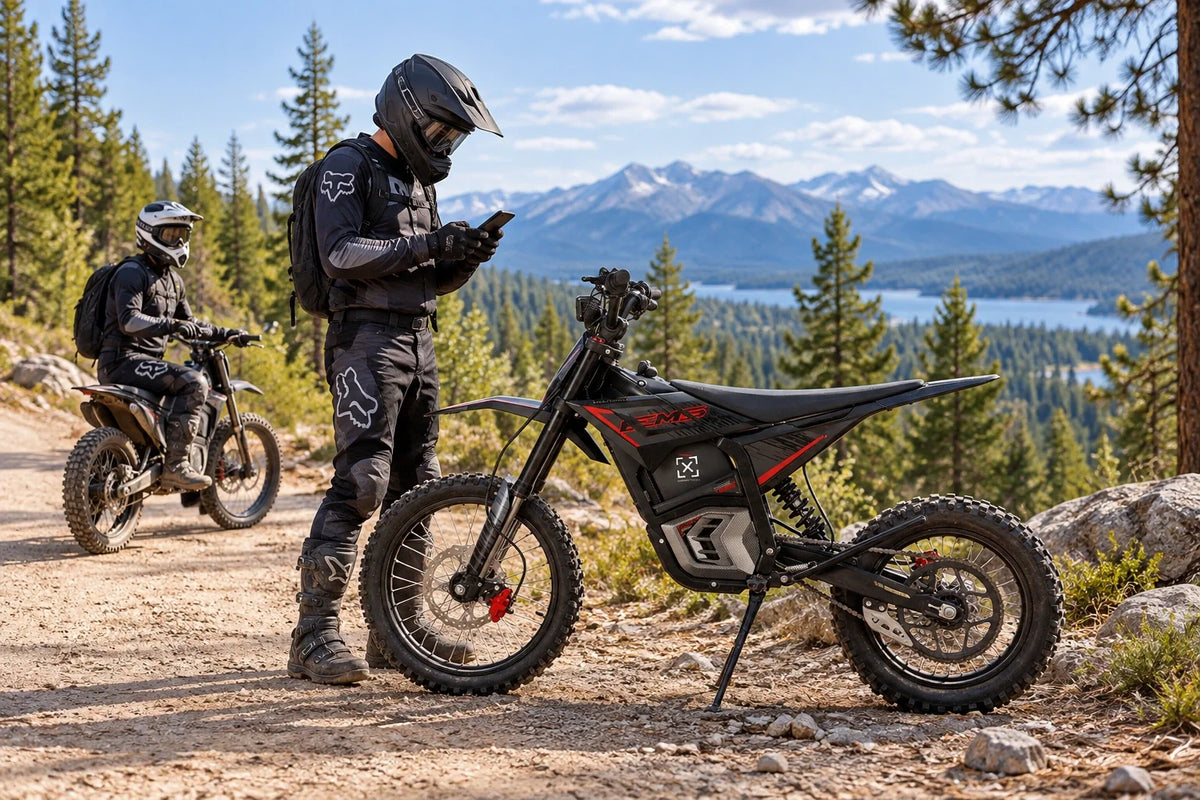
Electric Dirt Bike Trailside Power Loss: Recovery Plan When the Battery Is Dead
When an electric dirt bike loses power on the trail, first make the scene safe and decide whether the battery is simply depleted or the bike has a fault. Move out of the travel line if the bike can...
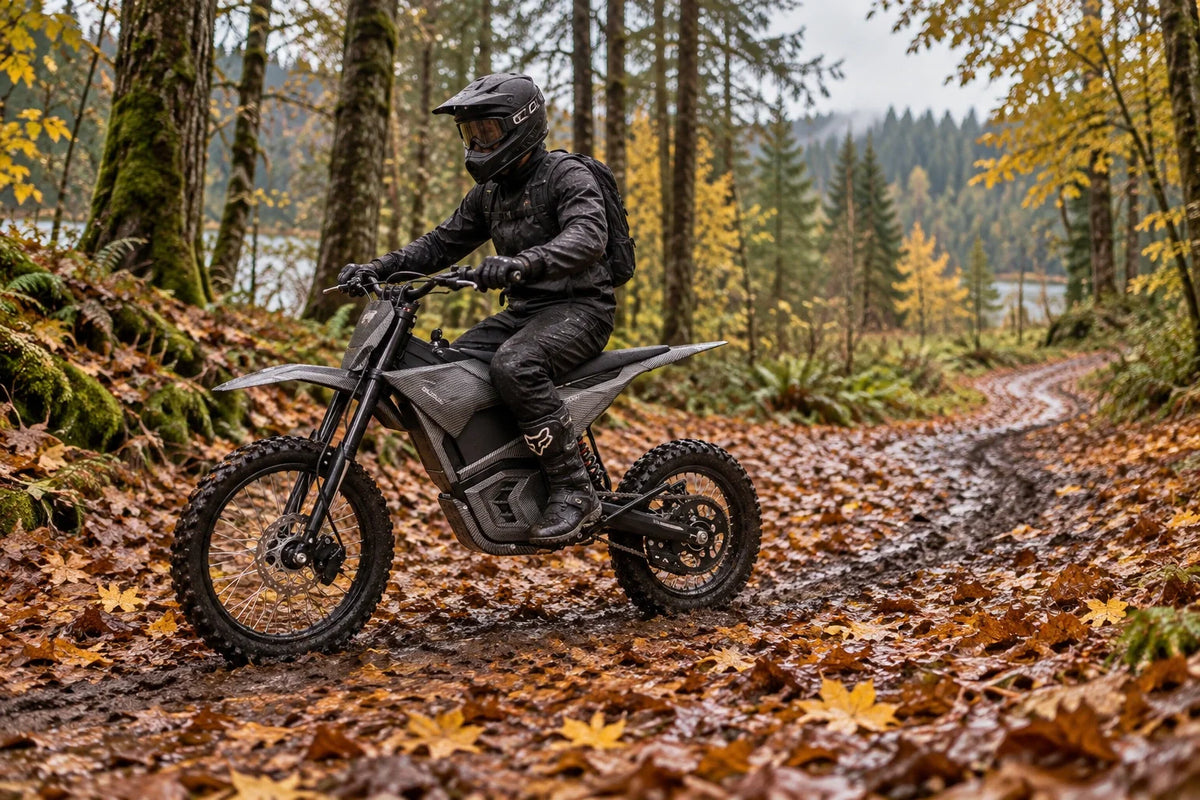
Electric Dirt Bike Fall Riding on Wet Leaves: Grip, Hidden Obstacles and Braking
Wet leaves reduce grip and hide the surface that determines it. A thin layer on firm soil may slide under braking; a deep layer can conceal roots, rocks, ruts and holes; decomposing leaves can beha...
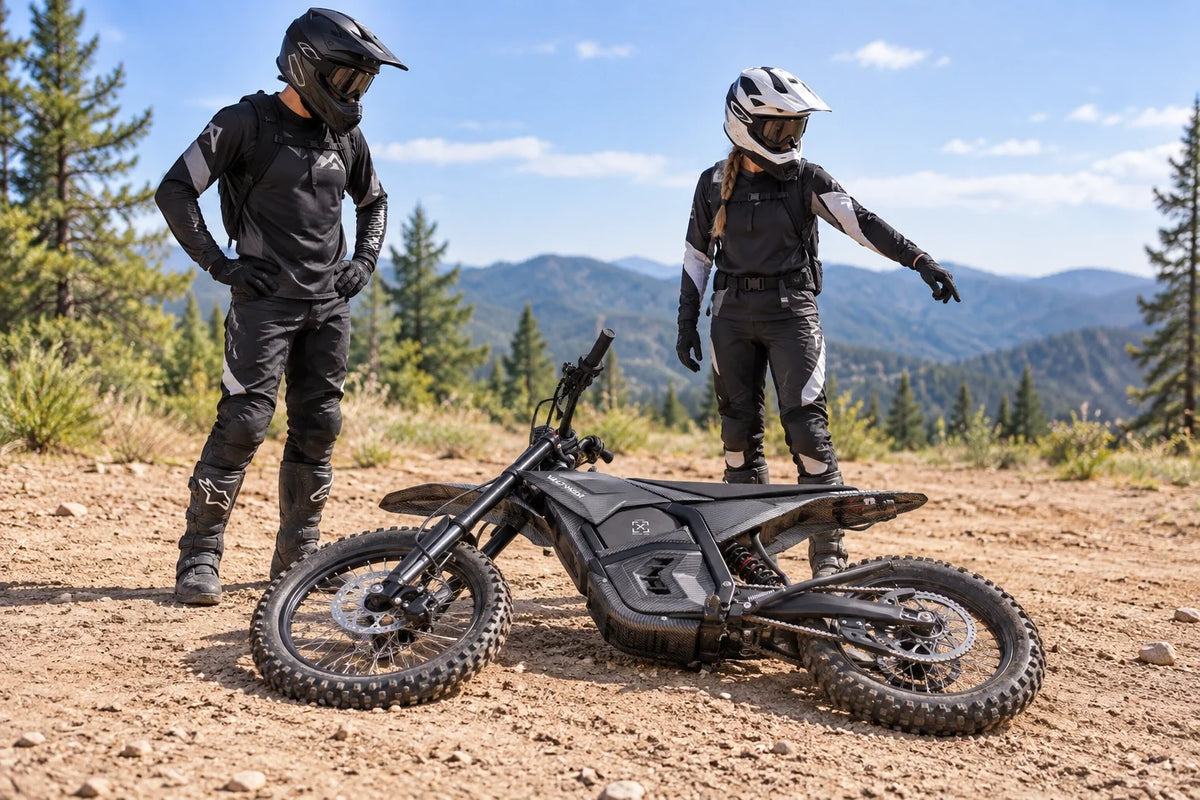
How to Lift a Fallen Electric Dirt Bike Without Hurting Yourself or the Bike
Do not lift a fallen electric dirt bike until people, terrain and battery hazards are assessed. A bike on a slope, near traffic, pinning a rider or showing battery heat, smoke, hissing, odor, swell...
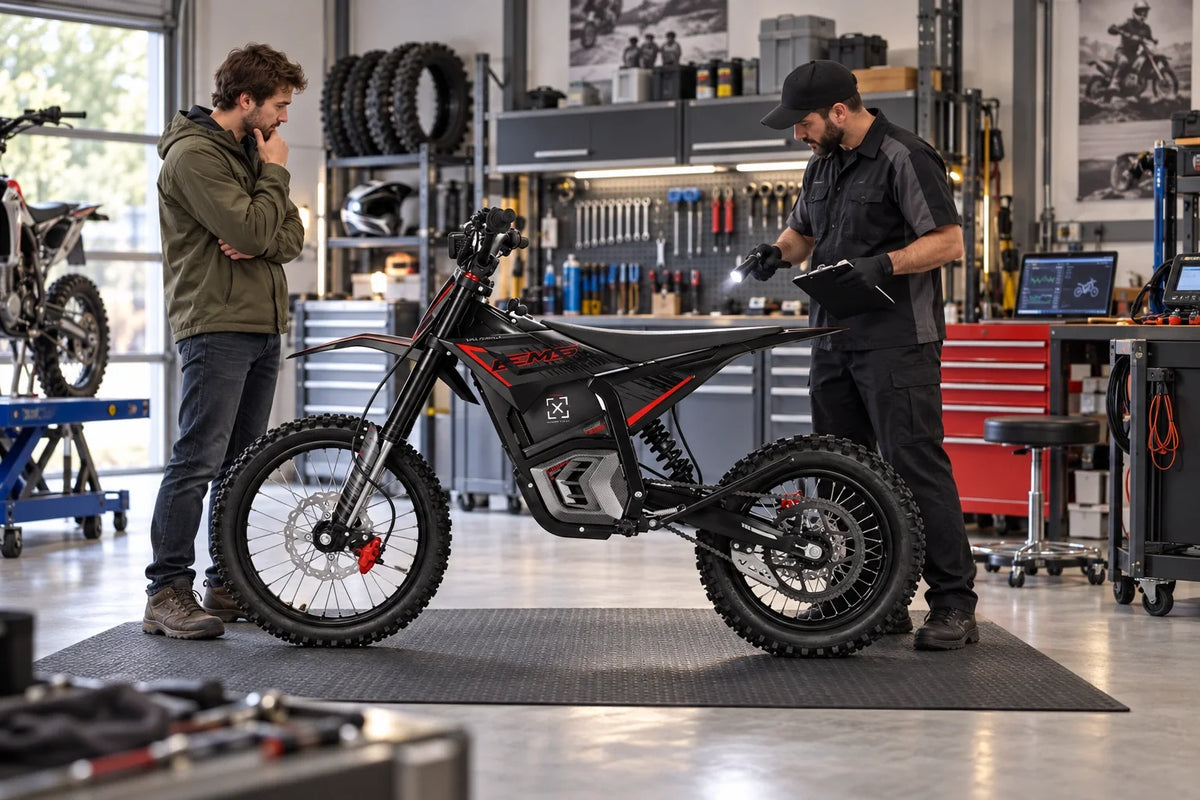
How to Choose an Electric Dirt Bike Repair Shop: Questions to Ask Before Service
Choose an electric dirt bike repair shop by matching the shop’s real capability to the actual job. Ask about experience with the model and component, access to manuals and parts, battery isolation ...