Electric Dirt Bike Battery Percentage Jumps or Drops: Gauge Error or Battery Fault?
A battery percentage that falls under acceleration and rises again after the bike rests is often the display reacting to temporary voltage sag, not energy disappearing and returning. The motor asks for high current, pack voltage drops, and a voltage-based gauge may translate that drop into a lower percentage. When the load stops, voltage partially recovers. A small, repeatable rebound can therefore be normal. A large drop, an early shutdown, a pattern that is getting worse, heat, swelling, odor, damaged connectors or a failure that occurs at moderate charge needs a different response: stop testing and contact qualified support.
The useful question is not simply, "Did the number move?" It is how far it moved, under what load, at what temperature, at what starting charge and whether propulsion or the display also failed. Those details turn a vague symptom into evidence. They also help prevent two common mistakes: replacing a healthy pack because the gauge is crude, or dismissing a developing battery or connection fault as normal sag.
What a jumping battery percentage actually represents
Most electric dirt bike dashboards do not count every watt-hour directly. They estimate state of charge from available signals, commonly pack voltage and a software map. Voltage is easy to read, but it is not fixed. It changes with current, temperature, cell chemistry, pack age and the time since the last charge or ride. That means a percentage can look precise while still being an estimate.
A simple electrical relationship explains the direction of the change: voltage drop increases as current and internal resistance increase. Under a hard launch, steep climb, soft terrain or low-speed high-torque section, the controller requests more current. The pack voltage seen by the display falls. Once the rider closes the throttle, current falls and the voltage moves back toward its resting level. A voltage-based gauge can then show several percentage points returning even though no charging occurred.

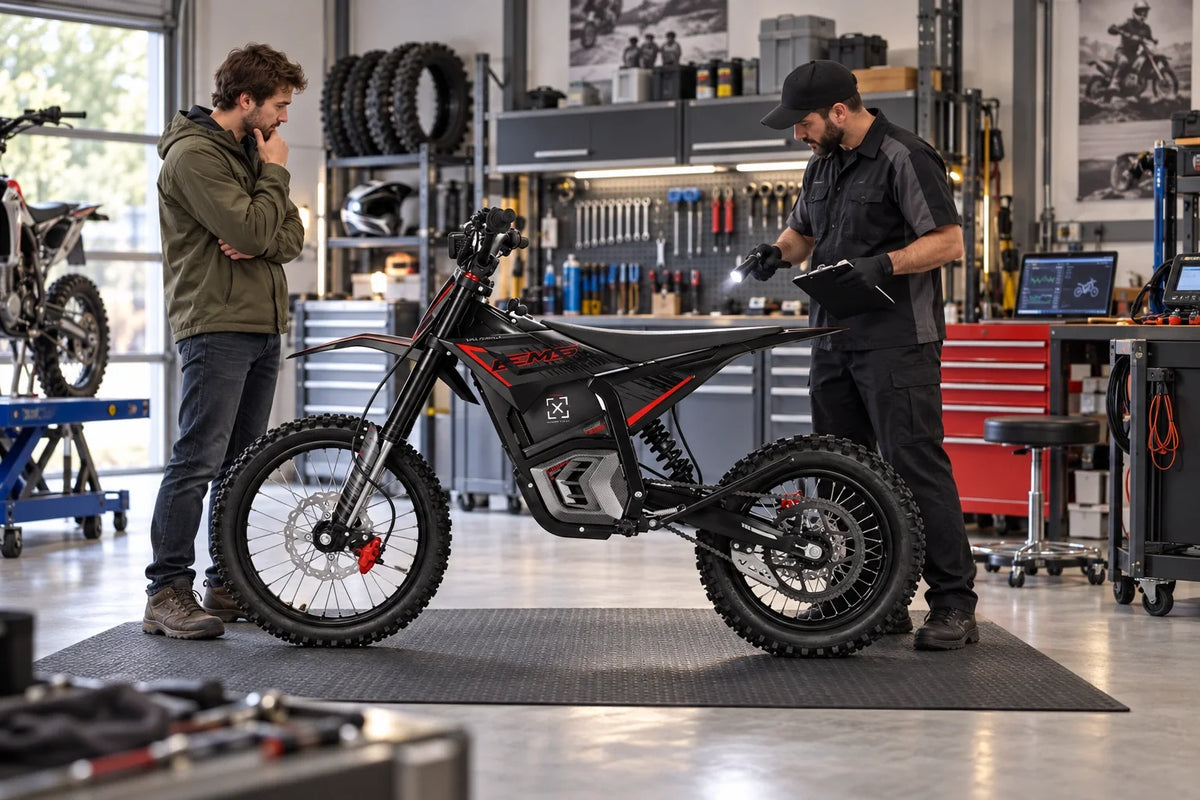
Figure 1. Official Valtinsu EM5 Pro product image accompanying what a jumping battery percentage actually represents. Confirm component locations and limits against the exact model page and current manual.
Normal movement versus a warning pattern
A pattern that is often consistent with ordinary voltage sag
● The percentage falls mainly during high load and begins to recover within a few minutes of rest.
● The display remains on, the bike does not cut out, and power delivery remains predictable.
● The behavior is repeatable at a similar starting charge, temperature and riding demand.
● The movement becomes more noticeable near the lower part of the usable charge, when the pack has less voltage margin.
Even when these points fit, "normal" does not mean every size of drop is acceptable. The expected amount depends on the complete battery, BMS, controller and display calibration. Do not borrow a threshold from a different voltage pack or another brand and apply it to your bike. Use your own established baseline and model documentation.
A pattern that deserves support
● The bike shuts down while the display still showed substantial charge.
● The same route and riding mode now produce a much larger drop than they did previously.
● The percentage changes sharply while the bike is parked and unloaded.
● The pack, charge port or connector becomes unusually hot, smells abnormal, looks swollen or shows impact damage.
● Power cycles, error codes, arcing marks or loose battery retention appear with the percentage jump.
Stop riding or charging when a battery shows heat, swelling, smoke, hissing, leaking, impact deformation or a strong unusual odor. Move away from the product if it can be done without handling a hazardous pack, follow local emergency guidance and do not open the battery case. Consumer safety agencies consistently advise using the supplied or specifically approved charger and avoiding damaged batteries.

Figure 2. Official Valtinsu EM-5 product image accompanying normal movement versus a warning pattern. Confirm component locations and limits against the exact model page and current manual.
Five checks before blaming the battery
● Confirm the starting condition. Let the bike rest powered off, note the displayed percentage, ambient temperature and time since charging. A reading taken immediately after a hard ride is not the same as a rested baseline.
● Check physical retention. With the system off, confirm that the removable pack is fully seated and locked according to the Valtinsu user manual. Do not force the latch or improvise padding around electrical contacts.
● Inspect accessible connection areas. Look for dirt, moisture, pulled wiring, discoloration or looseness without inserting tools into terminals or opening sealed components.
● Repeat at a moderate, controlled load. Use a safe closed area and the same short slope or acceleration pattern. Do not deliberately drain the pack or demand maximum output to make the fault appear.
● Compare the display with the bike behavior. Record whether only the percentage moved, power was limited, the display restarted or the entire system shut down. Those are different diagnostic branches.

Figure 3. Official Valtinsu EM5 Pro product image accompanying five checks before blaming the battery. Confirm component locations and limits against the exact model page and current manual.
Run a useful rest-load-recovery log
Create a three-line record rather than relying on memory. First record the rested percentage and, if the normal display exposes it, the resting voltage. Second, during a normal short load, have a safe recording setup capture the lowest reading without the rider looking down. Third, park and record the value after one, three and five minutes. Add temperature, riding mode, terrain, rider and cargo load, and whether the bike had been recently charged.
One run cannot diagnose cell health. The value comes from repeatability. If three comparable sessions show similar movement and no functional problem, you have a baseline. If the gap is widening, the shutdown point is moving upward or the symptom only occurs when the bars turn or the bike hits bumps, the log points toward a fault that needs model-specific inspection. A support team can work with a short video and structured notes much more effectively than with "the battery went crazy."

Figure 4. Official Valtinsu EM5 Ultra product image accompanying run a useful rest-load-recovery log. Confirm component locations and limits against the exact model page and current manual.
What not to do
● Do not open the pack, bypass the BMS or probe internal cell groups.
● Do not use an unapproved charger to "recalibrate" the display.
● Do not keep forcing high-current runs after an unexpected shutdown.
● Do not assume that repeatedly charging to 100 percent will repair an electrical or mechanical fault.
● Do not compare raw voltage thresholds with a bike that uses a different nominal voltage or software map.
Some systems have an official gauge-calibration or balancing procedure; others do not. Follow only the current model documentation or a direct support instruction. A generic forum procedure can create new problems when the display, charger or BMS behaves differently.
When the bike should be inspected
Arrange model-specific support when the pack cuts out early, the jump appears without load, the battery will not lock securely, the connector shows heat damage, the pack has been dropped or the result changes rapidly over a few rides. Provide the order and model details, approximate battery age, charge history, storage temperature, any modifications and the rest-load-recovery log. If the concern began after a crash, water exposure or transport event, say so directly.
When replacement is genuinely required, use a pack and charger confirmed for the exact model. The compatible accessories page is a starting point, but the product label, connector, electrical rating and support confirmation control the decision. Similar-looking batteries are not automatically interchangeable.

Figure 5. Official Valtinsu EM-5 product image accompanying when the bike should be inspected. Confirm component locations and limits against the exact model page and current manual.
Match the Diagnosis to the Right Valtinsu Model
Troubleshooting should begin with the specification and support path for the exact bike, not with a generic battery chart. Use the Valtinsu electric dirt bike collection to compare nominal battery voltage, wheel size, ride modes and intended use before applying model-specific advice. A 48V EM-5, 60V EM-5 Pro and 72V EM-5 Ultra should not share the same voltage assumptions.
For adult riders considering the Valtinsu EM-5 Pro, the current product specification lists a 60V/27Ah battery, three ride modes and a 52 mph top speed. Those figures provide a model-identification baseline, not a diagnosis: a jumping gauge still requires the rest-load-recovery log above and support review when shutdown, heat or connector damage appears.
Use Valtinsu's electric dirt bike battery support resources as the broad ownership reference, then confirm every procedure, part and limit against the exact model page and current manual.
Quick Decision Table
|
Pattern |
What it may indicate |
Recommended action |
|
Drops under hard load, then recovers |
Temporary voltage sag affecting a voltage-based estimate |
Log the rested, loaded and recovered readings under one controlled condition. |
|
Large change at moderate charge |
Connection resistance, imbalance or a pack that cannot support the requested current |
Stop repeated high-load testing and send the log to model-specific support. |
|
Display changes but propulsion remains stable |
Gauge calibration or estimation behavior |
Compare several charge levels before treating one reading as a battery failure. |
|
Shutdown, heat, odor, swelling or damage |
Potential battery or connection safety fault |
Power down, move people away from a damaged pack and follow manufacturer guidance. |
FAQs
Why does the percentage drop when I accelerate?
Acceleration raises current demand. Pack voltage temporarily falls under that load, and a voltage-based gauge may translate the lower voltage into a lower percentage. If the reading recovers after rest and the bike remains stable, the movement may be normal sag. A large or worsening drop, early cutoff or heat needs support.
Use this quick classification:
● Likely normal: a modest drop under hard load that largely returns after a short rest.
● Needs logging: a larger or inconsistent change affected by temperature, terrain or starting charge.
● Stop testing: shutdown, heat, odor, swelling, damaged connectors or a pattern that is getting worse.
Can battery percentage rise after the bike rests?
Yes. Voltage can recover after the motor load stops, so the estimated percentage may rise even though no energy was added. The key is whether the movement is modest, repeatable and free of shutdown or damage symptoms.
Does cold weather make the gauge less stable?
Cold conditions can increase effective internal resistance and reduce available power, so load-related sag may become more visible. Let the pack reach the permitted operating temperature naturally; never use direct heat. Follow the storage and charging limits in the model manual.
Should I replace the battery based on one percentage jump?
No. One display event is not enough evidence. Record a controlled pattern and check retention, accessible connectors, temperature and actual bike behavior. Replace a battery only after model-specific diagnosis or support confirms the need.
Follow this check sequence:
1. Record the rested percentage, ambient temperature and starting charge before applying load.
2. Use one controlled low-speed load on a known surface; do not repeat a fault that causes shutdown.
3. Stop, allow the reading to settle, and record recovery, warning icons and propulsion behavior.
Is it safe to keep riding after an early shutdown?
Do not continue a normal ride. Move the bike to a safe place, power it down and document the condition. Repeatedly demanding power can hide useful evidence and may worsen a connection or battery problem. Stop immediately for heat, odor, swelling, smoke or visible damage.
Can a loose battery connection make the percentage jump?
Yes. An intermittent connection can disturb the display reading or interrupt system power, especially over bumps or under load. Power the bike off and inspect only accessible retention and connector areas for looseness, contamination, heat marks or damage. Do not probe terminals or keep recreating a cutoff.
Why does the gauge become less reliable near empty?
A voltage-based gauge can become less stable near the lower end of the charge window because the pack has less voltage margin and the same load creates a more visible dip. Cold temperature, soft terrain and a hard acceleration can magnify the effect. Treat the percentage as an estimate, not a promise of remaining miles. Reduce load, return by the safest short route and record the rested reading. If the bike shuts down while showing substantial charge, or the pattern is worsening, stop repeated testing and send the log to model-specific support.


Looking for something else?
Electric Dirt Bike Loses Power Under Load: Causes and How to Fix It
LEARN MORE
Electric Dirt Bike Bolt Torque Checklist: What to Check and Where the Numbers Come From
LEARN MORE
How to Bleed Electric Dirt Bike Brakes Safely
LEARN MORE
Electric Dirt Bike Throttle Not Working: What to Check First
LEARN MORELooking for something else?
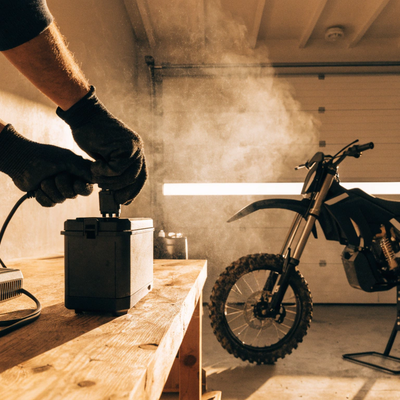
Electric Bike Battery Not Charging? Work Through This Before You Buy a New One
LEARN MORE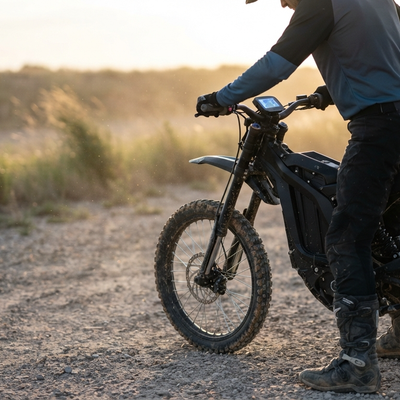
Electric Dirt Bike Error Codes: What They Mean and What to Check First
LEARN MORE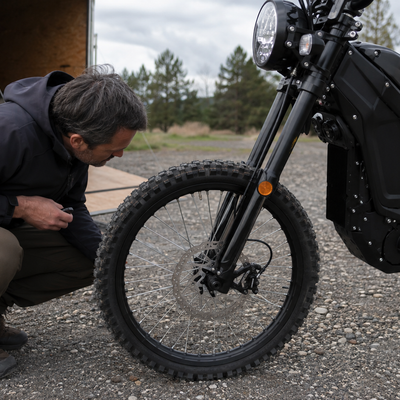
Electric Dirt Bike Brake Rotor Rubbing: Diagnose the Cause Before Adjusting
LEARN MOREYou may also like
Moto eléctrica todoterreno para adultos EM-5 con luz
VALTINSU EM-5 Pro Off-Road Black Electric Dirt Bike
VALTINSU EM-5 Pro Green Electric Dirt Bike
VALTINSU EM-5 Ultra Electric Dirt Bike
VALTINSU EM-5 & EM-5 Pro Combo
Further reading
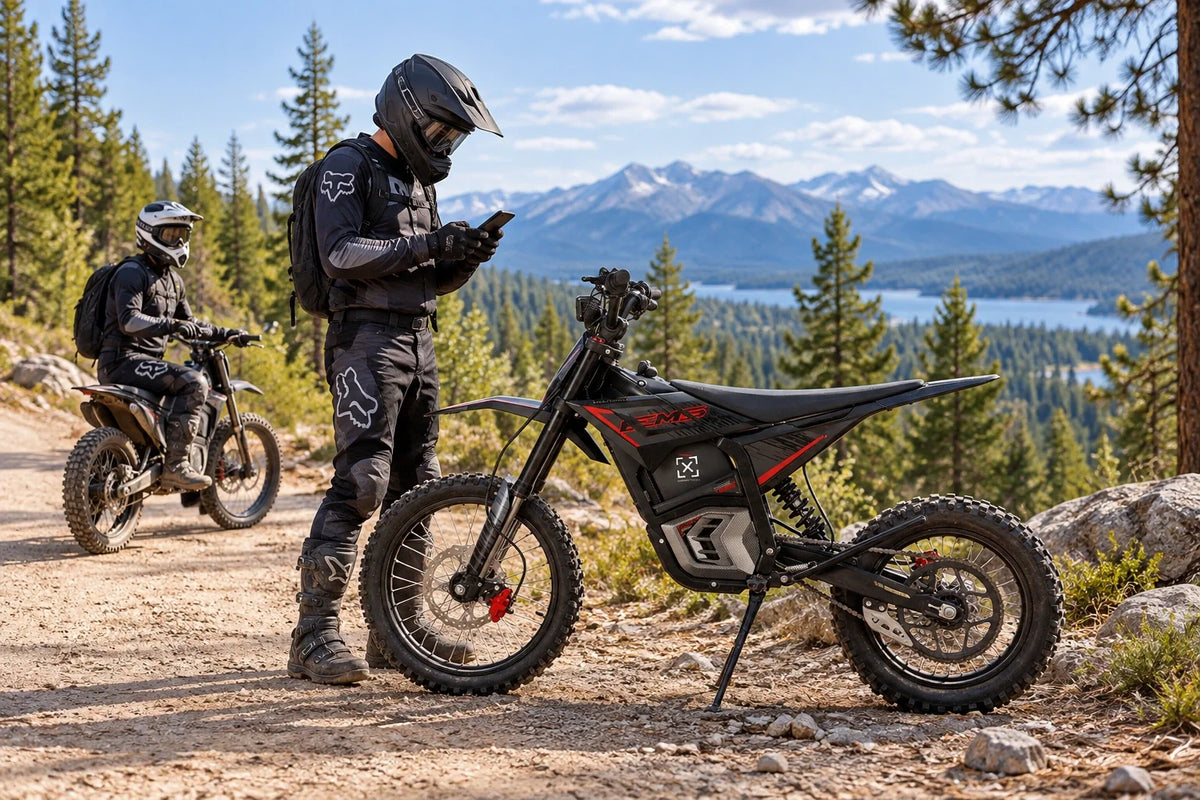
Electric Dirt Bike Trailside Power Loss: Recovery Plan When the Battery Is Dead
Electric Dirt Bike Fall Riding on Wet Leaves: Grip, Hidden Obstacles and Braking
How to Lift a Fallen Electric Dirt Bike Without Hurting Yourself or the Bike