Electric Dirt Bike Connector Corrosion: How to Inspect It Safely
A connector can look fine and still cut power over a bump. Corrosion does not have to eat through a pin to cause that. It only has to interfere with the microscopic points where current actually crosses the joint.
Three outcomes. Clean and reconnect, replace the connector, or stop and get it serviced. Getting that call wrong on an electrical system costs more than getting it wrong on a chain.
Read this before you touch anythingThis guide is for inspection and basic maintenance. It does not replace the applicable Valtinsu service instructions. Follow the model-specific user manual before disconnecting battery, controller or motor wiring. Do not open the battery pack, and do not bypass a fuse, BMS or safety interlock. Do not assume all Valtinsu models use identical connectors or isolation procedures. |
Why Electrical Voltage Changes the Rules Here
Every maintenance job starts with power the bike off. Here that instruction carries more weight, and the reason is worth knowing.
Valtinsu publishes 48V, 60V and 72V battery systems across its lineup. OSHA states that it considers all voltages of 50 volts or above hazardous. AC or DC, no distinction. Its reasoning is that injury comes from current rather than voltage: using 500 ohms as the minimum resistance of a person with broken skin at the contact point, a live part at 60 volts drives around 120 milliamperes. OSHA describes that as sufficient to cause serious injury.
OSHA adds that it knows of documented serious injuries from contact with live parts between 50 and 100 volts DC. Its general rule: de-energize live parts before working on or near them. The exception applies only below 50 volts to ground.
|
What that means for you These are workplace regulations for qualified workers, not a rule aimed at riders. But the underlying physics is the same on a trail bike, and the practical conclusion is simple: on a 48V to 72V system, isolate the battery before inspecting connectors. Do not treat a switched-off display as proof that a circuit is dead. A nominal 48V pack also sits above 48V when fully charged, so the lowest-voltage Valtinsu is not meaningfully outside this picture either. |
What Is Electric Dirt Bike Connector Corrosion?
Degradation of the metal contact surfaces inside a connector. Moisture drives most of it, helped by dirt, salt and whatever else reaches the pins. Off-road riding supplies all four.
The mechanism is more specific than dirty contacts. Connector industry guidance explains that two mated contacts never touch across their full apparent area. Current crosses at microscopic asperity points, only microns across. The resulting constriction resistance depends on how many of those points are genuinely metal-to-metal, so corrosion films sitting on them cut the number of working contacts and resistance climbs.
Worth noting: it happens on gold-plated interfaces too. The corrosion source is usually the copper-alloy base metal underneath, not the plating.
Why vibration matters as much as water
A second mechanism gets almost no coverage, and it suits an off-road machine exactly.
Fretting corrosion comes from repeated micro-movements at the contact interface, on the scale of a few microns, driven by vibration, mechanical shock and thermal cycling. Each movement exposes fresh metal. That oxidises, the debris builds up in the contact area, and resistance climbs. Connector Supplier calls fretting the predominant degradation mechanism for tin-plated systems.
One detail explains a lot of rider complaints. Intermittent high-resistance events show up well before average resistance shifts enough to notice. So a connector passes a visual inspection and still drops power over rough ground.
What Does a Corroded E-Bike Connector Look Like?

Appearance narrows it down. It does not settle anything. Use these as starting points, then check contact condition and terminal tension.
Green or blue-green residue
Usually oxidation on copper-containing metal. Common, and often the most recoverable state, provided the contact underneath is undamaged. Look for pitting beneath the deposit before you wipe it away.
White or grey residue
Associated with moisture exposure and oxidation deposits. Not every white deposit is corrosion. Dried mineral residue from water looks much the same. Either way, water got inside the housing, so check the seals.
Blackened or darkened contacts
Not a cleaning job. Darkening can follow overheating or arcing, and both point at a connection problem that no amount of cleaning resolves.
Pitted contacts
Metal loss, not surface film. A pitted contact has less material carrying current, and nothing puts it back. Replace it.
Melted or discoloured housing
The clearest stop signal here. Melted plastic means the joint got hot enough to deform its own housing, which points at high resistance under load. Replace the connector without finding the cause and it happens again.
Moisture inside the connector
Visible water means the sealing system is not doing its job. Drying it out treats the symptom. The seal, cable entry or routing is the actual fault.
Which Connectors Should You Inspect?
Inspect what sits exposed to water, mud, vibration and high current. Which of these your machine has, and where, varies by model.
- Main battery discharge connector
- Charging port and its cover
- Controller connections
- Motor connectors
- Motor sensor connectors
- Throttle connector
- Brake sensor or cutoff connectors
- Display connector
- Lighting and accessory connectors
Valtinsu publishes no connector locations, types or ratings for individual models. Check the applicable manual before you go looking.
Start with the high-current connections. Resistance at a signal connector produces a fault. Resistance at a high-current connection produces heat.
How to Safely Inspect an Electric Dirt Bike Connector

- Switch the bike off and disconnect the charger.
- Isolate the battery following the procedure in your model manual. Do not improvise this step.
- Work in a dry, well-lit area with eye protection, insulated or non-metallic tools, a flashlight and a clean cloth. Remove rings and watches.
- Inspect the connector externally before separating it: cracks, moisture, packed dirt, damaged seals, discoloration, melted plastic.
- Release the locking tab and separate the connector by its housing. Never pull on the wires.
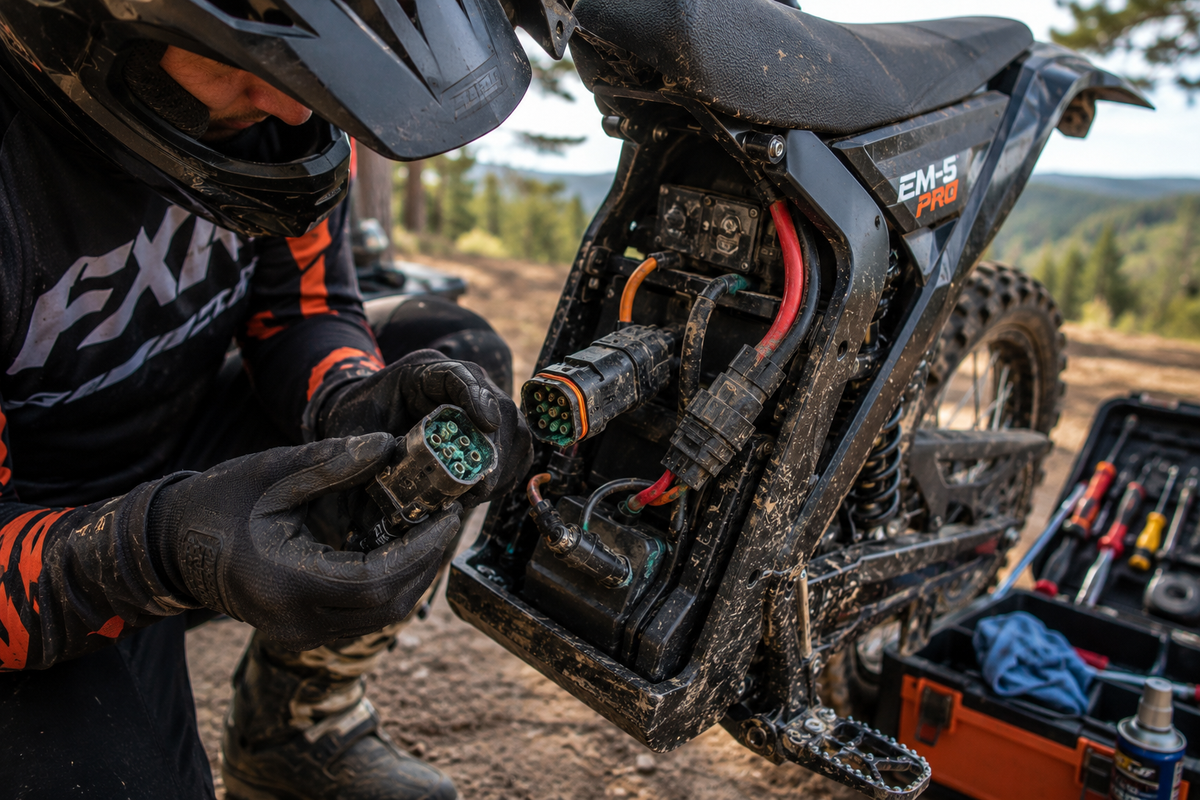
- Inspect pins and terminals for green or white residue, blackening, pitting, bent or recessed pins, and loose terminals.
- Inspect seals, O-rings and the cable entry point, including whether corrosion has travelled up under the insulation.
- Check for heat damage: browned insulation, blackened contacts, deformed plastic, a burnt smell.
- Decide whether this is a clean, a replace or a stop. The tables below cover that.
|
Do not do any of this
|
Is It Dirt, Moisture, Corrosion or Heat Damage?
|
What you find |
Possible issue |
First action |
|
Dry dirt or dust |
Surface contamination |
Dry-clean and inspect the contacts underneath |
|
Water droplets inside |
Moisture intrusion |
Isolate, dry fully, then inspect the seal |
|
Light green residue |
Oxidation on copper-alloy contacts |
Clean carefully, then check for pitting |
|
White or grey residue |
Moisture-related oxidation or deposits |
Clean, dry, and inspect seals for the entry point |
|
Pitted contacts |
Metal loss from corrosion or arcing |
Replace or service. Cleaning will not restore it |
|
Loose or pushed-back pin |
Terminal retention or tension failure |
Re-pin or replace |
|
Blackened terminal |
Possible arcing or overheating |
Stop and investigate before reconnecting |
|
Brown or hardened insulation |
Overheating at or near the joint |
Stop. Inspect the connector and the circuit |
|
Melted housing |
Excess heat from a high-resistance joint |
Replace and find the root cause |
|
Moisture returning after cleaning |
Seal or routing failure |
Fix the water-entry path, not just the corrosion |
|
Connector hot after riding |
High resistance under load |
Stop riding. Professional inspection |
Can You Clean a Corroded E-Bike Connector?
Sometimes. Light surface oxidation on otherwise intact contacts usually cleans up. Metal loss, heat damage or a loose terminal does not.
If you proceed, in this order: isolate power, dry-clean loose dirt with a soft cloth or non-metallic brush, then use a contact cleaner intended for electrical connectors, following its own instructions. Put it on a cloth or swab. Do not flood a connector, port or sealed module. Let it evaporate fully.
|
What not to use Household cleaners, vinegar, baking soda, unknown solvents, chain lubricant, penetrating oil, or brake cleaner unless the connector manufacturer specifically approves it. Steel wool, wire brushes, metal picks, fibreglass pencils or abrasive erasers on plated contacts. Removing plating exposes base metal and accelerates the next round of corrosion, and fibreglass leaves conductive filaments behind. |
One check most guides skip. A spotless connector still fails if the female terminal has lost its grip. Look for terminals that appear spread or pushed back. Do not shove a thick probe in to test tension, because that enlarges the terminal and leaves the connection worse than you found it.
Should You Use Dielectric Grease on an E-Bike Connector?
It is a moisture barrier for seals and mating surfaces. Not a conductor. Not a repair, and no substitute for clean metal-to-metal contact.
Where you do use it, follow the connector or bike manufacturer guidance, apply it thinly, and keep it out of small signal terminals. Too much interferes with seating.
There is a caveat worth knowing. Connector Supplier notes some contact lubricants are tacky enough to retain dust, and that retained dust can itself contribute to fretting degradation. On a machine ridden through dust and mud, more grease is not automatically better.
To be explicit about the limits: grease does nothing for pitted contacts, loose terminals, burned pins, melted housings or damaged wiring.
Why Does an Electric Dirt Bike Connector Get Hot?
Resistance and current make heat. A degraded connection has more resistance than a good one.
The chain runs like this. Corrosion, a loose terminal, a poor crimp or a damaged contact reduces effective contact area. Resistance rises. Under load that resistance dissipates power as heat at the joint, the heat accelerates the degradation, and resistance climbs again. Self-reinforcing. Which is why a hot connector rarely improves on its own.
So a connector that runs noticeably hot in normal use is not a cleaning job. It needs diagnosis. The cause might be the connector, the crimp, the current draw, or simply the wrong connector for the job.
Clean, Replace or Stop?

|
Condition |
Action |
|
Surface dirt, contacts intact |
Clean and inspect |
|
Light oxidation, contacts intact |
Clean, dry fully, re-inspect before reconnecting |
|
Moisture returning after cleaning |
Repair the sealing or routing problem |
|
Loose or pushed-back terminal |
Re-pin or replace the connector |
|
Pitted or metal-loss contacts |
Replace or professional service |
|
Blackened contacts |
Stop and investigate heat or arcing |
|
Melted or cracked housing |
Stop riding. Replace and find the cause |
|
Arcing or sparking |
Isolate the battery. Professional inspection |
|
Burning smell |
Stop riding |
|
Power loss with visible connector damage |
Stop riding |
|
Corrosion inside the battery enclosure |
Do not open it. Professional service |
Is It the Connector, or Something Else?
Not every electrical symptom is corrosion. Work the alternatives before pulling a harness apart.
|
Symptom |
Possible connector issue |
Other possible cause |
Safe first action |
|
Intermittent power over bumps |
Fretting corrosion or loose terminal |
Loose mounting, chafed wiring, switch fault |
Isolate, inspect connectors and wiring routing |
|
Motor cutout under acceleration |
High-resistance high-current joint |
Controller, motor, battery protection |
Stop riding. Professional diagnosis |
|
Charging starts and stops |
Charge port corrosion or moisture |
Charger, cable, battery management |
Inspect the port; do not open the pack |
|
Hot connector |
Resistance at a degraded joint |
Excess current draw, wrong connector, poor crimp |
Stop riding. Do not simply clean and continue |
|
Error code after wet riding |
Moisture in a sensor or signal connector |
Sensor fault, wiring damage |
Isolate, dry, inspect, then consult the manual |
|
Burning smell |
Overheating joint or insulation |
Motor, controller, battery fault |
Stop immediately. Professional inspection |
|
Green residue, no symptoms |
Early surface oxidation |
Normal dirt on the housing exterior |
Clean and monitor |
Can You Ride With a Corroded Electric Dirt Bike Connector?
Lower concern. Superficial dirt on the housing, dry residue, or light surface oxidation where contacts are intact and terminals still grip.
Inspect before riding again. Green oxidation on contacts, moisture that keeps coming back, a loose terminal, or any intermittent power symptom.
|
Stop riding and isolate the battery if you find
Do not repeatedly reconnect a connector that has been arcing to see whether it holds. Isolate the battery and have the system inspected. |
What Causes Connector Corrosion in the First Place?
Water, obviously. Rarely the whole answer though.
- Rain, water crossings and wet trail riding
- Mud and grit packing around connector seals
- High-pressure washing forcing water past seals
- Damaged, cut, displaced or missing seals
- Cable routing that lets water pool at the connector
- Vibration driving fretting at the contact interface
- Salt and other contaminants
- Long-term storage in damp conditions
Valtinsu publishes IPX6 for the EM-5, EM-5 Pro and EM-5 Ultra, and IPX4 for the EM23. Those are whole-vehicle ratings as Valtinsu states them. They are not a claim that any individual connector is permanently sealed. No rating keeps a connector corrosion-proof once a seal is damaged.
How to Prevent Connector Corrosion

- Keep pressure washers away from connectors, seals and electrical enclosures
- Dry the bike properly after wet or muddy rides
- Inspect connectors after any submersion or crash
- Replace damaged seals and cracked locking tabs rather than living with them
- Route cables so water cannot pool at a connector
- Secure wiring against vibration and chafing
- Cap or protect connectors while disconnected
- Store the bike dry
- Check high-current connections for heat after any electrical service
Valtinsu Model-Specific Connector Inspection
Connector locations, types and isolation procedures differ between models. Before disconnecting battery, controller or motor wiring, use the Valtinsu electric dirt bike user manual for your exact machine. Valtinsu currently lists manuals for the EM-5, EM-5 Pro in green and black, EM-5 Ultra and EM23.
|
What Valtinsu does not publish No connector type, series, rating, pin count, wire gauge, fuse rating, per-connector IP rating or battery-isolation procedure appears in the available Valtinsu product information. Do not infer any of these from another model or another manufacturer. Valtinsu’s own guidance is to power off before replacing electrical parts, use the correct components, never force a component that does not align, and seek qualified technician assistance for unfamiliar electrical or wiring work. |
Voltage differs across the range too. The Valtinsu EM-5 Pro electric dirt bike is listed with a 60V 27Ah battery, and other models in the adult electric dirt bike collection run 48V and 72V systems. All of them sit at or above the threshold OSHA treats as hazardous.
Final Takeaway
Clean minor contamination. Replace damaged contacts. Stop when corrosion arrives alongside heat, arcing, melting, a burning smell, exposed conductors or unpredictable power loss.
Electric dirt bike connector corrosion earns more caution than a dirty chain for one reason. The failure mode stays invisible until it is not. Resistance builds at contact points nobody can see, intermittent faults arrive before anything looks wrong, and the heat that damages a connector is the same heat that makes it dangerous.
Isolate the battery first. Every time. Take model-specific procedures from the Valtinsu electric dirt bike user manual rather than a general guide, and for anything past surface cleaning on a machine from the Valtinsu electric dirt bikes range, hand it to qualified service.
Frequently Asked Questions
What causes electric dirt bike connector corrosion?
Moisture reaching the contacts, usually helped along by mud, damaged seals, cable routing that traps water, or pressure washing. Vibration adds a second mechanism called fretting, where micro-movements at the contact interface repeatedly expose fresh metal that then oxidises.
What does green residue on an electrical connector mean?
Usually oxidation on copper-containing contact metal. It is common and often the most recoverable state, but do not just wipe it away. Check underneath for pitting, check whether the terminal still grips, and find out how moisture got in.
Can I clean a corroded e-bike connector?
Sometimes. Cleaning is reasonable when all of these are true:
- The battery is isolated per your manual
- Contamination is surface-level, not pitting
- Contacts are undamaged and terminals still grip
- There is no blackening, melting or heat damage
If any of those fail, replacement or service is the answer instead.
Is dielectric grease safe on electric dirt bike connectors?
Yes, used correctly and sparingly, as a moisture barrier on seals and mating areas.
It is not a conductor and not a repair. It does nothing for pitted contacts, loose terminals or melted housings, and connector-industry guidance notes tacky lubricants can retain dust, which itself contributes to contact degradation.
Can a wet connector cause electric dirt bike power loss?
Yes. Moisture and the corrosion that follows increase contact resistance, and intermittent high-resistance events tend to appear before anything looks visibly wrong. That is exactly the pattern behind power that cuts over bumps but tests fine in the garage.
Why is my battery connector getting hot?
Heat at a connector means resistance under load. Corrosion, a loose terminal, a poor crimp or a damaged contact all reduce the effective contact area, and the resulting heat accelerates the damage. Stop riding and have it diagnosed rather than cleaning it and carrying on.
When should an electrical connector be replaced?
Replace rather than clean when you find:
- Pitted contacts or visible metal loss
- A terminal that is loose or has lost its grip
- Blackened contacts or heat-damaged insulation
- A melted or cracked housing
- Corrosion that has travelled up under the wire insulation
- Symptoms that return after a proper cleaning
Can I ride with connector corrosion?
It depends entirely on what you have. Superficial dirt or light surface oxidation on intact contacts is low concern once cleaned. Green oxidation, recurring moisture or intermittent power means inspect before riding. Melting, blackening, arcing, a burning smell or a hot connector means stop and isolate the battery.
SOURCES USED
- Occupational Safety and Health Administration, Standard Interpretation: Guarding requirements for 50 volts or more DC. Published 4 September 2015. Retrieved 11 Aug 2026. Supports: OSHA considers all voltages of 50 volts or above hazardous, without distinguishing AC from DC; injury results from current rather than voltage; using 500 ohms as the minimum body resistance with broken skin at the contact point, 60 volts drives approximately 120 milliamperes, which is sufficient to cause serious injury; and OSHA is aware of documented serious injuries from contact with live parts operating between 50 and 100 volts DC.
- Occupational Safety and Health Administration, 29 CFR 1910.333, Selection and use of work practices. Retrieved 11 Aug 2026. Supports: live parts must be de-energized before work on or near them, with the exception applying to live parts operating at less than 50 volts to ground where there is no increased exposure to electrical burns or arc explosion. Cited as workplace regulation illustrating the principle, not as a rule governing private riders.
- Connector and Cable Assembly Supplier, Dr. Bob Mroczkowski, Connector Degradation Mechanisms: Corrosion Part I. Published 19 June 2007, updated 31 October 2019. Retrieved 11 Aug 2026. Supports: current crosses a contact interface at microscopic asperity points only microns across, producing constriction resistance; corrosion films on those points increase resistance and can lead to connector failure; surface corrosion affects all interfaces including gold, with the copper-alloy base metal as the corrosion source; fretting corrosion is driven by vibration, mechanical and thermal shock and thermal expansion mismatch, and is the predominant degradation mechanism for tin-plated systems; oxide debris accumulates at the interface and raises resistance; intermittent high-resistance events occur before significant change in average resistance; and some contact lubricants are tacky and retain dust, which can itself contribute to fretting degradation.
- Valtinsu Sport, Valtinsu electric dirt bike user manual. Retrieved 11 Aug 2026. Supports: model-specific manuals for EM-5, EM-5 Pro Green, EM-5 Pro Black, EM-5 Ultra and EM23, and their role as the authority for battery isolation and electrical procedures.
- Valtinsu Sport, EM-5 Pro Black Electric Dirt Bike. Retrieved 11 Aug 2026. Supports: 60V 27Ah battery, IPX6 protection rating, age grade 18+. Used as voltage and model context only.
- Valtinsu Sport, Electric Dirt Bike Collection. Retrieved 11 Aug 2026. Supports: the lineup spanning 48V, 60V and 72V systems, IPX6 and IPX4 protection ratings as stated per model, and off-road use only positioning.
- Valtinsu Sport, Parts and Accessories. Retrieved 11 Aug 2026. Supports: Valtinsu guidance to power off the bike before replacing electrical parts, use correct components, never force a component that does not align, contact support when unsure, and seek qualified technician assistance for unfamiliar electrical and wiring work.


Looking for something else?
Electric Dirt Bike Replacement Parts Availability: What Buyers Should Verify Before Ordering
LEARN MORE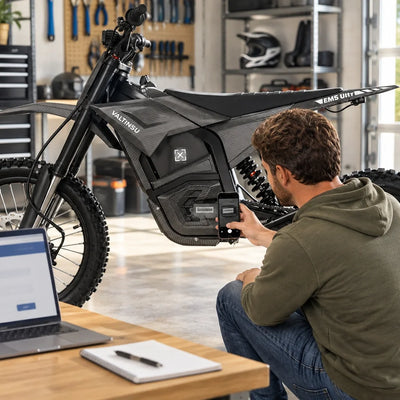
How to Check an Electric Dirt Bike for Safety Recalls by Model and Serial Number
LEARN MORE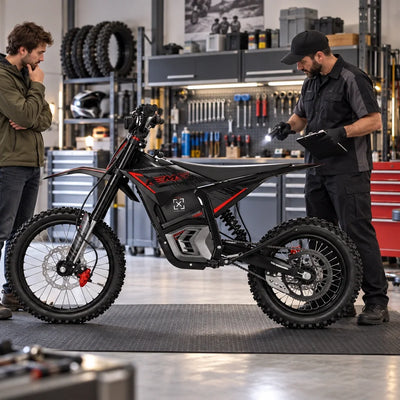
How to Choose an Electric Dirt Bike Repair Shop: Questions to Ask Before Service
LEARN MORE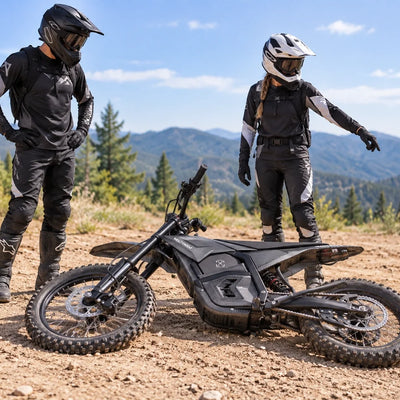
How to Lift a Fallen Electric Dirt Bike Without Hurting Yourself or the Bike
LEARN MORELooking for something else?
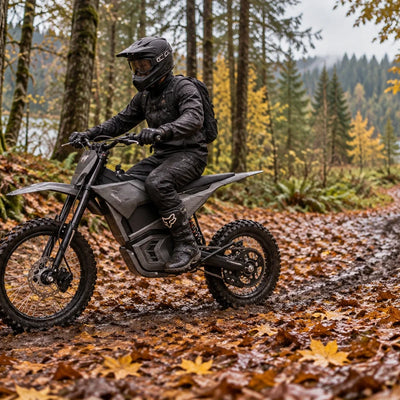
Electric Dirt Bike Fall Riding on Wet Leaves: Grip, Hidden Obstacles and Braking
LEARN MORE
Electric Dirt Bike Trailside Power Loss: Recovery Plan When the Battery Is Dead
LEARN MORE