Electric Dirt Bike vs Gas: Why Family Riders Are Switching Back in 2026
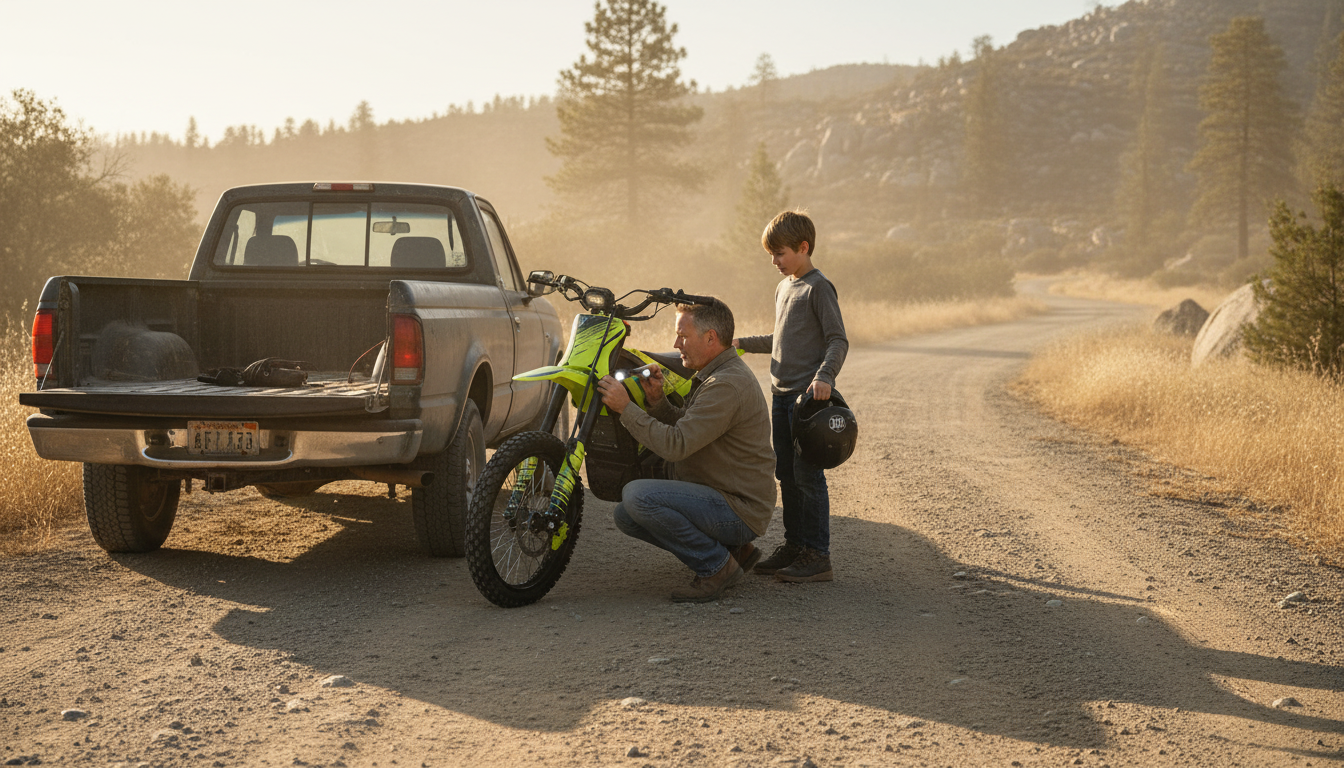
Tom's son Cole made it three miles into the loop before the bike died.
Tom was forty-four. Mechanical engineer. The kind of dad who doesn't usually run out of charge on anything. He'd bought the electric dirt bikes two summers earlier (one for him, one for Cole). Quiet rides in the backyard. Easy starts. Cole was nine then and the bike was perfect.
Now Cole was eleven and they were standing at the bottom of a fire road in El Dorado County, two miles from cell service, watching the battery icon blink at 6%. Marcus, the powersports shop manager I sat down with later, called it "the moment that ends every honeymoon with electricity." Not because the electricity failed. Because Tom's riding life moved on, and the bike didn't.
That's the question this guide answers. Most family riders don't pick electric or gas wrong on day one. They pick it right for who they were that year. Then year three arrives. The kid is bigger. The Saturdays are longer. The OHV park is farther. The math changes.
Here's what nobody tells you up front. The electric-vs-gas conversation isn't really about which technology is "better." It's about where your family will be riding in three years. Buy for that family, not the one you have today. Before you click anything (and especially before you click on any adult electric off-road bike built for real terrain), here's the framework families like Tom's are using in 2026.
|
Quick answer Electric dirt bike vs gas comes down to where your family rides most. For short backyard sessions, suburban property, and 30–90 minute OHV park rides, electric usually wins because it is quieter, easier to start, and lower-maintenance; for all-day remote trail riding, gas still has the edge. |
Why the "Electric Wins for Everything" Story Stopped Being True

Three years ago, electric was the easy answer. In 2026, "easy" depends on where you ride.
Marcus has been turning wrenches at a Sacramento powersports shop since 2012. He told me he sells more first-time gas dirt bikes in 2026 than he did in 2020. Not because his customers gave up on electric. Because they got specific about what they wanted from it.
|
"Three years ago, every other parent walked in asking about electricity. Now half of them are coming back asking what a 230cc four-stroke costs. Their kid grew. Their weekend ride got longer. The math changed." — Marcus, parts manager, 12-year veteran |
That math has a shape. It looks like this.
|
Use case |
Electric still wins |
Gas wins again |
|
Backyard, 20-minute rides |
✓ Quiet, instant, no warm-up |
Noise is a problem |
|
Property under 5 acres |
✓ Neighbor-friendly |
Noise + smell get reported |
|
Local OHV, 1-2 hour ride |
✓ One full charge covers it |
Works fine, but overkill |
|
Trailer-out OHV days |
Range and charging |
✓ Refuel in 90 seconds |
|
Multi-day camp + ride |
Charging at the campsite is hard |
✓ Bring extra fuel |
|
Riding far from cell service |
Battery anxiety is real |
✓ Carry a gallon |
Read down that table and ask honestly. Which row describes most of your weekends? Not the weekends you imagine. The actual ones. That's the column you should be shopping for.
What Actually Changed for Families in 2026
A few specific things shifted. None of them are loud. They added up.
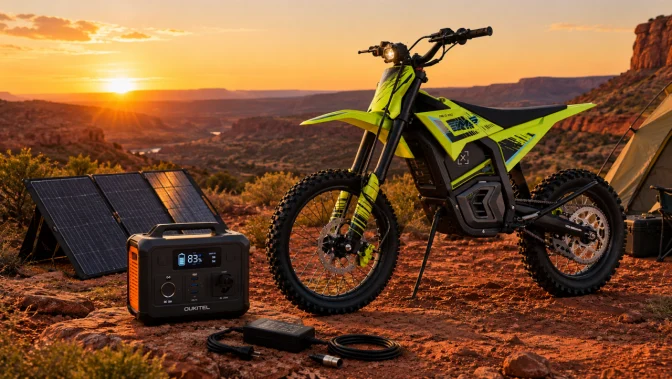
Charging infrastructure hasn't caught up to the trailheads. Almost every Pacific Coast and Mountain West OHV park I called this winter said the same thing: no public outlets at the staging area. A handful have started installing them. Most haven't. If you can charge at the trailhead, your range conversation is different. If you can't, your range is whatever you trailered out with.
Battery degradation is now a known number. A 60V 27Ah pack that delivered 53 miles in year one will deliver roughly 38-42 miles by year three under hard use. Brands have gotten better about saying so. Owners have gotten less surprised by it. The second-year families know the number now, and they shop accordingly.
Resale data has matured. Gas dirt bikes resell predictably. A clean five-year-old four-stroke holds about half its value. Electric resale is still soft because nobody is sure what a used battery is worth. The gap is narrowing. It's still real in 2026.
Trail access shifted, then re-shifted. Some districts opened to throttle-only e-bikes; others closed them in the same year. The U.S. Forest Service e-bike policy and the Bureau of Land Management e-bike guidance both still require local-rule checks before you ride. The Class 1/2/3 framework was supposed to clarify it. For high-power throttle-only off-road motorcycles, it mostly didn't.
Worth saying. None of these changes makes electric the wrong choice. They just made the choice less universal. The families who switched back didn't think they made a mistake the first time. They thought they made the right call for who they were in 2022, and they're making a different right call for who they are now.
Can Electric Really Replace Gas? (The Honest Answer)

Yes, for one family pattern. No, for another. The dividing line is range.
Look. The geared brushless motor on a modern adult electric off-road motorcycle delivers torque the way nobody saw coming five years ago. The EM-5 Pro's 60V/4,800W peak setup makes 240 N·m of torque available at zero RPM. A gas bike has to spin up to make that. Electric just makes it. Off the line, on a steep climb, in a tight switchback, electric is genuinely better.
The problem isn't the motor. It's the tank. A two-stroke 250 weighs roughly 220 pounds with a full tank and rides four to five hours on it. A 60V electric setup with comparable peak power weighs about 160 pounds and runs 60-90 minutes hard. The mass is different. The math is different. The trip pattern that fits each is different.
Here's the honest pattern. Electric replaces gas when:
- Your typical ride is under 90 minutes of seat time
- You can charge at home overnight
- The neighbors matter (or the HOA does)
- The rider is still learning and you want speed-mode limiters
- You hate small-engine maintenance
Gas keeps winning when:
- Your typical ride is over two hours
- You trailer to remote OHV areas
- You camp out and ride from camp
- Your kid is past the "first season" stage
- You already speak gas and want to pass it on
Most families fall somewhere on the boundary. An honest read of your own weekend habits gets you the answer faster than any spec sheet.
|
Valtinsu EM-5 Pro — Adult Electric Off-Road Motorcycle (18+) 60V geared motor | 4,800W peak | 240 N·m torque | 43 mph top mode | IPX6 | Three ride modes | Age 18+ Heavy-duty steel frame. Front 150mm hydraulic fork, adjustable air rear suspension. Hydraulic disc brakes front and rear. Removable 60V 27Ah lithium battery delivering 60-80 minutes of mixed-terrain riding. One-year battery warranty. Two-year motor and controller warranty. CE, UL, and GCC certified. Available in Black or signature Volt Green. From $1,699 USD | Free U.S. shipping | 3-7 day delivery View EM-5 Pro specifications → |
Electric Dirt Bike vs Gas: What the 2026 Market Looks Like for Family Riders

For families comparing electric dirt bike vs gas options in 2026, the market usually falls into three practical buckets: short-session electric bikes, adult-level electric off-road motorcycles, and gas bikes for longer remote rides.
|
Category |
Toy-grade electric |
Adult electric off-road |
Adult gas dirt bike |
|
Price range |
$400-$800 |
$1,200-$4,500 |
$3,500-$10,000+ |
|
Examples |
Razor MX125, Hiboy DK1 |
Valtinsu EM-5/Pro, Sur Ron, Talaria |
Yamaha YZ125, KTM 250, Honda CRF250F |
|
Ride time per "tank" |
30-60 min |
60-90 min hard / 2+ hr easy |
3-5 hr per tank |
|
Peak power |
250-500W |
3,840-8,000W |
20-40+ kW equivalent |
|
Top speed |
15-20 mph |
37-55 mph |
70+ mph (where legal) |
|
Maintenance per year |
Minimal |
Chain, brakes, tires |
+ oil, plugs, filters, valves |
|
Resale at year 5 |
Near zero |
Soft, improving |
Strong if maintained |
|
Best for |
Driveways |
Backyard + light OHV |
Full OHV days + racing |
Sur Ron and Talaria make good bikes. They cost roughly two to three times what an EM-5 Pro costs and they deliver more peak power and a few more mph of top speed. Real upgrades. Also real money. The Valtinsu EM-5 Pro sits in the value tier of the same category (adult electric off-road motorcycle, geared brushless motor, hydraulic brakes) at roughly 40% of a Sur Ron's sticker. That's the trade. More mph, or more dollars saved. Pick one.
Where You Can Legally Ride (And Where Quiet Doesn't Help)

Quiet doesn't equal legal. Worth getting that one straight before you buy anything.
|
Location |
Gas dirt bike |
Electric off-road motorcycle |
|
Private property (your own) |
Yes, with owner OK |
Yes, with owner OK |
|
Designated OHV parks |
Yes, with OHV sticker |
Yes, treated as OHV, not e-bike |
|
Federal OHV trails (USFS) |
Yes, on motorized routes |
Yes, on motorized routes |
|
BLM-administered lands |
Yes, on designated routes |
Local rule — check before you ride |
|
Public roads / sidewalks |
Not unless street-legal |
Not legal. Period. |
|
Crossing road to reach trail |
State-dependent |
State-dependent |
Two facts most families get wrong. First, a high-power throttle-only electric off-road motorcycle is not the same as a Class 1/2/3 e-bike. It can't ride on a bike lane or a non-motorized trail just because it's electric. It's an off-road motorcycle for legal purposes, and it goes on a trailer between your driveway and the trailhead. Second, "noise tolerance" doesn't grant trail access. A trail closed to motorized use is closed to your quiet electric bike too. The USFS Motor Vehicle Use Map is the source of truth, not the local Facebook group. State e-bike rules vary widely (see PeopleForBikes state-by-state guidance).
The Risks of Picking the Wrong Side

Three patterns I see often enough to flag. None of them is fatal. All of them are expensive.
You buy gas and the kid doesn't ride it
This is the gas bike sitting in the corner of the garage. Loud, intimidating, harder to start, more maintenance. New riders bail on gas more often than they bail on electric. If your kid is the rider, electricity usually gets ridden more. The bike that gets ridden more wins, every single time.
You buy electric and outgrow the range in season two
This is Tom and Cole at the fire road. Year one was perfect. Year two the rides got longer, and the bike didn't. There's a fix (spare battery, generator at camp, planning around charging) but it costs more time and more money than most families want to put in.
You buy adult-performance for a minor
This one isn't a maybe. The Sur Ron Light Bee X is rated 18+. The Talaria Sting is 18+. The Valtinsu EM-5 Pro is 18+. These are adult bikes. Putting a 14-year-old on one isn't a brand opinion — it's the manufacturer's own stated position. The youth slot in Valtinsu's lineup is the EM-5 (13+). Stay there until the calendar moves.
|
Worth reading the warranty terms before you buy. Valtinsu covers the battery one year and the motor and controller two years, original owner only. Per the U.S. Consumer Product Safety Commission's reporting on lithium-ion battery fires in e-bikes and similar devices, charging hygiene is part of owning the bike. Read the terms while the bike is still in the box, not after. |
A Family's Pre-Buy Checklist (Steal This)

Run this on any bike, electric or gas, before you commit.
- Audit your actual weekends. Not the wishlist version. The actual one. Where do you ride 80% of the time? Backyard? Local OHV? Remote? Buy for that pattern, not for the road trip you keep meaning to plan.
- Time for the ride. Pull out your phone log. How long is your typical session, measured from "start riding" to "done riding"? Under 90 minutes? Electric is fine. Over two hours? Gas is the easier package.
- Check the trailhead. Call the OHV park or check the land manager's website. Is there a public outlet? If not, your electric range is whatever you trailered out with.
- Match the rider to the model. Age, height, weight, prior experience. The bike has to fit a person, not a wish. Valtinsu's lineup is 13+ (EM-5), 16+ (EM-23), or 18+ adults only (EM-5 Pro). No exceptions.
- Budget the gear and the maintenance. DOT-labeled helmet, gloves, boots, knee/elbow pads, chest protector. Run that as a line item, not an afterthought. Then add expected annual service.
- Pull up the full lineup before you click. Open the full electric dirt bike lineup in another tab. Look at all three Valtinsu models side by side. The right answer is usually obvious once they're next to each other.
- Read the warranty. A one-year battery and two-year motor/controller is solid. A brand that won't write those numbers down is telling you something.
Which Valtinsu Fits Your Family's Ride Plan

|
EM-5 Ages 13+ FAMILY ENTRY 48V | 3,840W peak | 190 N·m | 37 mph | IPX6 Three ride modes (15 / 25 / 37 mph). The only Valtinsu rated under 18. The right first bike for a 13-15 year old. $1,259 View EM-5 → |
|
EM-23 Ages 16+ OLDER-TEEN / CRUISER 60V | 4,000W peak | 250 N·m | 43 mph | IPX4 19-inch front wheel. Cruiser geometry. Higher rated power. For 16-17 year-old riders with prior experience. |
|
EM-5 Pro Ages 18+ adults only ADULT PERFORMANCE 60V | 4,800W peak | 240 N·m | 43 mph | IPX6 Geared brushless. Adjustable air rear suspension. Hydraulic discs front and rear. Available in Black or signature Volt Green. $1,699 View EM-5 Pro → or Volt Green → |
|
Age rule. No exceptions. EM-5 = 13+. EM-23 = 16+. EM-5 Pro and EM-5 Pro Volt Green = 18+ adults only. If you're shopping for a minor, the EM-5 is the right Valtinsu. The Pro models are different bikes for different riders. Don't let a sales pitch tell you otherwise. |
Conclusion
The electric dirt bike vs gas choice in 2026 is no longer a simple win for one side. Electric dirt bikes still make strong sense for families who want quiet rides, easier starts, lower routine maintenance, and smoother control for beginners. They are a smart fit for backyard practice, short private-land sessions, and parents who want less time spent on oil, filters, and spark plugs.
Gas dirt bikes are getting attention again because many families need more than easy weekday rides. For long trail days, remote riding areas, faster refueling, and traditional engine feel, gas still has clear value. Parents who grew up around gas bikes may also trust the repair network, resale market, and riding feedback more.
The best choice depends on where your family rides most. Choose electric if convenience, low noise, and beginner-friendly control matter most. Choose gas if range, refueling speed, and all-day riding matter more. For many family riders, the smartest move is not following the trend. It is choosing the bike that fits the rider, the trail, and the real weekend plan.
FAQs
Are electric or gas dirt bikes better?
Electric vs gas dirt bikes are better for different types of riders. Electric is usually better for short, frequent family rides close to home because it is quieter, easier to start, and needs less maintenance. Gas is still better for long remote trail days, fast refueling, and families who already know how to maintain small engines. The better choice is the one that fits your riding location, session length, and comfort with upkeep.
What is the disadvantage of an e-bike?
Range and charging. Electric drains faster on hills, sand, cold weather, and hard throttle use. Once it's at 0%, you wait hours, not minutes. High-power throttle-only electric off-road motorcycles also live in a fuzzy legal category — they're not Class 1/2/3 e-bikes and can't ride bike lanes or non-motorized trails. Battery replacement at year three to five runs $400-$900. Worth budgeting now, not later.
Why are e-bikes banned on trails?
Most public land treats anything with a motor as motorized, even quiet ones. The U.S. Forest Service allows Class 1, 2, and 3 e-bikes on motorized trails and roads. Some non-motorized trails open to them after local decisions. Many don't. A high-power throttle-only adult electric off-road motorcycle is usually classified as an off-road motorcycle, not an e-bike, which closes more trails than it opens. Check the land manager's site before riding, every time.
Can e-bikes go 50 miles per hour?
Some adult electric off-road motorcycles can. Class 1/2/3 e-bikes can't — they're capped at 28 mph by definition. A Sur Ron Light Bee X tops out around 47 mph. A Talaria Sting hits 53. The Valtinsu EM-5 Pro reaches about 43 mph in third mode. Speeds in that range demand real off-road gear and a trail rated for motorized use. Don't shop on top speed alone. Brakes, suspension, and rider fit matter more.
How fast will a 2000 watt electric bike go?
Roughly 25-30 mph on flat ground, depending on voltage, controller, gearing, rider weight, and terrain. Wattage alone doesn't tell the full story. The Valtinsu EM-5 runs a 48V geared motor at 3,840W peak and reaches about 37 mph in third mode, with three speed settings (16, 25, 37 mph) for stepped progression. Look at peak power, voltage, gearing, and ride modes together, not the watt number in isolation.
What is the lifespan of an ebike?
The bike usually lasts 8-10+ years with basic maintenance. The battery is the limiting part. Expect 500-800 charge cycles before the battery drops to 70-80% capacity. Hot storage, deep discharges, and hard use shorten that. Light use and disciplined charging extend it. Replacement battery cost runs $400-$900 depending on brand and chemistry. Build that into the long-term math before you decide.
Are electric dirt bikes street legal?
No, almost never. Adult electric off-road motorcycles like the Valtinsu EM-5, EM-23, and EM-5 Pro are sold for off-road use only. They lack the DOT-required lighting, mirrors, VIN, registration path, and emissions certification to ride on public roads. Some states allow a perpendicular crossing of a public road to reach a trail. None allow you to ride along the road. Trailer between your driveway and the trailhead.
Can a 13 year old ride an electric dirt bike?
On a youth-rated bike, yes — with supervision, full safety gear, and a beginner mode capped under 20 mph. The Valtinsu EM-5 is the only model in the lineup rated 13+. The EM-23 is 16+. The EM-5 Pro (Black or Volt Green) is 18+ adults only. The age sticker matters more than the marketing tone. Match the model to the rider, every time.
Sources
- U.S. Forest Service (USDA).E-Bikes on National Forests and Grasslands.
- USDA Forest Service. Motor Vehicle Use Maps and motorized vehicle rules on National Forest land.
- U.S. Bureau of Land Management (BLM).E-bike classification on BLM-administered public lands (Class 1, 2, and 3 definitions).
- PeopleForBikes.State-by-state electric bike laws and regulations.
- Valtinsu.EM-5 Pro Electric Off-Road Adult Dirt Bike — Product Specifications.


Looking for something else?
Electric Dirt Bike Replacement Parts Availability: What Buyers Should Verify Before Ordering
LEARN MORE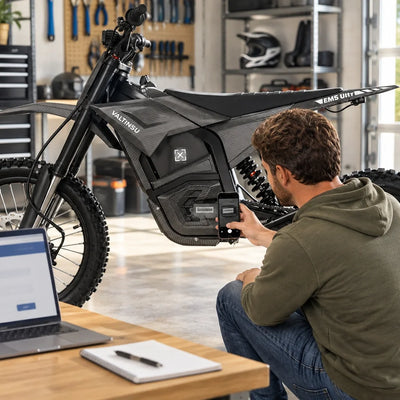
How to Check an Electric Dirt Bike for Safety Recalls by Model and Serial Number
LEARN MORE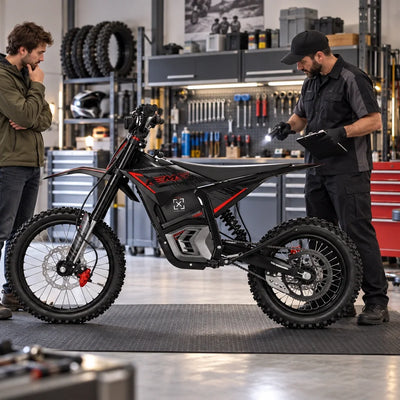
How to Choose an Electric Dirt Bike Repair Shop: Questions to Ask Before Service
LEARN MORE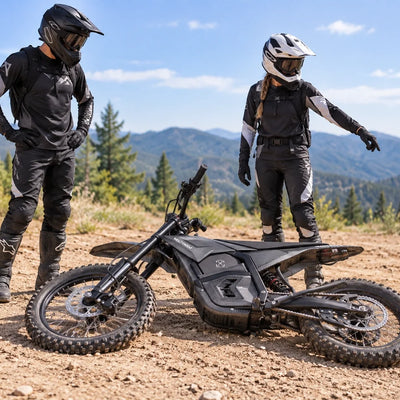
How to Lift a Fallen Electric Dirt Bike Without Hurting Yourself or the Bike
LEARN MORELooking for something else?
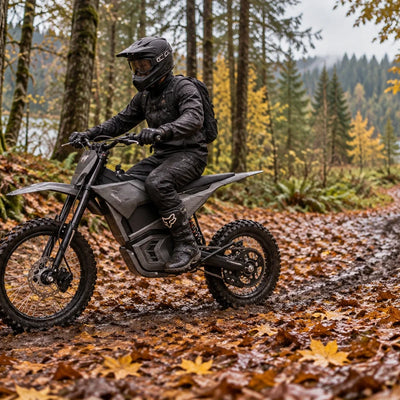
Electric Dirt Bike Fall Riding on Wet Leaves: Grip, Hidden Obstacles and Braking
LEARN MORE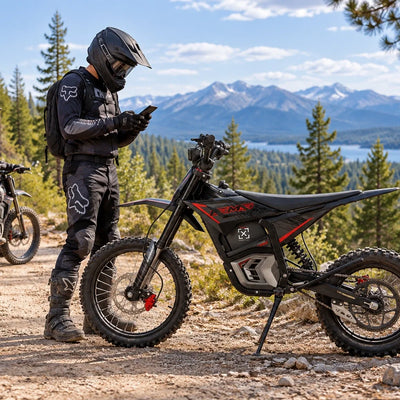
Electric Dirt Bike Trailside Power Loss: Recovery Plan When the Battery Is Dead
LEARN MORE