

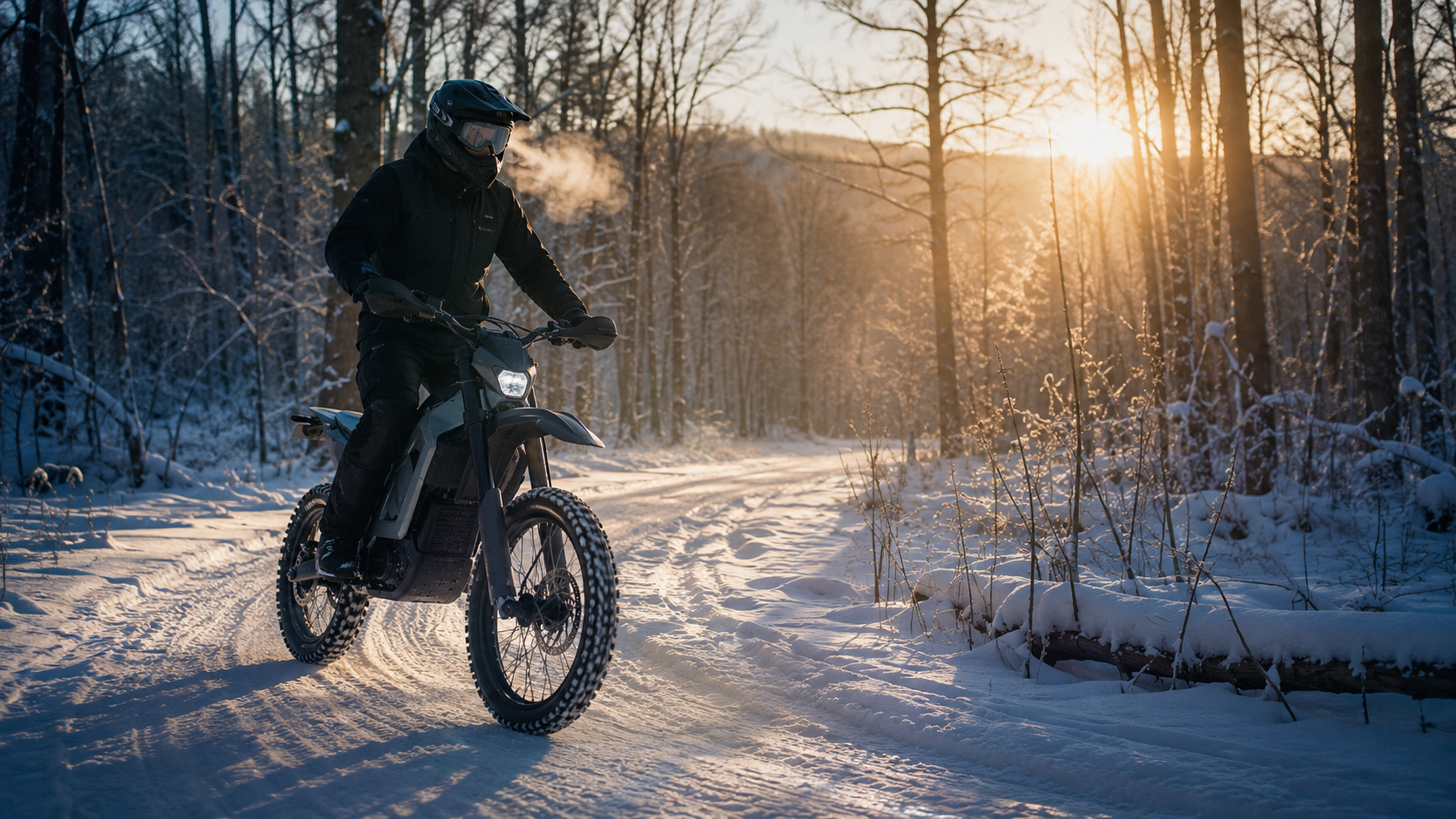
Can You Ride an Electric Dirt Bike in Snow or Cold Weather?
Yes. You can ride an electric dirt bike in snow or cold weather. The catch is small and specific: warm battery, tires that grip, and no glare ice. Do those three and the bike does not much care what month it is.
Winter does not stop the machine. It rewrites the math around it. Range shrinks. Snow eats traction. Road salt chews on bare metal the moment you stop paying attention to it. None of that ends a riding season. It just moves the work from the trail to the ten minutes before and after, and most riders who give up on winter never figured that out. They ran a July routine into January and blamed the bike. An adult electric off-road motorcycle is fine on a frozen trail once it is dressed for one. Worth a look at the gear that actually matters in the cold first, so compare the lineup before you commit to a build.
The Short Version for Winter Riders
Packed snow and frozen dirt are friendly surfaces. Glare ice and deep slush are not. Here is the part that surprises people: a loop that felt lazy in October will drink the battery in January, because the motor is shoving through snow while the pack itself hands over less energy in the cold. Two taxes, same ride.
What actually shifts once the temperature drops below freezing:
-
Range falls. Somewhere between 20 and 50 percent, depending on how cold it is and how hard your right hand is.
-
Grip goes before power does. The tire gives up long before the motor runs out of pull.
-
You need more room to stop. The best brakes in the world cannot help a tire that has nothing to hold.
-
Charging turns into a rule, not a habit. A cold pack never goes on the charger. Ever, until it warms.
Before each ride: battery warm, pressure set, brakes firm, lights bright, route short. Miss one and the cold finds the gap. It always finds the gap.
When Snow Riding Is Safe, and When to Park It
Safest on packed snow, frozen dirt, and open trail where you can read what is coming. Light snow is genuinely fun, because the tire still bites the firm ground underneath. The danger is not the snow you see. It is what the snow is covering.
Conditions that get a green light
A trail you already know, under packed snow. Frozen dirt wearing a thin, even dusting. Light powder over firm ground, taken slow. Daylight, or lights strong enough to show you the surface. In our experience the best first winter ride is a familiar summer loop after the first real snow, ridden at half pace, just to learn how the bike talks to you when the ground stops being predictable.
Days the trail can wait
Glare ice. Frozen ruts. Deep slush. Snow deep enough to hide a rock or a log you would have steered around in summer. Ice is the real hazard here, because even a good tire slides the instant you brake or turn too hard on it. If the bike sat outside through a hard freeze overnight, the pack needs indoor time before charging, not before riding. And a fresh storm that drops your visibility is a simple no: if you cannot see the surface, you cannot react to it in time. The EM23 leans this way by design, with its IPX4 rating and cruiser geometry pointing it at road-and-light-trail use rather than deep wet snow, so match the bike to the day in front of you.
How Cold Weather Changes the Ride
You feel it on the first twist of the throttle. The battery hands over less. The tires sit harder under you. The brakes want more room than they did in fall. And the surface can swap from snow to ice in the length of a parked car. Electric still wins one thing outright over gas out here. No cold-start ritual, no fuel mixture, no idling in a cloud of your own breath waiting for an engine to wake up. You power on. You go.
Why the battery loses range
Cold slows the chemistry inside a lithium pack, so it cannot push energy out as fast. Battery University puts numbers on it: a cell delivering full capacity at 80°F can fall to roughly half near 0°F
Mostly temporary, that loss. The range comes back when the pack returns to room temperature. Snow stacks a second cost on top of the first, because soft powder, low pressure, a heavy pack on your back, and a heavy throttle hand all raise the watts the motor has to find. Lab work on cold cycling tells the same story, with capacity dropping hard once the cells go sub-freezing
So plan smaller. Cut the winter loop until you have learned what the bike really does in the cold, and save the full power band for the moments that need torque, not the whole ride.
Motors, controllers, and the cold
Motors mostly shrug it off. They shed heat more easily when the air is cold, so the motor often feels strong while the battery is the part quietly holding the leash. The controller and display can lag a touch in a hard freeze. A screen might dim or stutter until things warm through. Give it the first few minutes. Smooth, gentle starts let the whole system find its feet before you ask anything of it.
Tires, brakes, and suspension in the cold
Cold rubber stiffens, and a stiff tire grips less on snow and ice. Bleeding off a little pressure widens the contact patch and claws some of that back. Brakes want more room on anything slick, because no brake out-stops a tire with nothing under it. The suspension goes wooden too, oil and seals moving slower in the cold, so a frozen bump you never saw lands sharper than the same bump would on warm dirt. Our full-suspension guide goes deeper on why travel matters once the ground turns rough.
How Cold Is Too Cold for the Battery?
Riding cold is usually fine. Charging cold is the part that hurts. The pack will hand over power in freezing weather, grudgingly. But plugging a frozen or near-frozen battery into a charger is the move that does lasting harm, and it is the single most common winter mistake we see owners make.

Why a cold pack stays off the charger
Charging a lithium battery below freezing stresses the cells and can wreck them for good
Keeping the battery warm before a ride
Store the pack indoors. If it lifts out, fit it right before you roll so the ride starts warm. A battery cover slows heat loss on longer runs, though it will not revive a pack that is already weak. The quiet range-killer is the cold truck bed. Leave a battery soaking in the back of a pickup at a Flagstaff trailhead for two hours and the ride starts at a deficit before you have turned a wheel, which is worth remembering when you read our transport guide.
The 20/80 habit
Day to day, keep the pack roughly between 20 and 80 percent. Easier on the cells over the long haul. For winter storage, never park it empty, because a flat battery left for weeks can sag too low to ever wake up. Need the range for a big ride? Charge higher for the day. Just do not store it full for weeks at a stretch.
Best Tire Setup for Snow and Ice
Tires beat motor power in winter. Every time. A strong bike on the wrong rubber just spins, slides, and burns through the pack chasing grip it will not find. What you want depends on what is under the wheel, and light snow, deep snow, packed snow, and ice each ask for something different.
|
Condition
|
Best tire
|
Why it works
|
|
Light snow / frozen dirt
|
Knobby
|
Open tread digs through the top layer to firm ground.
|
|
Deep snow
|
Fat
|
Spreads weight so the bike floats instead of sinking.
|
|
Packed snow / ice
|
Studded
|
Metal studs bite slick surfaces rubber cannot hold.
|
|
Mixed snow and pavement
|
Hybrid winter
|
Balances grip and rolling resistance across surfaces.
|
Knobby tires
Built for light snow and frozen dirt, the kind where firm ground still sits under the white. You want deep, open tread that sheds mud and snow instead of packing with it. Worn knobs go slick fast. And on real ice, a knobby is simply not enough, so do not ask it to be.
Fat tires
They float deep snow by spreading the bike's weight across a wider patch, and that extra width steadies slow riding when the trail is hiding bumps. Not magic, though. Wet, crusted, or genuinely deep snow can still bog a strong bike down and pour the battery out fast.
Studded tires
Safest thing going for ice and hard-packed snow. The studs bite where rubber just skates, which saves you on a shaded refrozen fire road or the black ice you would never have spotted. They chew up quickly on dry dirt and pavement, so keep them for routes where ice is a regular guest, not an occasional one.
Pressure and the contact patch
Drop the pressure and the contact patch grows, which means more tire kissing the ground and more grip in snow. Do not get greedy with it. Too low and you invite rim strikes and steering that feels like stirring soup. Check pressure cold, every winter ride, because the cold air alone bleeds PSI overnight and a tire that felt right in a warm garage can be soft by the time you reach the trailhead.
How to Ride Safely on Snow and Ice
Winter pays out for smoothness and punishes everything else. Hard throttle, late braking, a sharp stab at the bars, any of them can turn an ordinary trail into a slide. Stop thinking of it as a power contest. It is traction management. The whole job is keeping the tires talking to the ground.

Throttle
Slow, steady, deliberate. Electric torque shows up the instant you ask, and that instant hit will light up the rear tire on slick ground. Start in a low power mode if the bike has one. On a climb, hold the throttle steady and roll it, do not stab it.
Braking
Earlier than feels natural. Gentle pressure, weight on the rear, and keep your hand off a fistful of front brake, which washes the front tire straight out on ice. Get the braking done before the corner, not leaned over in the middle of it.
Cornering and body position
Keep the bike more upright than summer instinct wants, and run a wider line through the turn. Eyes up and through the corner, not down at the front wheel. Stay seated when you need the rear to grip, since your weight is what presses the tire into the snow. Standing helps over bumps but lightens the rear on a slick climb, so read the surface and pick your spot.
Ice
Cross icy patches dead straight if you can, slow, arms loose, throttle steady. If a stretch looks too slick to trust, stop short and walk the bike around it. A few saved seconds never once outweighed a hard fall on a frozen trail.
Winter Gear and Visibility
Cold hands and numb feet wreck your control faster than most riders expect, which makes gear part of the safety system, not a comfort upgrade. Visibility counts double in winter too, when gray skies and short afternoons swallow riders on trails and access roads.
Layer it. A moisture-wicking base, a warm middle, a windproof shell over the top, and skip cotton entirely because it chills you the second you stop moving. Gloves are the tricky one: warm enough to keep feeling in your fingers, thin enough to still feel the brake levers, since thick mittens that kill that feel are their own hazard. Waterproof boots earn their place the moment snow turns to slush. Up top, a proper off-road helmet and goggles with a clear lens for the flat light, plus an anti-fog insert if they steam up at crawling speed. Then lights, front and rear, running even in daylight. A blinking rear light cuts through a gray afternoon, and a few reflective strips on the jacket give drivers near a trailhead one more chance to see you.
Pre-Ride Checklist for Cold Weather
Winter prep is not summer prep with a coat on. Snow adds drag, cold steals range, and ice gives almost no warning before it lets go. A short, honest checklist catches most of the trouble before it starts.
-
Battery warm from indoors, fitted right before you leave.
-
Tire pressure checked cold and set for the surface, inside the tire's safe range.
-
Brakes squeezed. Levers firm, wheels stopping clean.
-
Chain and moving parts looked over, because salt and snow strip lube faster than dry dirt ever did.
-
Every charging port shut, connector covers checked for cracks or trapped grit.
-
A shorter loop with easy exits, and someone who knows your route if you ride alone.
Replacement levers, chargers, and chain parts for the lineup live in the accessories section if a check turns up something worn or tired.

Post-Ride Care After Snow, Slush, and Salt
What you do after the ride protects the bike as much as the prep before it. Snow, slush, and road salt settle onto the frame, the chain, the brakes, the bolts. Road salt is the quiet villain in all of it: the EPA puts corrosion from de-icing salt in the billions of dollars of vehicle and infrastructure damage a year

Wipe the snow, slush, and salt off before it dries on. A damp cloth or a gentle rinse does it, with real attention to the chain, sprockets, brakes, fork legs, and the lower frame where grime collects. Leave the pressure washer in the corner, because a strong jet pushes water past seals and into the connectors you are trying to protect, so it is low pressure, a soft brush, and a clean cloth, always aimed away from the battery and the port. Dry the battery area and the connectors after. Pull the pack if the bike lets you and let it warm and dry indoors before it ever sees the charger. Re-lube the chain with a wet-weather formula once the slush rides start, and wipe the excess so it does not turn into a grit magnet. Then store the bike somewhere dry. Not empty on the battery, not parked outside under a blanket of snow.
What Makes an Electric Dirt Bike Winter-Ready?
A winter-ready bike is not just a powerful one. It wants sealed electrics, a battery you can actually manage, room for winter tires, steady low-speed torque, and handling that stays calm when the ground does not. For snow, control beats top speed in every single case that matters.
Sealed, water-resistant electrics
Sealed connectors, covered ports, a protected battery case. They all earn their keep the moment snow melts into water around the frame. Across the bikes we have ridden in genuinely wet conditions, an IPX6 rating on the off-road models handles spray and soaked trails well. It is not a license for a river crossing or a pressure washer, though, so read the manual for your bike's real limit before any wet ride.
A removable, manageable battery
A pack that lifts out is a quiet winter advantage. Store it warm, charge it safe, keep it at a steady indoor temperature while the bike itself sits in a freezing garage. It does not erase the care, mind you. The pack still has to come up to temperature before it goes on the charger.
Strong low-speed torque
Steady low-speed pull is what carries a bike through snow without resorting to speed, which is exactly what a climb or a soft patch demands. You want controlled grip, not wheelspin. The EM-5, with a geared mid-drive motor laying down 148 lb-ft low in the rev range, is a fair example of the smooth, manageable power a newer winter rider actually leans on rather than fights.
Tire clearance and a stable frame
Winter tires run wider or taller, so the fork, swingarm, and frame need the room or snow packs in and drags the wheel. A stable frame and decent suspension keep the tires planted over uneven snow and the frozen bumps you cannot see. A bike that feels nervous on dry dirt feels worse on snow, so weight stability and tire fit over a bigger top-speed number every time.
A Cold-Region Reference: the EM-5 Pro
For anyone building a cold-weather setup, the EM-5 Pro is a useful one to study. A 60V 5,600W geared motor, 177 lb-ft of torque low in the range, a 60V 27Ah pack that lifts out, IPX6 sealing, and adults-only 18+ positioning. The two things that matter most when the trail turns white are the strong low-end pull and that removable battery you can carry inside. One honest option among plenty of winter-capable bikes, not the only answer.

How the three off-road models line up for winter, by feature and by rider:
|
Model
|
Motor / torque
|
Top speed
|
Waterproof
|
Age
|
Winter fit
|
|
EM-5
|
48V 3,840W / 148 lb-ft
|
40 mph
|
IPX6
|
13+
|
Smooth low-speed power for new or younger riders.
|
|
EM-5 Pro
|
60V 5,600W / 177 lb-ft
|
52 mph
|
IPX6
|
18+
|
Strong low-end pull, removable pack, sealed electrics.
|
|
EM23
|
60V 4,000W / 184 lb-ft
|
43.5 mph
|
IPX4
|
16+
|
Highest torque, but IPX4 leans road-and-light-trail.
|
FAQs
Can electric dirt bikes go in snow?
Yes, when it is not too deep, the battery is warm, and the tires grip. Packed snow, light powder, and frozen dirt are far easier than glare ice or deep slush. The motor's steady torque helps the bike crawl through snow without any shifting, but traction is the ceiling, not power. Cold trims range too, so a short trail can pull more battery than it would in July. Treat the whole thing as a slower, more careful version of off-road riding, and start on a familiar loop after fresh light snow before you go anywhere deep or remote.
How cold is too cold for an e-bike battery?
Riding cold is usually fine. Charging cold is the danger. If the pack feels frozen or very cold, let it warm indoors before it touches the charger. Cold slows the lithium chemistry, so you see less range and weaker output in winter, and that drop is mostly temporary. Charging a cold pack, on the other hand, can cause lasting cell damage. Storage matters as well, because a battery left empty in deep cold can sag too low to recover. Keep it indoors before and after rides and it holds up through the season.
How much does cold weather cut range?
Figure 20 to 50 percent less, depending on temperature, terrain, and how hard you ride. Near freezing it might be 20 to 30 percent; in a hard freeze it can reach half. Two things pile up: the pack delivers less when cold, and snow makes the motor work harder to move you. The loss is usually temporary and comes back as the battery warms. To stretch winter range, store the pack warm, ride a lower power mode, and plan loops well short of your warm-weather routes until you know the bike.
Is it hard to ride in snow?
Harder than dry dirt, yes, because grip drops and the surface changes fast. Snow hides ice, rocks, and ruts, and the bike will slide if you brake or turn abruptly. Instant electric torque adds a wrinkle, since it spins the rear tire easily when traction is low. The fixes are plain: slower speed, smooth throttle, wider turns, earlier braking. The right tires help a lot, fat ones for soft snow and studs for ice. Practice starts, stops, and slow turns in an open area before you take on a narrow trail.
What is the 20/80 rule?
Keep the battery roughly between 20 and 80 percent for daily use, and avoid leaving it at 0 or 100 for long stretches. It eases stress on the cells over time. In winter the habit matters more, because cold makes a low battery drop faster than you expect. For a long ride, charging above 80 percent is fine, just do not park it full for weeks. For storage, keep it partly charged indoors and top it up before it drifts too low.
Do I need studded tires?
Not for every ride. Studs earn their keep when ice or hard-packed frozen snow is a regular feature of your trail. For light snow over firm ground a good knobby is enough, and for deep powder fat tires float better. Studs bite slick surfaces rubber cannot hold, but they wear quickly on dry dirt and pavement. If your route mixes ice and bare ground, a hybrid winter tire splits the difference. Match the tire to the surface you ride most, not the worst day you can imagine.
Should I charge a cold battery right away?
No. Let it reach room temperature first. After a freezing ride, bring the pack indoors and wait until it feels room-temperature before plugging in. Charging it cold stresses the cells and risks permanent damage, which is the most avoidable winter mistake there is. Keep the charger indoors too, so both the pack and the charger sit at a safe temperature when you start. A dry, warm charging spot is a basic winter rule, not an optional nicety.
Sources
-
Battery University, BU-502: Discharging at High and Low Temperatures (2026)
-
Battery University, BU-410: Charging at High and Low Temperatures (2026)
-
PubMed Central, Study on Low-Temperature Cycle Failure Mechanism of a Ternary Lithium-Ion Battery (2022)
-
U.S. Environmental Protection Agency, Winter is Coming! And With It, Tons of Salt on Our Roads (2020)


Looking for something else?
Electric Dirt Bike Loses Power Under Load: Causes and How to Fix It
LEARN MORE
Electric Dirt Bike Bolt Torque Checklist: What to Check and Where the Numbers Come From
LEARN MORE
How to Bleed Electric Dirt Bike Brakes Safely
LEARN MORE
Electric Dirt Bike Throttle Not Working: What to Check First
LEARN MORELooking for something else?
Electric Bike Battery Not Charging? Work Through This Before You Buy a New One
LEARN MORE
Electric Dirt Bike Error Codes: What They Mean and What to Check First
LEARN MORE
Electric Dirt Bike Brake Rotor Rubbing: Diagnose the Cause Before Adjusting
LEARN MOREYou may also like
VALTINSU EM-5 Off-Road Electric Dirt Bike
$969.00
$1,559.00
VALTINSU EM-5 Pro Off-Road Black Electric Dirt Bike
$1,699.00
$1,899.00
VALTINSU EM-5 Pro Green Electric Dirt Bike
$1,699.00
$1,899.00
VALTINSU EM-5 Ultra Electric Dirt Bike
$2,199.00
$2,499.00
VALTINSU EM-5 & EM-5 Pro Combo
$2,658.00
$3,458.00
Further reading
Electric Dirt Bike Trailside Power Loss: Recovery Plan When the Battery Is Dead
When an electric dirt bike loses power on the trail, first make the scene safe and decide whether the battery is simply depleted or the bike has a fault. Move out of the travel line if the bike can...
Electric Dirt Bike Fall Riding on Wet Leaves: Grip, Hidden Obstacles and Braking
Wet leaves reduce grip and hide the surface that determines it. A thin layer on firm soil may slide under braking; a deep layer can conceal roots, rocks, ruts and holes; decomposing leaves can beha...
How to Lift a Fallen Electric Dirt Bike Without Hurting Yourself or the Bike
Do not lift a fallen electric dirt bike until people, terrain and battery hazards are assessed. A bike on a slope, near traffic, pinning a rider or showing battery heat, smoke, hissing, odor, swell...
How to Choose an Electric Dirt Bike Repair Shop: Questions to Ask Before Service
Choose an electric dirt bike repair shop by matching the shop’s real capability to the actual job. Ask about experience with the model and component, access to manuals and parts, battery isolation ...