E Ride Pro SS 3.0 vs Valtinsu EM5 Ultra: Is It Worth $2,800 More?
The E Ride Pro SS 3.0 and Valtinsu EM5 Ultra are both 72V electric dirt bikes, but they do not ask the same thing of a buyer. The E Ride asks you to pay for a much larger battery, nearly twice the published peak output and a 19/18-inch chassis. Valtinsu’s rider-first electric dirt bike approach asks whether 8,000W, 56 mph and 1,800Wh already cover the riding you can actually do.
That distinction matters more than a winner badge. Based on the current official listings, the E Ride is $4,699 plus $300 shipping and is marked sold out. The EM5 Ultra is $2,199 with free shipping and is available to order. Before tax, that is an approximately $2,800 gap—and it turns this into a question about usable capability, not simply maximum capability.
Every performance number below is a manufacturer-published claim. The bikes were not tested together on the same loop, with the same rider, tire pressure, temperature or state of charge. Where the evidence does not support a clean winner, this article says so.
Choose the E Ride Pro SS 3.0 when your riding genuinely benefits from a 3,600Wh battery, 19/18-inch wheels, quicker published charging and a 15.8kW performance ceiling. It is the stronger machine on paper for long, fast sessions and rougher terrain—but the current direct listing is sold out, so dealer pricing and availability may differ.
Choose the Valtinsu EM5 Ultra when 8,000W peak output, a 56 mph top-speed claim, 17/14-inch wheels and a 1,800Wh Samsung battery already clear your real trail requirement. It costs about $2,800 less than the E Ride’s current list-plus-shipping figure, weighs 24 lb less on the published numbers and leaves more of the budget for protective equipment, transport, tires and maintenance.
The short verdict is simple: E Ride wins the capability ceiling. EM5 Ultra wins the threshold test. If you cannot identify a ride where the E Ride’s extra battery, output, wheel size or charging speed changes the outcome, the premium is buying unused headroom.
|
Choose E Ride Pro SS 3.0 if… |
Choose Valtinsu EM5 Ultra if… |
|
Your normal sessions can consume more than 1,800Wh with a safe reserve |
Your normal loop fits comfortably inside a 1,800Wh energy budget |
|
Rough terrain makes 19/18-inch rollover a practical advantage |
A compact 17/14-inch platform suits your fit, storage and transport |
|
You need a shorter published charging turnaround |
You normally charge overnight |
|
You can describe exactly where 15.8kW improves your riding |
8,000W already exceeds the output you can use on your terrain |
|
The premium does not reduce your safety, transport or maintenance budget |
Complete-system value matters more than the largest specification |
Lock the Exact Models and Current Buying Status
“E Ride Pro SS” is no longer one unambiguous product page. Search results still surface older SS 3.0 pricing and specifications, while the E Ride model homepage now foregrounds the newer Pro 4.0. The live SS 3.0 page used here is the “off-road fatty” listing linked from E Ride’s own navigation. It shows a $4,699 price, $300 shipping and a sold-out status.
This article does not borrow the Pro 4.0’s 18kW peak figure or the SS 2.0’s battery and price. It compares the SS 3.0 values published on that live page: 72V 50Ah, 3,600Wh, 15.8kW peak output, 19/18-inch tires and a 167 lb listed weight.
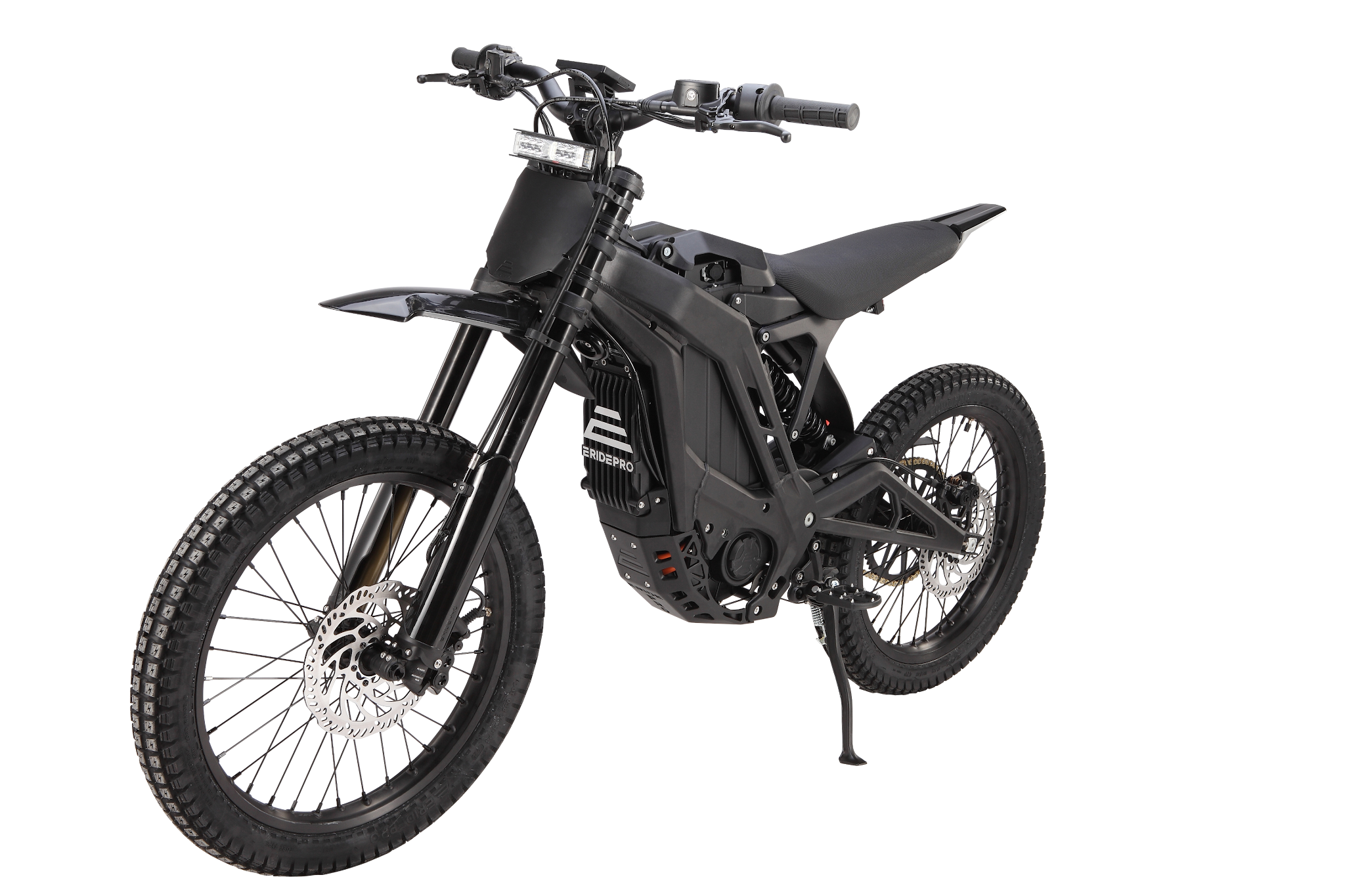
The Valtinsu model is the current EM5 Ultra listing. It shows $2,199, free shipping, a 72V 25Ah Samsung battery, 8,000W peak output, 17/14-inch wheels, reverse and an IPX6 rating. It is available to add to cart, and the site states that orders ship from a U.S. warehouse in one to three business days. Availability and promotional pricing can change, so both pages should be checked again immediately before publication.
One evidence note is important. The Ultra page identifies the system and battery as 72V but contains a separate rated-power row labeled “60V 3000W.” Because those labels conflict, this comparison does not use that row to infer a 60V system. It relies on the unambiguous 72V/25Ah battery architecture and the published 8,000W peak claim.
The $2,800 Question: What Does the E Ride Premium Buy?
The E Ride’s current list price plus required shipping is $4,999 before tax. The EM5 Ultra’s current price is $2,199 with free shipping. The Ultra therefore costs about 44% as much as the E Ride’s list-plus-shipping figure, or about $2,800 less.
“Less than half the price” is technically true at those checked figures, but it is not the useful conclusion. The important question is what the remaining $2,800 buys.
First, it buys another 1,800Wh of nominal battery energy. Second, it buys a peak-output claim of 15.8kW rather than 8,000W. Third, it buys the rollover and cockpit implications of 19/18-inch wheels. Fourth, it buys a shorter published charging window: 3.5 hours from 20% to 90%, compared with 7–8 hours for the Ultra.
Those are real differences. They still do not automatically buy twice the range, a better fit, legal access to more trails or an easier ownership experience. A taller chassis can be an advantage over roots and ledges but a disadvantage when loading into a van. A larger pack can rescue a long loop but becomes unused weight on a short practice session. The premium has value only where it solves a constraint.
|
What the premium buys |
Evidence |
Rider who will use it |
Rider who may not |
|
Extra 1,800Wh of nominal energy |
3,600Wh vs 1,800Wh |
Long or repeated high-output sessions |
Short technical loops with overnight charging |
|
Higher output ceiling |
15.8kW vs 8,000W published peak |
Experienced riders on open or demanding terrain |
Riders limited first by traction, space or skill |
|
Larger wheel package |
19/18 vs 17/14 |
Riders prioritizing rollover and a larger stance |
Riders prioritizing compact storage and placement |
|
Faster published turnaround |
3.5h from 20–90% vs 7–8h |
Two-session days with limited charging time |
Riders who charge once overnight |
Price also needs a complete-system check. A bike without a suitable helmet, eye protection, boots, gloves, body protection, transport and a legal riding venue is not a complete purchase. If paying the premium forces a buyer to postpone those essentials, the more capable bike may create the weaker riding system.
Specs That Change the Ride
A useful comparison table should separate decision-changing specifications from brochure decoration. Battery energy, wheel sizes, weight, seat height, charging and current buying status can change whether the bike fits a rider’s life. A peak torque number without a shared measurement location or test method cannot do that reliably.
|
Decision factor |
E Ride Pro SS 3.0 |
Valtinsu EM5 Ultra |
What it changes |
|
Current listed price |
$4,699 + $300 shipping |
$2,199, free shipping |
Complete budget |
|
Current direct status |
Sold out |
Available to order |
Timing and seller choice |
|
Battery |
72V 50Ah, 3,600Wh |
72V 25Ah Samsung, 1,800Wh |
Energy reserve |
|
Published peak output |
15.8kW |
8,000W |
Performance ceiling |
|
Published top speed |
60 mph |
56 mph |
Small headline-speed difference |
|
Published range |
62+ mi at 25 mph; 99+ mi at 16 mph |
Up to 75 mi; no equivalent speed condition shown |
Evidence quality differs |
|
Published charging |
3.5h from 20% to 90% |
7–8h |
Same-day turnaround |
|
Wheels |
19 in front / 18 in rear |
17 in front / 14 in rear |
Rollover, stance and packaging |
|
Seat height |
32.7 in |
31.5 in |
Reach to ground, not total fit |
|
Listed weight |
167 lb |
143 lb net |
Loading and recovery |
|
Maximum load |
265 lb |
287 lb |
Published load envelope, not suspension fit |
|
Water statement |
No IP rating shown in compared spec block |
IPX6 |
Spray resistance; not submersion permission |
|
Standout convenience |
Swappable battery |
Reverse |
Different ownership benefits |
Notice the four-mph gap between the two top-speed claims. It is much smaller than the output and price gaps. That alone should stop buyers from treating top speed as the deciding specification. The expensive capability is not four more miles per hour; it is the battery and output reserve available before the bike reaches that headline.
Use the Three-Constraint Test Before Paying the Premium
The specification table shows what is different. It does not show which difference will change your ride. Before paying the premium, identify the first constraint that stops the cheaper bike from completing the job. For this comparison, only three constraints are strong enough to decide the purchase: energy reserve, repeated chassis demand and transaction or support risk.
This test prevents two common errors. The first is buying the biggest number because it feels safer, even when the rider never reaches the smaller bike’s limit. The second is treating the lower price as automatic value while ignoring return terms, parts support or a route that regularly consumes the smaller battery. A defensible decision needs a repeated use case, not a future fantasy.

Figure 5. The E Ride’s larger energy and wheel package raises the capability ceiling; the Ultra’s smaller package lowers cost and handling burden. AI-generated educational comparison; bikes are generic and no component-level claim is implied.
Constraint 1: Does 1,800Wh end the ride?
Start with the ride that is longest, coldest, sandiest or most climb-heavy—not the easy loop used to justify a purchase. If the Ultra’s 1,800Wh pack would reach your chosen turnaround reserve before that route is complete, the E Ride’s extra 1,800Wh is solving a concrete problem. If your normal session returns with substantial energy remaining, the larger pack mainly buys optionality. The planning method in the next section turns this question into an estimate using your own Wh-per-mile or battery-percentage data.
Constraint 2: Which obstacle repeats?
Do not pay for 19/18-inch wheels because one trail contains one rock. Pay for them when roots, ledges, braking bumps or open high-speed terrain repeatedly make rollover and chassis composure the limiting factors. The Ultra’s 17/14-inch package and 24 lb lower listed weight make the opposite case when the recurring problem is a narrow doorway, a solo loading ramp, a tight practice area or picking the bike up on a slope. Owner discussions about sharp throttle response, Eco mode, tire grip and rider fit are anecdotal, but they reveal an important decision pattern: on technical ground, smooth control and traction often become the limit before peak power does.
Constraint 3: What transaction can you actually complete?
The official E Ride SS 3.0 page is sold out, while the EM5 Ultra product page is orderable at the compared price. That makes this more than a spec-sheet comparison. A buyer may be choosing between a new Ultra with a current order confirmation and an SS 3.0 found through a dealer or used listing. The second path can change price, model year, battery condition, included charger, warranty status and access to local service.
Compare real offers, not idealized MSRPs. For any SS 3.0 outside the direct listing, obtain the serial number, exact configuration, written out-the-door price, proof of purchase, battery-health evidence and the seller’s warranty-claim process. For the Ultra, confirm the exact color or configuration, delivery timeline, return eligibility at the sale price and who pays freight for a large warranty part. If one seller cannot answer those questions, that uncertainty belongs in the price comparison.
Pass all three gates before choosing. The E Ride earns its premium when the larger battery or chassis repeatedly prevents a ride-ending constraint and the actual unit carries acceptable support. The Ultra earns the value win when 1,800Wh, 17/14-inch packaging and 8,000W already complete the rider’s real loop—and the buyer has verified the policies behind the lower checkout price.
Twice the Battery Does Not Mean Twice the Trail Miles
Battery energy is the cleanest numerical difference in this comparison:
- E Ride Pro SS 3.0: 72V × 50Ah = 3,600Wh nominal
- Valtinsu EM5 Ultra: 72V × 25Ah = 1,800Wh nominal
The E Ride stores twice the nominal energy. It does not follow that it will travel exactly twice as far. Speed, climbing, sand, mud, tire pressure, rider mass, temperature, acceleration and controller behavior all change the rate at which energy leaves the pack. The larger bike also carries 24 lb more listed weight.
The published mileage claims are not a controlled comparison. E Ride gives speed conditions—62+ miles at 25 mph and 99+ miles at 16 mph—while the Ultra page says “up to 75 miles” without an equivalent speed condition beside that figure. That makes the E Ride claim easier to interpret, but it still remains a manufacturer result rather than a promise for a rocky, cold or high-speed trail day.
Think in sessions instead of maximum miles.
Short technical loop
On a tight loop with frequent stops, low-speed climbs and limited straight-line running, 1,800Wh may already leave a comfortable reserve. The smaller pack matters less if the rider returns to the same truck or garage after every session. Here, the Ultra’s lower weight and price may affect every ride more than the E Ride’s unused energy reserve.
Mixed trail day
A route that combines slow technical sections with open connectors makes battery use harder to predict. The larger E Ride pack creates more room for detours, repeated hill attempts or a higher average pace. The correct choice depends on the rider’s own recorded consumption, not the longest number in a product-page banner.
Long, high-output session
Sustained speed and climbing can turn the E Ride’s extra 1,800Wh into the most important difference in the article. If a rider cannot recharge and regularly approaches the Ultra’s energy limit before reaching a safe turnaround reserve, the premium is no longer theoretical.
The practical rule is to plan the first rides conservatively, turn around with margin and record battery use on the same loop. A rider who returns with 45% remaining does not need a range argument. A rider who returns near reserve does.
Turn advertised range into a planning range
A more useful comparison starts with your own energy use. Record distance and battery percentage on the same loop for several rides, then estimate consumption: estimated Wh per mile = nominal battery Wh × battery percentage used ÷ miles ridden. The result will not be laboratory-grade because the display may round percentage and the battery management system keeps its own buffer, but it is far more relevant than comparing two unmatched “up to” claims.
Planning distance = nominal battery Wh × the share you are willing to use before your chosen reserve ÷ observed Wh per mile.
For an illustrative example only, assume a rider observes 45 Wh per mile and chooses to return with 20% of nominal energy held in reserve:
- EM5 Ultra: 1,800Wh × 0.80 ÷ 45 Wh/mi = 32 planning miles.
- E Ride Pro SS 3.0: 3,600Wh × 0.80 ÷ 45 Wh/mi = 64 planning miles.
Those figures are not range promises. Cold weather, deep sand, climbing, battery age, tire pressure, repeated acceleration and a different reserve choice can move them sharply. The point is the method: when your measured loop requires 1,500Wh before a safe return margin, the Ultra is close to its planning limit and the E Ride’s extra battery has a defined job. When the same loop uses 800Wh, both bikes clear the energy constraint and the decision should move to fit, control, price and ownership support.

Figure 6. Route energy should be planned around the return reserve, not the farthest advertised mileage. AI-generated educational illustration; terrain and energy graphics are conceptual, not test data.
Do You Need 15.8kW, or Is 8kW Already Enough?
The E Ride has the decisive paper advantage: 15.8kW peak compared with 8,000W. Yet the current top-speed claims are only four mph apart. That tells us the extra output should be evaluated as acceleration and sustained-load headroom, not as a simple speed purchase.
On open ground, long grades or faster track-style riding, the E Ride’s higher ceiling can be meaningful. An experienced rider can ask for power repeatedly without operating as close to the platform’s published maximum. The larger battery also gives that rider more energy to support the pace.
Technical trail riding can reverse the logic. On loose dirt, wet roots or tight switchbacks, traction and throttle precision become the first limits. Power that turns into wheelspin is not useful performance. E Ride owner discussions repeatedly ask about throttle response, eco-mode behavior and dirt-tire grip. Those comments are anecdotal—not defect-rate evidence—but they reveal the question a buyer should test: can the rider meter the first few millimeters of throttle cleanly on the intended surface?
The Ultra should not be sold as a beginner bike merely because its peak number is lower. An 8,000W machine with a 56 mph claim still demands motorcycle-level judgment. Lower price is not lower consequence. A first-time rider should begin in the lowest mode on legal private ground, establish smooth starts and controlled stops, and add speed only after the controls feel predictable.
Use this decision gate: name one real riding situation where more than 8,000W changes the result. If the answer is a specific climb, track section, rider load or sustained high-speed use, the E Ride premium has a job. If the answer is “maybe someday,” it is headroom rather than a current need.
Full-Size Rollover or Compact Control?
The E Ride’s 19-inch front and 18-inch rear tires create the stronger case for rougher terrain. A larger wheel meets a square edge at a shallower angle, which can make roots, embedded rock and ledges less abrupt. The 32.7-inch seat and larger wheel package also give the bike a more full-size stance.
The EM5 Ultra uses 17/14-inch wheels and a 31.5-inch seat. That does not automatically make it more agile, but it creates a smaller package to place, store and transport. The lower published weight—143 lb versus 167 lb—is likely to matter every time one rider loads a ramp, corrects a lean in a garage or recovers the bike from a downhill tip-over.
Fit is more nuanced than seat height. The E Ride’s seat is only 1.2 inches higher, yet wheel size, seat-to-peg distance, handlebar position and suspension sag change how large the cockpit feels. The Ultra also lists a higher maximum load, 287 lb versus 265 lb, but a published load limit does not prove that the stock spring rate or riding position will suit a heavier rider.
Before buying, answer five fit questions:
- Can you stand with relaxed knees and elbows without feeling folded over?
- Can you move rearward without the seat or handlebar trapping you?
- Can you place a foot confidently on uneven ground while wearing riding boots?
- Can you pick the bike up from its low side without relying on a second person?
- Will the bike fit the actual carrier, van, truck bed, doorway and storage space you use?
Tall, aggressive riders have the stronger paper case for the E Ride. Riders who move the bike alone or have limited storage have the stronger paper case for the Ultra. Neither conclusion replaces sitting on the exact configuration.
Which Bike Fits Your Terrain?
Terrain decides whether a specification becomes useful. The following matrix is an evidence-bounded fit judgment, not a shared trail-test result.
|
Terrain or use |
Likely advantage |
Why |
|
Repeated rocks, roots and square edges |
E Ride |
Larger 19/18-inch wheel package |
|
Long open routes |
E Ride |
More nominal battery energy and higher output ceiling |
|
Short practice loops |
EM5 Ultra value case |
Less reason to purchase unused range reserve |
|
Tight woods or limited maneuvering space |
Conditional |
Compact packaging may help; control setup and rider skill still dominate |
|
Solo loading and recovery |
EM5 Ultra |
24 lb lower published weight |
|
Two sessions with a short charging window |
E Ride |
Faster published charging turnaround |
|
Overnight charging and one daily session |
EM5 Ultra value case |
The longer charge time has less practical cost |
Legal access comes before the matrix. These are high-output off-road machines, and an “e-bike” label does not guarantee access to bicycle paths, public roads or every motorized trail. The U.S. Bureau of Land Management explains that route rules can vary by location and travel-management decision. Check the exact land manager, route and vehicle requirements before treating any performance advantage as usable.

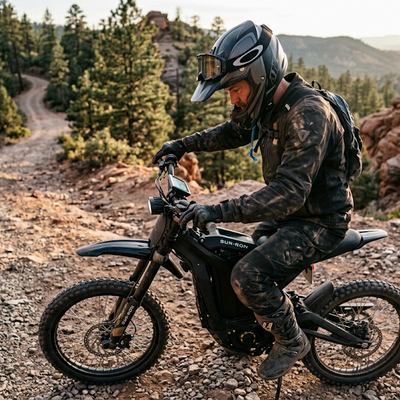
Figure 2. Valtinsu EM5 Ultra at the entrance to a rocky high-country trail. AI-generated scene based on the official product image; terrain setting is illustrative and no performance claim is implied.
The Ownership Differences Buyers Miss
The purchase decision continues after the specification table.
Charging changes the shape of the day
E Ride lists 3.5 hours from 20% to 90%. Valtinsu lists 7–8 hours. A rider who charges once overnight may barely notice the difference. A rider trying to fit two sessions into one day may value the E Ride’s turnaround as much as its battery size.
Do not try to erase that difference with an unapproved charger. The U.S. Consumer Product Safety Commission advises riders to use the manufacturer-supplied charger, follow the charging instructions and stop using products that show damage, swelling, abnormal heat or other warning signs. Compatibility is not established by connector shape alone.

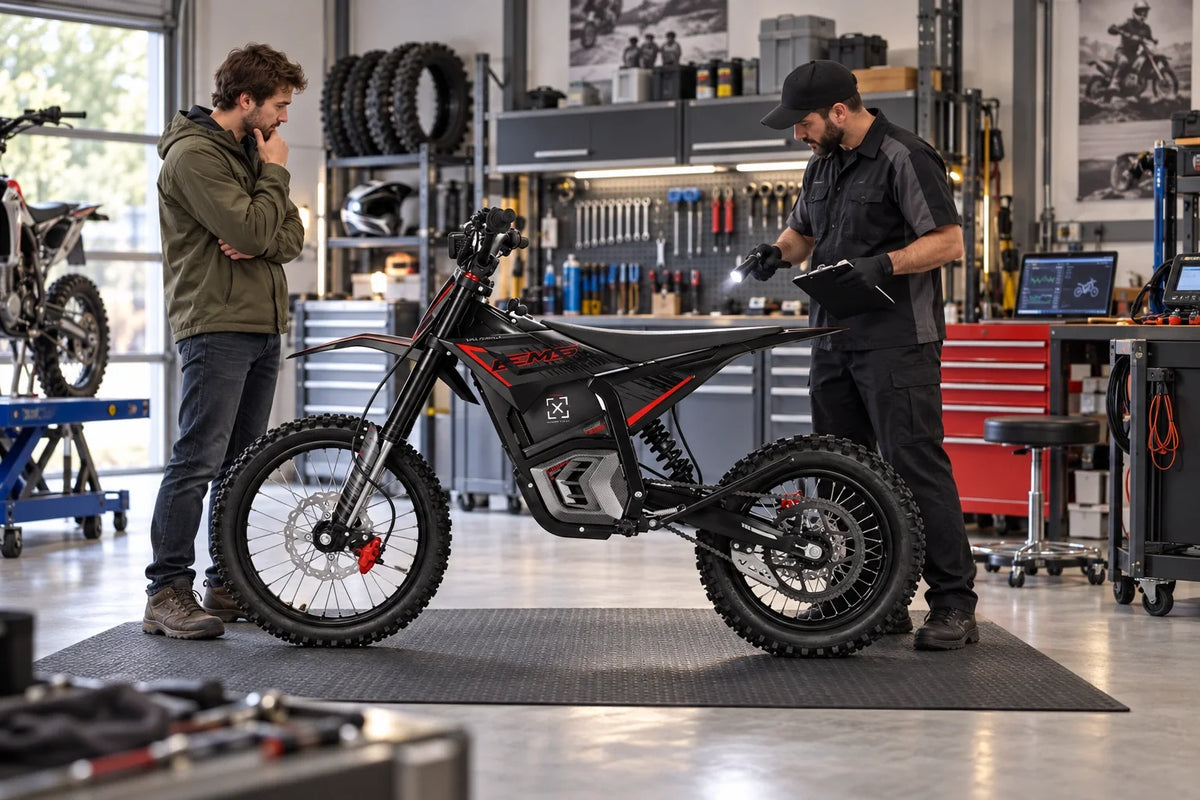
Figure 3. Valtinsu EM5 Ultra in a pre-ride inspection workshop. AI-generated scene based on the official product image; the setting illustrates ownership and maintenance context, not a service procedure.
Transport is a system, not a rack number
Both bikes are too heavy to treat like ordinary bicycles. Verify the carrier, hitch, vehicle tongue limit, ramp and tie-down points together. The Ultra’s 24 lb advantage can be meaningful, but 143 lb is still substantial when the bike is wet, muddy or lying downhill.
Availability changes the comparison
The current E Ride direct page is sold out. That does not prove the SS 3.0 is unavailable from every dealer, but it means the official list price is not necessarily the buyer’s real transaction price today. Dealer stock, used condition and local support can change the value equation.
The EM5 Ultra is currently available on Valtinsu’s product page with free shipping and a one-year warranty headline. The same page showed no customer reviews at the time of checking. That absence matters: it means this article should not invent a reliability record for the Ultra or present manufacturer range and performance claims as owner-verified results.
Warranty and return terms can reverse the value decision
The official E Ride warranty covers new bikes sold through authorized dealers or the brand’s website for 12 months. It applies to the original purchaser and is non-transferable. The current policy also requires dealer-sold-bike claims to run through the dealer. That matters when the direct SS 3.0 listing is sold out: a used bike may be mechanically attractive while carrying no transferable factory warranty, and a dealer relationship may determine how smoothly a claim moves.
Valtinsu’s published one-year policy covers the frame, battery, controller and motor for 12 months, while the instrument panel is listed at six months. The policy allows limited second-hand coverage only when the original warranty is still active and the buyer has the initial owner’s name and order number. It also states that customers pay shipping fees for warranty replacement parts. These are not small-print details; they change the cost and effort of ownership after a failure.
The bigger issue is return eligibility. The live Ultra product page displays a discounted sale price, while Valtinsu’s return policy says sale and limited-promotion items are not eligible for refunds. The same policy also lists buyer-paid return freight and, for a used bike returned within 30 days, a 20% restocking fee. Treat that as a point to resolve before checkout, not after delivery. Ask support to confirm in writing whether the exact Ultra SKU and sale price are returnable, which fee schedule applies, and who pays freight for a verified defect.
For a dealer-stock or used SS 3.0, verify four items before comparing its price with a new Ultra:
- Is the seller an authorized E Ride dealer, and who submits a warranty claim?
- Is the bike’s serial number tied to the original purchaser, and is any coverage transferable?
- Can the seller document battery state of health, charger condition and crash or water exposure?
- Does the quoted out-the-door price include freight, setup, tax and any required service?
Before ordering either bike, ask the seller the same five questions:
- Which wear and crash parts are stocked in the United States?
- What are the warranty terms for the battery, controller, display and labor?
- Who pays freight if a large component must be returned?
- What is the typical lead time for a battery, charger, wheel and control assembly?
- Is there a manual, wiring diagram and diagnostic process for the exact model year?
This is where Valtinsu’s value argument should stay honest. The brand is not claiming the Ultra equals the E Ride in every performance dimension. It is offering serious 72V capability without forcing every buyer to pay for the highest ceiling. Readers can compare the broader Valtinsu electric dirt bike lineup before deciding whether the Ultra is the right step.

Figure 4. Valtinsu EM5 Ultra beside a vehicle loading ramp. AI-generated scene based on the official product image; no performance claims are implied.
Who Should Choose the E Ride Pro SS 3.0?
Choose the E Ride when most of these statements are true:
- Your longest legal rides need more than 1,800Wh with a safe reserve.
- You regularly use terrain where 19/18-inch rollover improves control or comfort.
- You are experienced enough to use—and meter—a 15.8kW performance ceiling.
- A 3.5-hour 20–90% charging claim changes how many sessions you can ride.
- You are comfortable loading and recovering a 167 lb machine.
- The approximately $2,800 premium does not remove essential gear, transport or maintenance from the budget.
- You have confirmed actual dealer inventory, configuration and warranty support.
The E Ride is the stronger machine for a rider who can describe exactly how the battery, wheels and output improve a real use case. It is a poor value argument when those benefits remain abstract.
Who Should Choose the Valtinsu EM5 Ultra?
Choose the Ultra when most of these statements are true:
- A 1,800Wh battery covers your normal loop with a conservative reserve.
- An 8,000W peak claim and 56 mph already exceed the output you regularly use.
- A 143 lb listed weight and 17/14-inch package better fit your transport and storage.
- Overnight charging makes the 7–8-hour claim acceptable.
- Reverse has practical value in a garage, loading area or tight repositioning situation.
- You want to reserve more of the total budget for protection, transport, tires and maintenance.
- You accept that the current product page does not yet provide an owner-review history.
The Ultra’s lower price is most persuasive when it improves the whole ownership system. Spending less on capability you will not use can leave more money for the parts of riding that keep the machine safe, legal and available.
After checking your route length, rider weight, transport limit and charging window, review the current EM5 Ultra configuration and availability. If the 72V/25Ah package clears all four constraints, the E Ride premium needs a specific reason to win.
Final Verdict: Buy the Performance You Can Name
The E Ride Pro SS 3.0 is the objective performance winner in this comparison. It has twice the nominal battery energy, almost twice the published peak output, larger wheels and a faster published charging window. Riders with long sessions, rougher terrain and a real demand for sustained performance can justify paying more.
The Valtinsu EM5 Ultra is the value winner. At the checked listings it costs about $2,800 less, weighs 24 lb less and still offers a 72V 25Ah Samsung battery, 8,000W peak output, a 56 mph claim, reverse and IPX6 protection. For a rider whose normal loop fits inside that envelope, the Ultra is not a compromise version of the E Ride. It is a different threshold decision.
Buy the E Ride if you can name the ride that needs its extra 1,800Wh, 19/18-inch wheels, faster charge or higher output. Buy the Ultra if those advantages would sit unused while the extra cost narrows the rest of your riding budget.
The better electric dirt bike is not the one with the largest numbers. It is the one whose capability appears on your actual trail.
FAQs
Is the E Ride Pro SS 3.0 worth the extra $2,800?
Yes—when you can name a regular ride that needs its extra battery reserve, larger 19/18-inch wheels, faster published charging turnaround or higher output ceiling. No—when those advantages would sit unused on short loops and reduce the budget available for protection, transport or maintenance.
The premium is easiest to defend when:
- A 1,800Wh battery would end your normal session before you retain a conservative return reserve.
- Rough routes repeatedly reward the E Ride’s larger-wheel rollover rather than only occasional extra speed.
- A same-day second session depends on the E Ride’s shorter published charging turnaround.
- Your protection, transport and maintenance budget is already complete after paying the premium.
Recheck live price and inventory before publishing or buying. The $2,800 gap reflects the compared manufacturer listings and shipping at the time of review, not a guaranteed transaction price.
Does twice the battery energy mean twice the real-world range?
No. The E Ride publishes 3,600Wh of nominal battery energy versus 1,800Wh for the EM5 Ultra, but real range also changes with speed, elevation, surface, tire pressure, rider mass, temperature and throttle use.
The manufacturer range claims are not a controlled head-to-head test: E Ride publishes speed conditions, while Valtinsu’s “up to” figure is not shown with an equivalent speed condition. Treat the larger pack as stronger evidence of energy reserve—not a promise of exactly twice the trail miles—and establish a conservative turnaround point on early rides.
Which bike is better for technical trails?
Neither wins every technical trail. The E Ride has the stronger rollover case on repeated roots, rocks and square edges; the EM5 Ultra’s lower listed weight and compact package may be easier to place, load or recover in tighter situations.
- Choose the E Ride when roughness, larger obstacles and longer sessions are the repeatable limits.
- Choose the EM5 Ultra when compact ownership and low-speed placement matter more than maximum output.
- Treat the result as unsettled when suspension setup, tire choice, rider fit or skill is likely to dominate the wheel and weight differences.
Is the Valtinsu EM5 Ultra suitable for a beginner?
Not as a conventional beginner bike. Its lower purchase price and compact dimensions may make ownership more approachable, but the manufacturer’s 8,000W peak-output and 56 mph claims still demand motorcycle-level respect.
It is only a reasonable first high-output e-moto when the rider can:
- Practice in the lowest mode on a legal, open and controlled area.
- Use motorcycle-rated helmet, eye, hand, body and foot protection.
- Build smooth throttle, progressive braking and low-speed balance before entering a trail.
- Accept a lower-performance model if the Ultra’s output is not needed for the intended terrain.
How can I tell whether either bike will fit my transport setup?
Start with the published bike weight, but approve the complete transport system—not the carrier’s headline number. The vehicle, hitch, carrier, ramp and tie-down geometry must all support the loaded bike together.
- Confirm vehicle tongue-weight and axle limits, then the installed hitch class.
- Confirm the carrier’s dynamic rating, wheelbase fit, tire-channel width and ramp limit.
- Measure doors, truck beds or van openings and plan where the handlebars and pegs will clear.
- Practice loading, securing and recovery on level ground before the first remote trip.
Are the E Ride Pro SS 3.0 and EM5 Ultra street legal?
Do not assume they are street legal because a seller uses the term “e-bike.” Their published power and speed can place them outside ordinary low-speed bicycle classifications, while registration, equipment and trail-access rules vary by jurisdiction and route.
Check state and local motor-vehicle requirements, then confirm the exact route with the relevant land manager. BLM route-management guidance explains why access can differ between areas; an off-road product page is not registration approval.
Does the E Ride Pro SS 3.0 warranty transfer with a used bike?
No—not under E Ride Pro’s current published U.S. warranty. Coverage is limited to the original purchaser and is described as non-transferable. That makes the sold-out direct listing a meaningful ownership issue: a privately purchased used SS 3.0 may have a lower asking price but no transferable factory protection, even when the original one-year period has not expired.
Before treating a dealer or used SS 3.0 as equivalent to a new Ultra:
- Confirm whether the unit is new authorized-dealer inventory or previously sold stock.
- Ask for the serial number, original invoice and written warranty status.
- If it is dealer inventory, confirm who will submit a claim and whether labor is included.
- If it is used, price battery testing and a possible major-component repair into the offer.
Valtinsu’s policy uses different second-hand conditions, so do not assume the two brands handle ownership transfer the same way. Recheck the exact policy and get the seller’s answer in writing before payment; warranty wording can change and the purchase channel can determine the claim path.
Sources
- E Ride Pro SS 3.0 official product page — current price, status and manufacturer specifications
- E Ride Pro model homepage — current model-generation context
- E Ride Pro SS 3.0 owner’s manual — model documentation
- Valtinsu EM5 Ultra official product page — current price, availability and manufacturer specifications
- Valtinsu electric dirt bike collection — current model context
- U.S. Consumer Product Safety Commission Micromobility Information Center — charging and lithium-ion safety guidance
- U.S. Bureau of Land Management e-bike overview — route-management and access context
- E Ride Pro official warranty policy — coverage duration, original-purchaser limits and dealer claim path
- Valtinsu official warranty policy — component periods, second-hand conditions and replacement-parts shipping
- Valtinsu official return policy — return windows, sale-item exclusions, freight and restocking terms
- Valtinsu official shipping policy — U.S. warehouse timing, free-bike shipping and cancellation charges
- Reddit: Is the SS 3.0 worth $5K?, owner review discussion and issue questions — customer questions about value, range, throttle response, fit and support; used as anecdotal voice, not product-fact evidence


Looking for something else?
Electric Dirt Bike Loses Power Under Load: Causes and How to Fix It
LEARN MORE
Electric Dirt Bike Bolt Torque Checklist: What to Check and Where the Numbers Come From
LEARN MORE
How to Bleed Electric Dirt Bike Brakes Safely
LEARN MORE
Electric Dirt Bike Throttle Not Working: What to Check First
LEARN MORELooking for something else?
Electric Bike Battery Not Charging? Work Through This Before You Buy a New One
LEARN MORE
Electric Dirt Bike Error Codes: What They Mean and What to Check First
LEARN MORE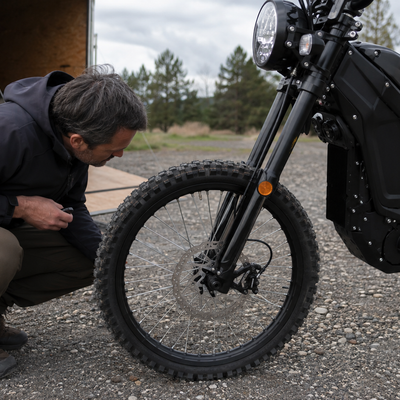
Electric Dirt Bike Brake Rotor Rubbing: Diagnose the Cause Before Adjusting
LEARN MOREYou may also like
Moto eléctrica todoterreno para adultos EM-5 con luz
VALTINSU EM-5 Pro Off-Road Black Electric Dirt Bike
VALTINSU EM-5 Pro Green Electric Dirt Bike
VALTINSU EM-5 Ultra Electric Dirt Bike
VALTINSU EM-5 & EM-5 Pro Combo
Further reading
Electric Dirt Bike Trailside Power Loss: Recovery Plan When the Battery Is Dead
Electric Dirt Bike Fall Riding on Wet Leaves: Grip, Hidden Obstacles and Braking
How to Lift a Fallen Electric Dirt Bike Without Hurting Yourself or the Bike