


Electric Dirt Bike Service Log Template: Track Torque, Tires, Brakes and Battery
An electric dirt bike service log should record more than a date and the word “checked.” A useful entry identifies the bike, condition, method, result, action, parts, evidence and next review. That record helps owners notice trends, hand accurate information to a technician and support a warranty conversation without inventing a diagnosis.
Build the schedule from the current Valtinsu user manual and keep links to approved accessories and replacement items beside the record. The template organizes evidence; it never changes the service interval or torque specified for the actual model.
Create a permanent bike identity page
Photograph labels clearly and store proof of purchase with the log. Do not publish serial numbers in public forums. Update configuration whenever a part changes so an old specification is not applied to a new component.
 Figure 1. Official Valtinsu EM5 Pro product image accompanying create a permanent bike identity page. Confirm component locations and limits against the exact model page and current manual.
Use one row per observation or action
Avoid writing only “good,” “bad” or “tight.” Record a measurement or observable condition and the exact source used. If a bolt was not disturbed, write “visual witness mark unchanged,” not “torqued.” Repeatedly checking a fastener with a torque wrench can move it and is not the same as verifying that it stayed secure.
 Figure 2. Official Valtinsu EM-5 product image accompanying use one row per observation or action. Confirm component locations and limits against the exact model page and current manual.
Separate inspection, maintenance and repair
● Inspection: observed condition without changing the assembly.
● Maintenance: scheduled cleaning, adjustment or replacement using an approved procedure.
● Repair: correction of a fault or damage, often requiring diagnosis and professional skill.
● Modification: change from original configuration, requiring compatibility and warranty review.
This distinction prevents the log from implying work that did not occur. It also helps support understand whether a symptom existed before or after a service action.
Record torque work with context
A torque number without source, tool and thread condition can be misleading. Log the manual revision, fastener location, specified value and units, whether the threads were dry or treated as required, tool identification and final result. Do not copy a value from another model, nearby bolt or online discussion. If threads, head or mating surfaces are damaged, record the defect and stop before tightening.
 Figure 3. Official Valtinsu EM5 Pro product image accompanying record torque work with context. Confirm component locations and limits against the exact model page and current manual.
Track tires and wheels as trends
Record cold pressure with the same reliable gauge, terrain, rider/load, tire model and visible condition. Note bead seating, valve-stem angle, spoke or rim observations and any pressure loss. A trend across comparable entries can reveal a slow leak, repeated tire creep or setup that is damaging the tire even when one check looks acceptable.
Track brakes without contaminating the evidence
Log lever feel, engagement consistency, visible pad condition, rotor appearance, rub, noise and the result of a wheel-spin check. If pads are measured, identify the point and tool. Photograph suspected contamination before cleaning. Record the exact fluid and bleed procedure only when work is performed by the appropriate person; never infer fluid type.
Track battery and charging sessions selectively
A full log of every minute is unnecessary. Create comparable checkpoints: rested starting percentage, ambient temperature, charger used, connection time, intermediate reading, completion indicator, total time and warning behavior. Record unusual heat, odor or damage as a stop-use event. Keep battery and charger serial references private.
 Figure 4. Official Valtinsu EM-5 product image accompanying track battery and charging sessions selectively. Confirm component locations and limits against the exact model page and current manual.
Use status labels that drive action
Attach evidence consistently
Use filenames containing date, bike ID and component, such as 2026-09-12_BikeA_rear-tire_valve-angle.jpg. Photograph the same angle with a scale or reference where safe. Keep original files and a read-only export of each monthly log. Cloud sync is useful, but an offline copy protects records if an account changes.
Review the log, not just individual rows
● Weekly or before a major ride, filter unresolved stop-ride and service items.
● Monthly, compare tire pressure, brake observations, charge behavior and recurring looseness.
● After an impact or service, create a baseline entry before the next full ride.
● Before a warranty request, export the relevant records without unrelated personal data.
● At resale or handoff, share appropriate maintenance history while protecting serial and contact information.
 Figure 5. Official Valtinsu EM5 Ultra product image accompanying review the log, not just individual rows. Confirm component locations and limits against the exact model page and current manual.
Make measurements reproducible
A measurement is useful only when the next person can repeat it. Record whether tire pressure was cold, where pad thickness was taken, how the bike was supported, which point defined chain slack and which instrument was used. For photographs, include a fixed reference without blocking the component. Never place a hand or scale near a powered or rotating wheel to improve documentation.
Correct records without rewriting history
If an entry is wrong, retain the original, add a dated correction and explain why it changed. Do not overwrite a symptom after a repair or backfill a torque value from memory. Versioned records make the sequence credible for technicians and warranty reviewers. When sharing the log, export only relevant rows and preserve the complete original privately.
Close every action with verification
A part installation is not complete merely because the hardware is back in place. Record static checks, wheel and control movement, warning status and the result of a short conservative test where appropriate. If verification cannot be performed safely, mark the task “service before next ride” rather than “completed.”
Turn Service Notes Into Maintenance Decisions
A log should make the next action obvious. Record a baseline when the bike is operating normally, then use the same fields after every inspection or service. Separate measured values from observations and separate both from decisions. For example, "rear pressure 18 psi cold" is a measurement, "slow leak suspected" is an interpretation and "inspect before next ride" is the action.
Use permanent fields for model context
Keep model, serial identifier, battery and charger labels, wheel and tire sizes, brake configuration and approved fluid or lubricant specifications at the front of the log. Update parts only when they actually change. This avoids copying model data into every entry and reduces compatibility errors.
Create simple trend and closure rules
Flag a value when it moves outside the bike's normal range or a symptom repeats under comparable conditions. Every open item should have an owner and next step: monitor, inspect, order a confirmed part or contact support. Close it only after the repair, torque check or controlled verification is documented. Never convert an unresolved safety concern into a routine reminder.
Build the Service Log Around the Bike You Own
A useful log connects every observation to the exact model, date, operating hours, terrain and parts fitted. Start with the Valtinsu electric dirt bike collection to record the correct model name, battery platform and wheel format. That prevents later entries from becoming a pile of numbers with no reliable specification context.
For a Valtinsu EM-5 Pro, record the 60V/27Ah battery platform, 17-inch front and 14-inch rear wheels, and hydraulic brake system as the permanent equipment baseline. Then log inspections, symptoms and model-specific torque checks separately. The product page identifies the bike; the current manual and support instructions remain the authority for service limits.
Use Valtinsu's electric dirt bike maintenance record resources as the broad ownership reference, then confirm every procedure, part and limit against the exact model page and current manual.
A service log becomes more valuable when every entry uses the same terms and units. Record what changed, what stayed unchanged and the result of the next test ride so a future pattern can be compared instead of reconstructed from memory.
Quick Decision Table
|
Log entry |
Record |
Why it matters |
|
Bike identity |
Model, serial, battery, charger and configuration |
Prevents parts and procedures being applied to the wrong revision. |
|
Inspection |
Date, mileage or hours, method and result |
Creates a baseline even when no fault is found. |
|
Service action |
Part, value, tool, technician and outcome |
Makes later diagnosis reproducible. |
|
Follow-up |
Test result and next inspection trigger |
Closes the loop instead of leaving an incomplete note. |
FAQs
How often should I update the log?
At every scheduled inspection, service, part change, impact or unusual symptom, plus the intervals required by the model manual.
Use this quick classification:
● Identity data: model, serial, battery, charger and current configuration.
● Observation data: date, mileage or hours, conditions, symptom and measurement method.
● Action data: part or procedure used, result, verifier and the next inspection trigger.
Should I record every torque value?
Record torque only when the procedure actually calls for it and the check is performed correctly. Visual witness-mark checks should be labeled separately.
Does a service log prove warranty coverage?
No. It documents care and timing, but the written warranty determines coverage. Preserve receipts and communications too.
What should multiple riders add?
Record rider/load category, terrain and who reported the symptom. Do not store unnecessary sensitive information.
Follow this check sequence:
1. Create one entry per observation or service action and use consistent units.
2. Record exact values and parts only when they were actually measured or installed.
3. Close the entry after the next test with what changed, what did not and when to inspect again.
Paper or digital log?
Either works if entries are legible, dated and backed up. Digital logs make photos and filtering easier; paper can remain available in the workshop.
Can I use the log instead of the manual?
No. The manual defines the procedure and interval. The log records what happened.
What should I record after a no-fault inspection?
Record the date, odometer or hours, inspection scope and a short result such as 'no play found' or 'no damage observed.' A normal result creates a baseline and proves the item was checked, which makes later change easier to spot. Include the tool or method when it matters, but do not invent a torque value or measurement that was not taken. Close the entry with the next inspection trigger, such as after a hard impact, tire change or specified service interval. A log is useful because it preserves trend, not because every row contains a repair.


Looking for something else?

Electric Dirt Bike Brake Fade: Causes, Warning Signs and a Safe Test Method
LEARN MORE
Electric Dirt Bike Climbing Angle: Degrees, Grade and Real Trail Limits
LEARN MORE
Electric Dirt Bike Braking Distance: What Changes Stopping Length?
LEARN MORE
Electric Dirt Bike Cuts Out Over Bumps: Diagnose Intermittent Power Loss
LEARN MORELooking for something else?

Electric Dirt Bike Tire Pressure: How to Find the Right PSI
LEARN MORE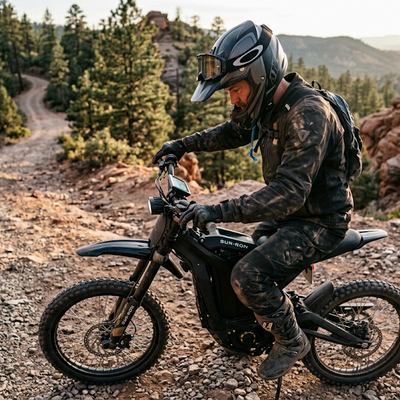
Electric Dirt Bike Loses Power Under Load: Causes and How to Fix It
LEARN MORE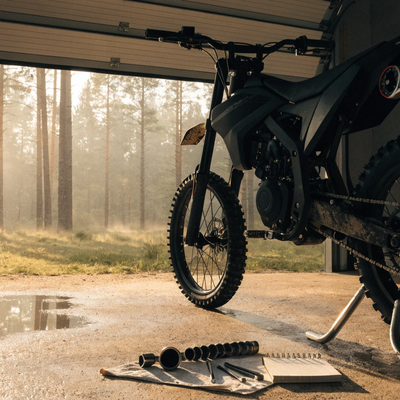
Electric Dirt Bike Bolt Torque Checklist: What to Check and Where the Numbers Come From
LEARN MOREYou may also like
Moto eléctrica todoterreno para adultos EM-5 con luz
VALTINSU EM-5 Pro Off-Road Black Electric Dirt Bike
VALTINSU EM-5 Pro Green Electric Dirt Bike
VALTINSU EM-5 Ultra Electric Dirt Bike
VALTINSU EM-5 & EM-5 Pro Combo
Further reading

Electric Dirt Bike Replacement Parts Availability: What Buyers Should Verify Before Ordering

Electric Dirt Bike Warranty Claim Checklist: Photos, Logs and Questions to Prepare

Electric Dirt Bike Spare Parts Kit: What to Keep at Home and on the Trail