72V Sur-Ron Battery Upgrade vs Factory 72V Bike: Which Is the Better Buy?
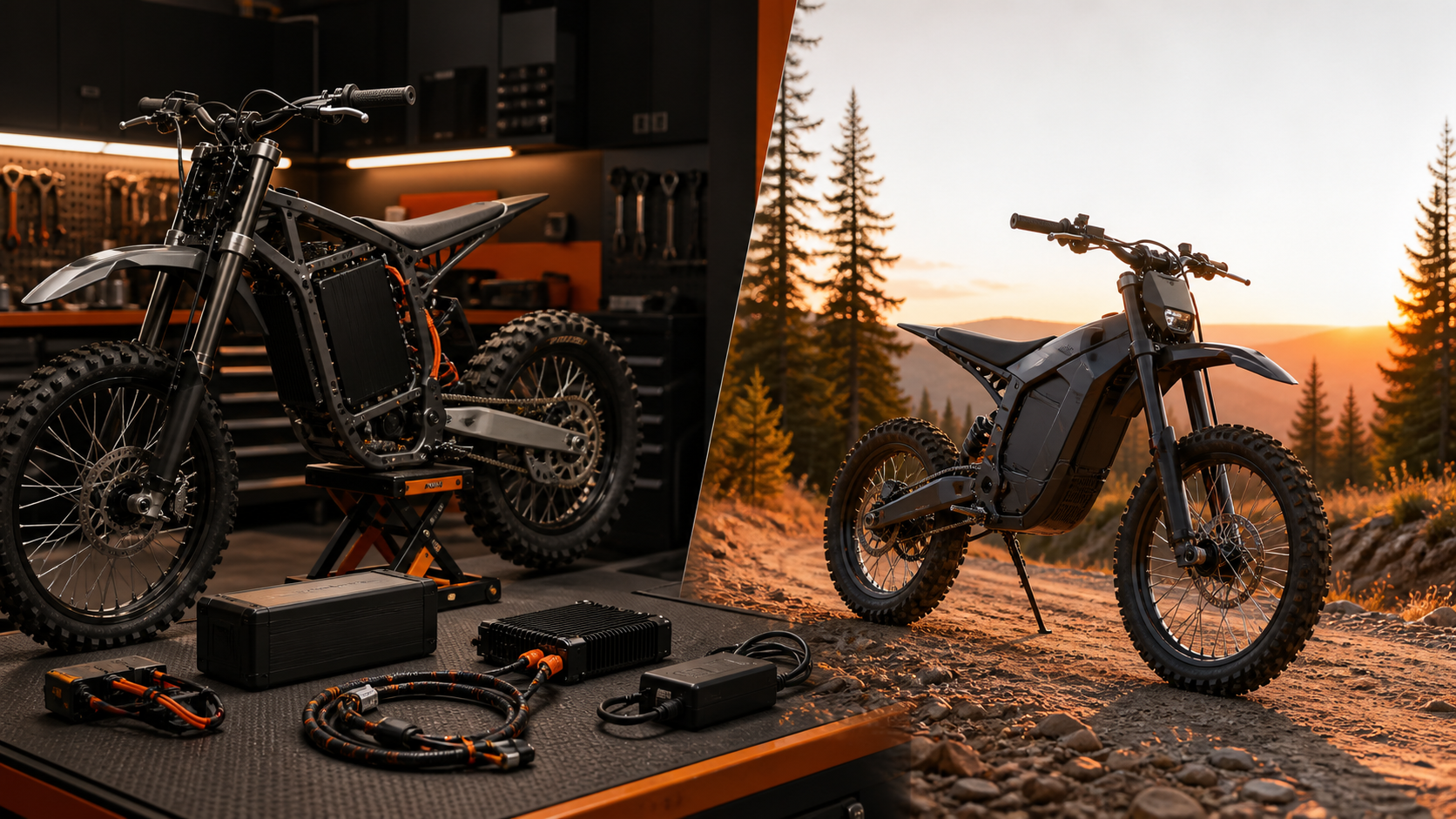
A 72V Sur-Ron battery is only one part of the conversion. The ride-ready cost may also include a controller, an approved charger, a harness, mounting parts, tuning, labor and chassis work.
This guide compares two complete outcomes: upgrading an existing Sur-Ron, and buying a matched factory 72V bike. The factory route favors simplicity. The Sur-Ron route favors capacity, tuning freedom and customization.

The core trade-off: custom capability versus factory integration.
Buy the factory 72V bike if you want a matched system and less setup work.
Upgrade the Sur-Ron if the bike is healthy, you have a specific range or power target, and every battery–controller–charger interface is supported.
One hard rule. Do not order the battery until every required part, support contact and cost is known. If any line still says “unknown,” the build is not ready.
Define the Exact Sur-Ron and the Goal
“Sur-Ron” is not one electrical specification. Model years, regional versions, batteries, controllers and connectors vary. Before shopping, record the exact model and year, battery data plate, controller part number, connector, charger output and previous wiring changes.
Then write one goal:
- More range at a similar pace
- Stronger acceleration
- Sustained high output
- Faster charging
- A replacement for an aging pack
- A complete performance build
Different goals require different parts. More trail time may call for a higher-capacity compatible pack; sustained power may require controller, motor-temperature and gearing changes.
Start with the bike's measured limitation, not the “72V” label. A build without a clear finish line is difficult to budget and tune.
What a 72V Conversion Really Includes
At minimum, investigate these interfaces:
|
System |
Question that must be answered |
|
Battery |
Does the pack fit the exact chassis and lid without crushing cables or forcing the enclosure? |
|
Controller |
Is it rated for the pack's fully charged voltage, current and communication requirements? |
|
Charger |
Is output voltage and connector approved for that exact battery? |
|
Main harness |
Are connector type, cable gauge, fuse and contactor appropriate for the intended current? |
|
Motor |
Can the stock motor tolerate the requested output and duty cycle? |
|
Display / throttle |
Will state of charge, faults, modes and throttle mapping work correctly? |
|
Mechanical drive |
Are belt, jackshaft, chain, sprockets and gearing ready for the load? |
|
Brakes / tires / suspension |
Can the chassis control the speed and mass the new system enables? |
|
Installation |
Who will assemble, program and test it, and who owns the diagnosis if parts disagree? |

A supported conversion treats the battery, controller, charger, harness, motor and chassis as one system.
One current Chi 72V product page states that its higher-voltage pack requires an aftermarket controller and a 72V charger. That is manufacturer-specific evidence, not permission to mix any 72V part with any controller.
The pack's maximum charge voltage matters more than the nominal label during compatibility checks. Never connect a battery because two product names both contain “72V.”
Current Cost Snapshot
This is a budget screen, not a quote. Confirm the exact product version, cart total, compatibility and availability before ordering anything.
|
Item |
Current listed price |
Still to verify |
|
Chi Gladiator 72 Pulsar, 45Ah |
from $1,599 |
version, fit, current, lead time |
|
Chi Gladiator 72 Odyssey, 55Ah |
from $1,949 |
version, connector, fit |
|
Chi Gladiator 72 Colossus, 60Ah |
from $2,099 |
lid/fit, controller, mass |
|
Chi compatible chargers |
$175-$375 |
approved output for chosen pack |
|
High-power harness example |
$100 |
connector and installation |
|
Aftermarket controller |
variable |
voltage, current, motor and tune |
|
Installation / tuning |
variable |
shop skill and warranty |
|
Corrective brakes, tires, suspension or drive parts |
variable |
actual inspection |
|
Valtinsu EM5 Ultra complete bike |
$2,199 complete bike |
live price and availability |
Three Current Cart Scenarios
Using current official list prices, three pre-controller screens make the gap visible — each is battery + $175 charger + $100 harness:
|
BUILD |
BATTERY |
SUBTOTAL |
VS. $2,199 ULTRA |
|
Entry energy (45Ah) |
$1,599 |
$1,874 |
$325 below |
|
Mid-capacity (55Ah) |
$1,949 |
$2,224 |
$25 above |
|
High-capacity (60Ah) |
$2,099 |
$2,374 |
$175 above |
These are not capability-equivalent products: the larger packs store far more energy than the Ultra's 1,800Wh pack. The point is to prevent a false comparison. Ask whether the extra energy, tuning range and retained Sur-Ron chassis justify the additional system cost and ownership work.

The battery is only one line in a complete, ride-ready conversion budget.
What Constraint Are You Actually Solving?
Voltage is a design choice, not a diagnosis. Before buying parts, classify the current limitation as range, power and heat, or ownership friction.
Range constraint
If the bike finishes the route with weak reserve but otherwise performs well, usable watt-hours matter more than a larger voltage label. A 72V 45Ah pack is 3,240Wh nominal; the Ultra is 1,800Wh nominal. The custom route can therefore offer much more energy, but only if weight, fit and discharge capability remain acceptable.
Power or heat constraint
If power fades on long climbs, more battery energy may not solve the cause. Controller limits, voltage sag, motor temperature, gearing and low-speed load can dominate. Define a repeatable climb or acceleration target and log temperatures before buying; otherwise the build may move heat rather than remove it.
Ownership constraint
If the real problem is repeated diagnosis, incompatible parts or lost riding time, another custom component increases—not decreases—the burden. A factory platform is valuable because one company defines the baseline system. Integration can be worth more than the largest specification.
The decision becomes clearer when the goal is written as a measurable finish line: “complete my 35-mile loop with 20% reserve,” “hold this climb without thermal rollback,” or “be ride-ready this weekend.” “Make it 72V” is not a finish line.
Performance and Battery Capacity

Figure 3. Supporting product or technical visual for the decision section.
Voltage influences motor speed potential and the current required for a given electrical power, but voltage alone does not determine wheel performance. Controller current, motor constants, gearing, pack voltage sag, thermal limits and software decide how the system behaves.
Capacity matters as much as voltage. Example nominal energy:
- 72V × 45Ah = 3,240Wh
- 72V × 55Ah = 3,960Wh
- 72V × 60Ah = 4,320Wh
- EM5 Ultra 72V × 25Ah = 1,800Wh
A large aftermarket pack can hold far more energy than the Ultra's stock pack. It may also weigh more, change the center of mass and need a different lid or retention system. The owner pays for range and current capability with money and kilograms.

Larger aftermarket packs can store more energy than a compact factory pack, but they also add weight and fitment demands.
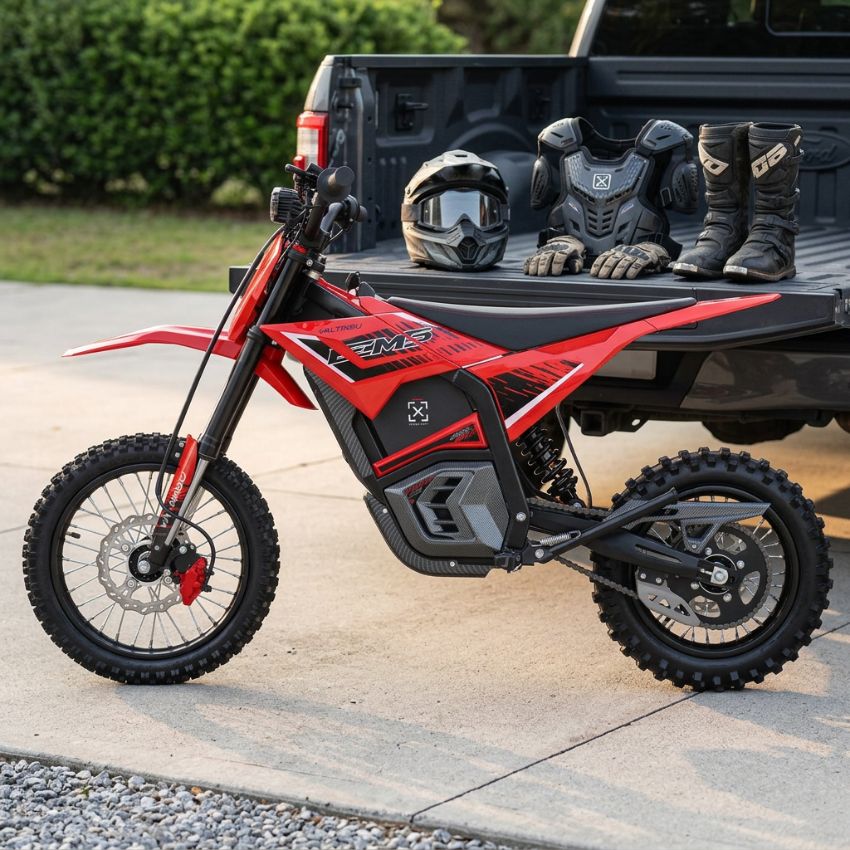
Valtinsu publishes 8,000W peak power, 56 mph, up to 75 miles and a 72V 25Ah battery for the EM5 Ultra. The same specification table lists “60V 3000W” on the rated-power line, which conflicts with the 72V product description. Ask Valtinsu to clarify that field before purchase.
A Sur-Ron conversion has even more variables. Controller map, motor, gearing, battery sag and thermal limits determine the result, so there is no single honest “72V top speed.”
Compatibility, Heat and Mechanical Limits
Power that feels clean for ten seconds may not be sustainable for a long sand climb. Battery, connector, controller and motor temperatures rise under current and time. Larger wheels, taller gearing, rider mass and low-speed load can increase stress.
The mechanical system does not receive a waiver because the motor is electric. More acceleration loads the belt, jackshaft, chain and sprockets. Higher speed increases brake energy by the square of speed: a small speed increase can create a much larger stopping-energy demand.

More output adds electrical heat and increases loads on the drivetrain and brakes.
Inspect the present bike before buying electrical parts:
- Frame and swingarm damage
- Steering and wheel-bearing play
- Fork or shock leaks
- Brake pad, rotor and hose condition
- Tire age and load rating
- Chain, sprocket and belt wear
- Previous connector heat or wire chafing
If the chassis already needs work, put that cost beside the conversion. A powerful battery does not repair a tired fork.
Charging Safety: Connector Fit Is Not Approval
A connector that fits does not prove a charger is correct. CPSC advises using the supplied or approved charger, staying present while charging and not charging while asleep; it also warns against incompatible “universal” chargers.
For a conversion, the battery maker must confirm the charger's output voltage, current and connector. An adapter or one successful charge is not proof of compatibility.
Use a qualified installer for polarity, protection, cable routing and charge checks. Stop using a pack that is damaged, unusually hot, swollen, leaking, hissing or producing an odor.
Downtime, Warranty and Resale
A factory bike gives the owner one documented configuration and one first support contact for the battery, controller, charger and wiring.
A modified Sur-Ron can split responsibility among the battery maker, controller maker and installer. Keep invoices, serial numbers, wiring diagrams, firmware versions and settings.
Include downtime in the budget. Made-to-order packs, delayed connectors and repeat tuning visits can remove weeks from the riding season.
Read warranty terms before installation. At resale, recognized parts and complete records help; undocumented wiring makes the bike harder to value and support.
Who Should Upgrade the Sur-Ron?
The upgrade makes sense when:
- The current bike fits well and its chassis is healthy
- The owner can name the performance or range target
- Battery, controller, charger and motor compatibility is documented
- Installation and tuning support are available
- The aftermarket ecosystem is part of the enjoyment
- Downtime does not cancel the riding season
- The finished budget still beats alternatives that meet the same goal
If research, tuning and documentation are part of the hobby, upgrade. If they feel like extra work, buy the matched system.
Who Should Buy a Factory 72V Electric Dirt Bike?
The factory-bike route makes sense when:
- The owner would need a battery, controller, charger and professional installation
- The present Sur-Ron needs additional brakes, suspension or drivetrain work
- A 56 mph and 8,000W factory claim already clears the use case
- Reverse, IPX6 evidence and 17/14-inch wheels are useful
- One support relationship matters more than maximum customization
- The $2,199 checked Ultra price preserves budget for gear and transport
The Ultra does not match the energy capacity of a 4,000Wh custom Sur-Ron. It is the cleaner choice for a rider who accepts the smaller stock pack and values integration over maximum capability.
Decision Worksheet
Write a number or yes/no answer for each line:
- Present Sur-Ron resale value: $____
- Battery delivered price: $____
- Compatible controller and required accessories: $____
- Approved charger: $____
- Harness, connectors, lid or mounting parts: $____
- Installation and tune: $____
- Brakes, tires, suspension and drive parts: $____
- Expected downtime: ____ weeks
- Required range at normal pace: ____ miles
- Maximum complete-bike budget including gear and transport: $____
Use two stop rules: do not buy while any electrical interface lacks written support, and pause if the conversion approaches complete-bike pricing before controller, labor or chassis work is included.
If the conversion still wins after those tests, proceed deliberately. If the worksheet exposes missing parts or support, keep researching.
Final Verdict
Choose the factory route when a 1,800Wh pack and Valtinsu’s published performance claims meet your use. The current $2,199 EM5 Ultra price covers one matched battery, controller, charger and wiring package.
Choose the Sur-Ron conversion when the bike is sound, you need more energy or a specific tune, and every electrical interface is documented. The reward is higher capability; the cost is more weight, complexity and support work.
Buy the complete system that meets your route, power and ownership target with the fewest unsupported assumptions.
FAQs
Does a 72V Sur-Ron battery require a new controller?
Usually, yes. A 72V pack must be matched to a controller that accepts the pack's fully charged voltage and current. Some 72V packs explicitly require an aftermarket controller and a dedicated 72V charger.
Before buying:
- Record the exact bike year, battery label and controller part number.
- Ask the battery and controller manufacturers to confirm the combination in writing.
- Confirm maximum charge voltage, current limits and firmware requirements.
If any supplier will not confirm the combination, do not connect the parts.
How much does a complete 72V Sur-Ron upgrade cost?
A complete conversion can exceed $2,000 before labor. Current examples place the battery at $1,599–$2,099, the charger at $175–$375 and a high-power harness at about $100; the controller, installation and chassis work are additional.
Include these lines in the budget:
- Battery, compatible controller and approved charger.
- Harness, connectors, lid or mounting parts.
- Installation, programming and diagnosis.
- Brakes, tires, suspension or drivetrain work.
Compare ride-ready total with ride-ready total—not battery price with complete-bike price.
Will 72V automatically make a Sur-Ron faster?
No. Higher voltage can increase speed potential, but it does not guarantee a faster bike. Controller settings, motor limits, gearing, battery sag, tire diameter and heat determine the result.
Set one measurable goal before buying parts—for example, completing a specific loop with reserve or holding a repeatable climb without thermal rollback.
Is a larger amp-hour battery always better?
No. More amp-hours usually mean more stored energy, but also more size, weight and cost.
- Capacity: enough watt-hours for the route plus a reasonable reserve.
- Fit: no forced lid, crushed cable or insecure mounting.
- Output: discharge capability that matches the supported controller settings.
- Handling: acceptable added mass and center-of-gravity change.
Can I install a 72V battery myself?
Only if the manufacturers approve the combination and you have the electrical, mechanical and programming skills to complete it safely. Otherwise, use a qualified installer.
Stop and get help if:
- Any wire or connector function is uncertain.
- The installation requires an undocumented adapter, bypass or tune.
- A connector shows heat damage or the cable routing can chafe.
- You cannot verify polarity, protection settings or charge voltage.
Keep the final wiring diagram, firmware version, settings and serial numbers for future service.
Is the EM5 Ultra cheaper than a complete Sur-Ron conversion?
It can be. At the checked example prices, a 45Ah battery, lowest-cost charger and harness total $1,874 before controller or labor; the 55Ah and 60Ah examples reach $2,224 and $2,374 before those costs. The current EM5 Ultra complete-bike price is $2,199.
- Choose the factory bike when a matched system, faster ownership setup and one support path matter most.
- Choose the Sur-Ron upgrade when the current bike is healthy and the extra energy or tuning freedom justifies the added cost and complexity.
The two options are not capability-equivalent, so compare them against the same route and performance target.
Sources
- ChiBatterySystems Sur-Ron 72V collection
- Chi Gladiator 72 Colossus product page
- EBMX battery troubleshooting document
- Sur-Ron USA Light Bee product page
- Valtinsu EM5 Ultra official page
- CPSC Micromobility Information Center
- CPSC warning on incompatible “universal” micromobility chargers


Looking for something else?
Fastest Bike in the World: Top 10 Speed Records Ranked
LEARN MORE
How to Measure Bike Size: Frame, Wheel & Fit Step-by-Step
LEARN MORE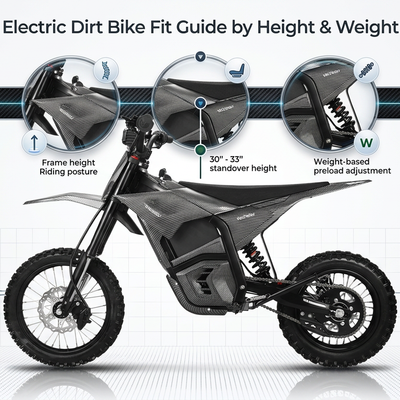
What Size Electric Dirt Bike Do I Need? Fit Guide by Height & Weight
LEARN MORE
Best E-Bike Brands: Top-Rated Companies Worth Buying in 2026
LEARN MORELooking for something else?
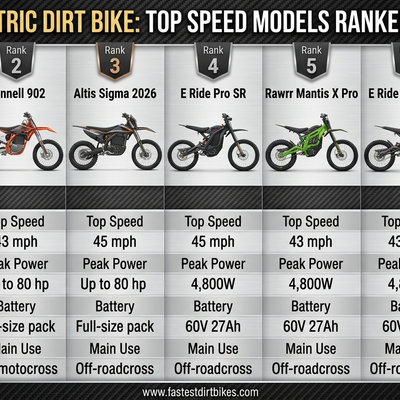
Fastest Electric Dirt Bike: Top Speed Models Ranked & Compared
LEARN MORE
Electric Dirt Bike Range: How Far Can You Really Ride on One Charge?
LEARN MORE
Cheap Electric Dirt Bikes 2026: Best Budget Picks, Tested and Compared
LEARN MOREYou may also like
Moto eléctrica todoterreno para adultos EM-5 con luz
VALTINSU EM-5 Pro Black Electric Dirt Bike
VALTINSU EM-5 Pro Green Electric Dirt Bike
Moto eléctrica todoterreno para adultos EM23
Further reading
72V Sur-Ron Battery Upgrade vs Factory 72V Bike: Which Is the Better Buy?
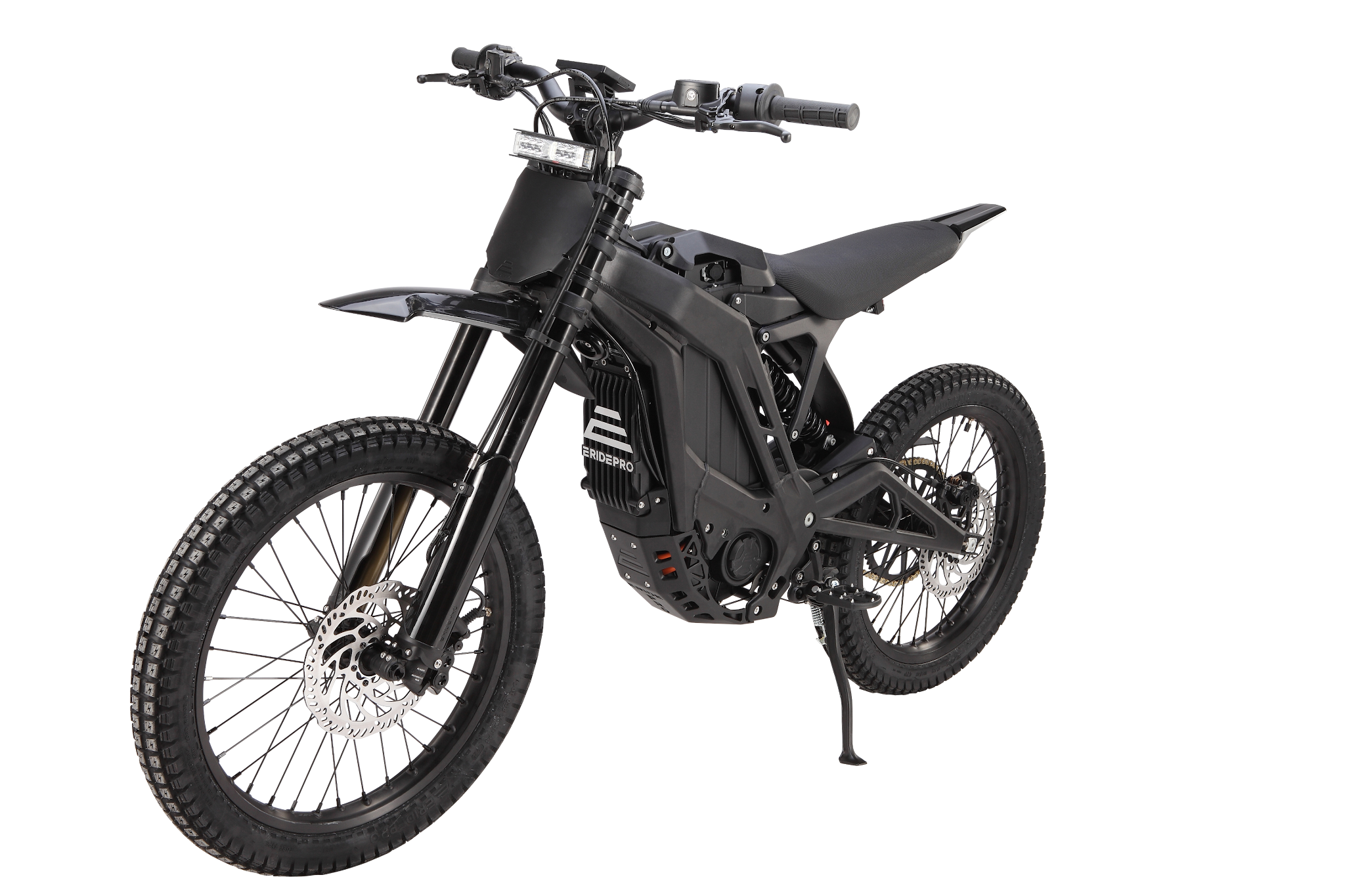
E Ride Pro SS 3.0 vs Valtinsu EM5 Ultra: Is It Worth $2,800 More?
RTR eBike vs Valtinsu EM5 Pro: Which Trail Bike Should You Buy?